


Balancing workers’ rights, production costs and global competitiveness remains a key challenge for Bangladesh’s RMG industry

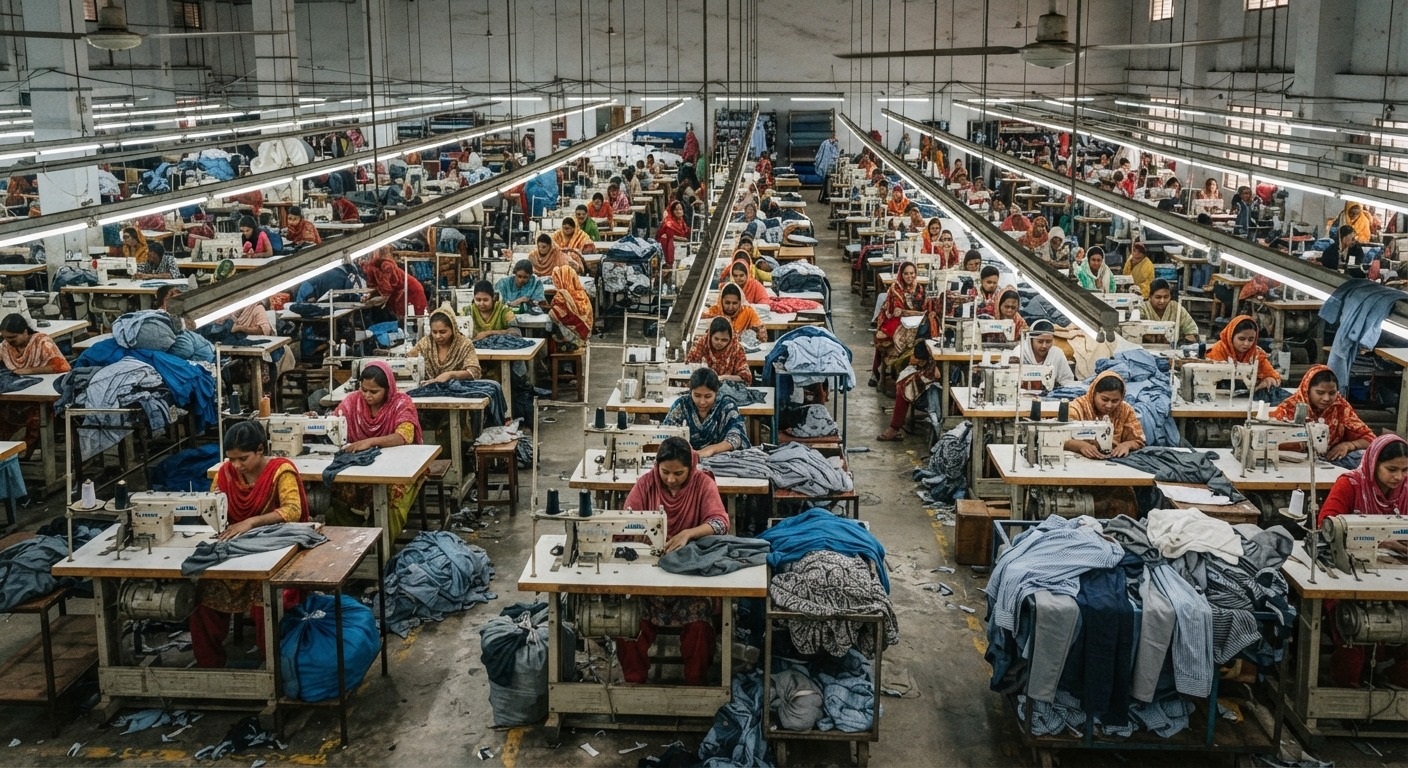
Rising prices of essential commodities, increasing house rents, healthcare expenses and transportation costs have placed growing financial pressure on workers in Bangladesh’s readymade garment (RMG) sector, renewing calls for higher wages. While fair compensation is essential to improving workers’ living standards, proposed wage increases have also raised a critical question: who will bear the additional financial burden?
The issue has become increasingly important for Bangladesh’s garment industry, where factory owners, international buyers and the government all have a role to play in maintaining a sustainable balance between workers’ welfare and industrial competitiveness.
Labour costs account for a significant share of garment production expenses. However, manufacturing costs also include raw materials, electricity, gas, transportation, bank interest, factory operations and export-related expenses. Any increase in workers’ wages is therefore likely to push up overall production costs, putting additional pressure on manufacturers.
Industry stakeholders point out that many Bangladeshi garment factories operate on relatively narrow profit margins to remain competitive in international markets. Without corresponding increases in the prices offered by global buyers, higher wages could significantly affect factory profitability. Small and medium-sized enterprises are particularly vulnerable because of their limited financial capacity to absorb additional operating costs.
This has brought international buyers’ purchasing practices into sharper focus. Industry representatives argue that if global brands and retailers expect manufacturers to provide better wages, improve working conditions and meet higher labour standards, they should also offer fair and commercially viable prices for their products.
Long-term sourcing commitments, transparent cost assessments and responsible purchasing practices could help manufacturers accommodate higher wages without compromising business sustainability. Otherwise, the financial burden of improving workers’ livelihoods could fall disproportionately on factory owners.
At the same time, manufacturers need to explore ways to improve operational efficiency and reduce production costs. Investments in modern technology, automation, energy efficiency, better production planning and waste reduction could help factories increase productivity and offset some of the additional wage expenses.
The government also has an important role to play in creating a supportive business environment. Reliable energy supplies, improved infrastructure, affordable financing and appropriate policy support could ease operational pressures on manufacturers. Ensuring effective enforcement of labour laws, timely wage payments and stronger social protection for workers must also remain priorities.
Ultimately, higher wages should not be treated as the responsibility of any single stakeholder. Factory owners, international buyers and the government must work together to establish a fair and sustainable cost-sharing mechanism that protects workers’ rights while preserving the industry’s long-term viability.
The challenge is to strike a balance between workers’ legitimate demands for better wages and the financial realities of garment manufacturing. Protecting factory profitability at the expense of workers’ welfare is neither fair nor sustainable. Equally, increasing labour costs without addressing purchasing prices, productivity and the broader cost structure could place manufacturers under further financial pressure.
The fundamental question, therefore, is not simply how much garment workers should earn, but how the additional costs of ensuring decent wages can be shared fairly among all stakeholders.
Finding that balance will be crucial to protecting workers’ livelihoods, sustaining factory operations and strengthening Bangladesh’s position in the highly competitive global apparel market.