MOMODa FOUNDATION, IDE hold joint research findings

Business Desk :
The critical importance of applied reproductive health literacy and family planning services in deferring adolescent pregnancy has been underscored by a study conducted in the Gaibandha district.
In collaboration with the Institute of Developing Economies (IDE-JETRO), Japan, and Florida International University (FIU), USA, the MOMODa FOUNDATION conducted the study involving 1,200 adolescent girls across 120 villages in the Gaibandha Sadar and Saghata Upazilas.
The research findings reveal that pregnancy rates among adolescent girls who received regular reproductive health education, counseling, and family planning support were significantly lower than those of the control group.
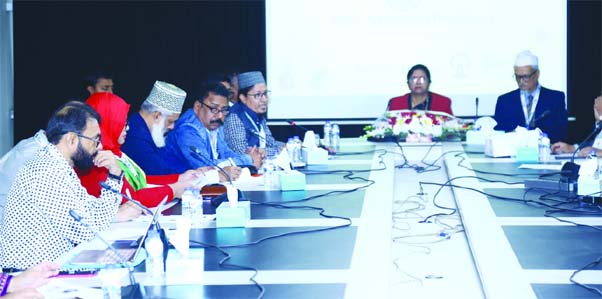
These results were disseminated on Thursday, at a workshop organised at “The Daily Star Center” in the capital to present the midline survey findings of the study titled “Delaying Adolescent Pregnancy: The Role of Practical Reproductive Health Knowledge.” According to the study, the incidence of ever-pregnant adolescents within the intervention group stands at 8.5per cent, whereas it reaches 18per cent in the control group.
Similarly, the prevalence of current pregnancies among adolescents in the intervention group is 6per cent, in contrast to 16per cent in the control group. Researchers assert that this disparity is statistically significant, underscoring the direct role of reproductive health literacy in deferring adolescent pregnancy.
Furthermore, the midline survey reveals that adolescents who received reproductive health education exhibit a markedly higher inclination toward delaying pregnancy. Specifically, 88 per cent of adolescents in the intervention group expressed a desire to postpone pregnancy, compared to 67per cent in the control group.
Moreover, approximately 97per cent of the intervention group possess an accurate understanding of the minimum legal age of marriage for girls-a finding that suggests a positive shift toward the prevention of child marriage.
The project’s impact also extends to the educational sphere, with survey results indicating that 86.6per cent of the total adolescent cohort remains enrolled in education. According to the researchers, awareness of reproductive health bolsters the self-confidence and decision-making capacity of adolescent girls, thereby playing a pivotal role in ensuring school retention, said a press release.
As part of the intervention framework, 60 adolescent clubs were established for girls aged 13 to 17, providing year-long regular monthly sessions, individual counseling, emergency helpline services, and the distribution of complimentary family planning kits to married adolescents.
The project was implemented in three distinct phases: a baseline survey from December 2023 to January 2024, an intervention period from February 2024 to January 2025, and a midline survey from February to March 2025, during which data from 1,185 adolescents were aggregated. The intervention activities were facilitated by the Reproductive Health Services Training and Education Program (RHSTEP).
At the workshop, Professor Dr. Momoe Makino, Senior Research Fellow at IDE, provided a synthesis of the research. At the same time, Dr. Abu S. Shonchoy, Associate Professor at Florida International University, presented the core findings. Dr. Shonchoy remarked that equipping adolescents with timely and practical reproductive health information empowers them to make informed decisions regarding their physiology, education, and prospects, which serves as a potent catalyst in reducing adolescent pregnancy.
In her concluding remarks, Dr. Ashrafi Ahmad, ndc, Director General of the Directorate General of Family Planning, asserted that the findings of this study will serve as vital empirical evidence for policymakers to fortify adolescent reproductive health initiatives at the national level and facilitate the strategic optimization of national programmes.
She emphasized the necessity of reinforcing the synergistic roles of schools, families, and communities within adolescent reproductive health frameworks. Furthermore, initiatives aimed at disseminating age-appropriate, safe, and acceptable information to adolescent girls warrant more extensive consideration.
The insights and experiential learnings derived from this research are poised to serve as critical inputs for future planning, particularly regarding adolescent health, the prevention of child marriage, and family planning programs. She further noted that equipping adolescent girls with accurate information at the opportune time transcends the mere deferral of pregnancy; it represents a fundamental investment in nurturing a healthy, educated, and empowered generation.
According to the researchers, these midline survey results will provide an effective roadmap for the future expansion of adolescent health, child marriage prevention, and family planning interventions in Bangladesh.
The event was attended by officials from various government departments, representatives from diverse national and international development organisations, and academics specializing in public health research from various universities across the country.