July uprising succeeded through steadfast resistance: Nahid

NN Online:
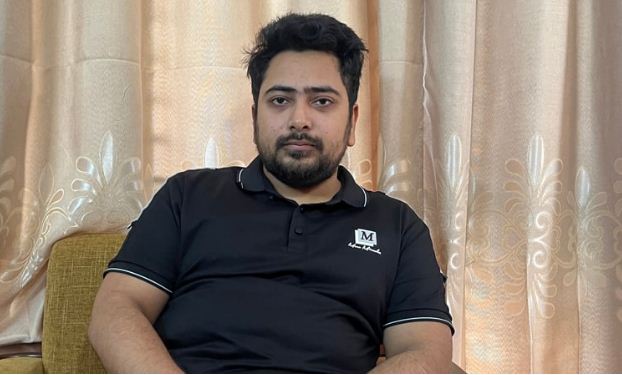
Key student leader Nahid Islam, coordinator of the Anti-Discrimination Student Movement, has said that unwavering determination in the face of fear and state-sponsored brutality led to victory during Bangladesh’s historic July uprising.
Recalling the chaos and repression during those fateful days, Nahid said, “In the final days of the Awami League regime, we were overwhelmed by fear and uncertainty. But we stayed united and resolute in our movement. That’s what brought us victory.”
A sociology student at Dhaka University, Nahid was abducted, tortured, and subjected to physical and mental abuse during the 36-day nationwide movement that culminated in the fall of Sheikh Hasina’s nearly 16-year rule.
What began as protests demanding the reinstatement of the 2018 government job quota reform soon evolved into a mass uprising. Sparked by a court verdict on June 5, 2024, which reintroduced a previously abolished quota system, students from across the country joined in demonstrations, angered by what they saw as a betrayal by the government.
“In 2018, students wanted reform, not a total repeal of quotas. But the government scrapped all quotas without consultation,” Nahid said in an exclusive interview with BSS. “Then in 2024, after a one-sided election, the same system was brought back through a court ruling. The sense of betrayal was deep.”
According to Nahid, the movement officially launched on July 1, after the government ignored the students’ June 30 ultimatum. Protests erupted in universities nationwide—Jahangirnagar, Chattogram, Rajshahi, Rangpur, Barisal—and were coordinated via online meetings and social media.
From July 1 to 4, students demonstrated continuously. The situation escalated after July 5, when the ‘Bangla Blockade’ was announced. On July 14, the movement delivered a memorandum to the President, hoping for government intervention. But Prime Minister Sheikh Hasina, just back from a China trip, dismissed the movement at a press conference, labeling it “Rajakar-driven.”
“Her remarks shocked us,” said Nahid. “It insulted the dignity of a just and rational student movement. The backlash was immediate. Students flooded the streets that very night.”
By July 15, brutal state repression had intensified. “We were mentally prepared for some violence, but not the scale we witnessed—especially the attacks on female students at Dhaka University. Even injured protesters at Dhaka Medical were attacked again,” Nahid said, visibly shaken as he recounted the events.
On July 16, student Abu Sayeed was killed, marking a pivotal turning point. “I announced his death at Shaheed Minar. He stood his ground in the face of bullets. His sacrifice transformed our cause—it was no longer about quotas. It became a movement to topple the regime.”
Despite widespread arrests, violence, and a government-ordered shutdown of educational institutions, the students pressed on. On July 17, confusion and uncoordinated planning affected their program due to Ashura observance. The authorities seized the opportunity to launch a full crackdown.
“When we began the symbolic coffin march, police and security forces fired tear gas and sound grenades. We retreated to the halls. By evening, a 24-hour curfew was declared. That night, I was abducted again,” said Nahid.
He described being taken from a friend’s house around 2:30 a.m. on July 19 by plainclothes officials. Blindfolded and handcuffed, he was taken to an undisclosed location and subjected to further abuse. He was released at Purbachal on July 21 but later re-detained and held in DB custody for six days.
“They pressured us to end the movement. When we resisted, they threatened our families and even brought a female comrade into custody. Finally, under intense pressure, we were forced to record a video statement saying the movement was over,” he said.
However, the statement failed to suppress the protests. “The people outside didn’t believe it. They took to the streets even more fiercely. We were in a do-or-die moment—either we would win or perish trying,” he said.
On August 4, as the situation intensified, Nahid and his group even hinted at taking up arms. “We had announced a long march for July 6 but later moved it up to July 5, anticipating the regime’s attempts to block us. We coordinated plans to lay siege to Ganabhaban and began thinking about an interim government in case of regime change.”
Talks reportedly took place with civil society figures like Dr. Muhammad Yunus about post-government transition. Nahid said they began planning for a caretaker setup from July 3 onward, convinced that the regime’s collapse was imminent.
On August 5, the decisive moment arrived. “The night before was terrifying—internet shutdowns, widespread attacks. But when we marched from Shahbagh and heard people from Uttara were joining, we got news that Sheikh Hasina had fled.”
“By midday, we weren’t sure whether we would survive the day. Rumors spread that Hasina had left the country in the morning. Though unverified, we believed a final crackdown was coming. But we stood firm—ready to resist at any cost,” Nahid concluded.