Humanitarian actors demand localisation of aid in Bangladesh

News Desk :
Humanitarian actors at an international seminar on Tuesday urged effective implementation of the Grand Bargain commitments in Bangladesh, emphasisinglocalisation of aid, quality funding to local and national actors, and accountability to affected populations.
The Grand Bargain, adopted at the World Humanitarian Summit in Istanbul in May 2016 and signed by around 70 parties including donor countries, UN agencies and INGOs, seeks to advance humanitarian action globally, reports UNB.
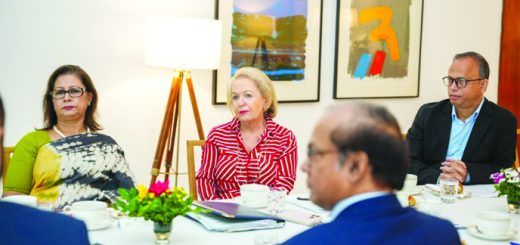
The international seminar titled “Accelerating Grand Bargain 3.0 for Advancing Humanitarian Action in Bangladesh” was held at a city hotel in Gulshan on Tuesday questioned the practice of some INGO branches registering locally and presenting themselves as local NGOs, saying it undermines the spirit of the localization agenda.
The event was jointly organized by COAST Foundation, BDCSO Process and Cox’s Bazar CSO-NGO Forum, and was moderated by Rezaul Karim Chowdhury, Executive Director of COAST Foundation. The keynote presentation was delivered by Md. Iqbal Uddin of COAST Foundation, according to a press release.
Distinguished speakers included Matilda Svensson, First Secretary at the Embassy of Sweden in Bangladesh; ShaheenAnam from MJF; Bjorn Hofmann, Senior Advisor of the Grand Bargain Secretariat in Switzerland; GawharNayeemWahra from Disaster Forum; Sudhanshu S. Singh from Humanitarian Aid International, India; Abdul Awal from NRDS; Sharif Jamil from Waterkeepers; NuzhatJabin from Christian Aid; Jasim Uddin from ADAB; Nasir Uddin from IRB; Mehedi Hasan Shishir from IFRC; and Dulon Joseph Gomes from World Vi sion.
In his keynote, Md. Iqbal Uddin said progress under Grand Bargain 3.0, set to conclude in 2026, remains limited. He urged donors and aid organizations to fulfill their pledges by ensuring at least 25% direct funding to local actors, providing multi-year and flexible funding, and supporting local leadership with mutual accountability.
Matilda Svensson said Sweden and SIDA are already channeling 25% direct funding to local and national actors, while stressing the need for equitable partnerships and avoiding subcontracting. ShaheenAnam underlined that accountability and transparency apply equally to donors and implementing agencies, to ensure aid reaches the right beneficiaries.
Bjorn Hofmann informed that the Grand Bargain Secretariat has circulated its Think Piece globally, and progress on commitments will be reviewed at the Annual General Meeting in Geneva in October.
GawharNayeemWahra noted that localisation must include resources, not just funding. Sudhanshu S. Singh cited an ALNAP study showing only 6% of global humanitarian funding reaches local actors directly, calling for stronger support. Abdul Awal cautioned that aid cuts put local actors at risk, but stressed the need for preparedness and stronger donor negotiations.
Other speakers included Mainul Islam from NRC Bangladesh; Alauddin Al Noman from BRAC; Fadia Sultana from Muslim Aid; AHM Bazlur Rahman from BNNRC; NilimaAkther Chowdhury from AGRAJATRA; MiftaNaim Huda from CDIP; and humanitarian expert Abdul Halim, who shared insights on advancing aid localization in Bangladesh.