
BD facing moderate stagflation amid slow growth
Staff Reporter :
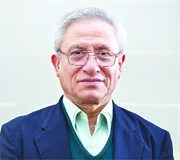
Bangladesh is currently experiencing a moderate stagflationary phase, with persistently high inflation coinciding with a slowdown in economic growth, according to Dr. Zahid Hussain, former lead economist at the World Bank’s Dhaka office.
Speaking at a roundtable titled “Is the economy trapped in a vicious cycle?” at BDBL Bhaban in Dhaka on Wednesday he noted that while GDP growth remains positive at 3.5percent–4percent, inflation continues in the high single digits, driven largely by exchange rate depreciation and rising food prices.
“By definition, stagflation occurs when growth falls below trend levels while inflation stays elevated. Bangladesh has exhibited these tendencies over the past three to four years,”
Dr. Hussain said, adding that political stability alone is not enough to ensure macroeconomic stability.
Under current institutional and investment conditions,
the country’s potential growth is estimated at 6percent–6.5percent, making the goal of sustained 8percent growth highly ambitious.
Without deep structural reforms, growth is likely to hover around 4percent–5percent, putting the target of a trillion-dollar economy at risk.
Fahmida Khatun, Executive Director of the Centre for Policy Dialogue (CPD), warned that Bangladesh could become trapped in a “low-level economic equilibrium” if persistent inflation, weak private investment, and widening inequality are not addressed.
Citing the Labour Force Survey 2024, she highlighted that total employment declined by 1.74 million, nearly 94percent of whom were women, undermining inclusive development and eroding purchasing power despite easing inflation.
Economist Jyoti Rahman emphasized that achieving the trillion-dollar economy target by 2035 would require sustained 8percent GDP growth over the next decade, while Planning Commission member Dr. Monzur Hossain urged prioritizing macroeconomic stability, quality investment, and productive employment over chasing numerical growth targets.
The roundtable, jointly organized by Voice for Reform and BRAIN, was also attended by Dhaka University professor Rashed Al Mahmud Titumir.