Jamaat promises 5 million jobs in next five years

Staff Reporter:
Bangladesh Jamaat-e-Islami on Tuesday unveiled what it described as a comprehensive policy framework for building a “new and prosperous Bangladesh,” placing democratic transition, economic stability and human dignity at the centre of its political vision ahead of the February 12 parliamentary elections.
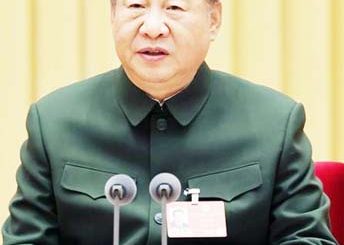
The roadmap was presented at the party’s Policy Summit 2026, held at a hotel in Dhaka, where Jamaat’s Ameer, Shafiqur Rahman, outlined a future strategy focused on employment generation, youth empowerment, women’s participation and long-term structural reforms.
If voted to power, Jamaat plans to create 5 million jobs for young people over the next five years, bring 10 million youths under various skills development and training programmes, develop 500,000 new entrepreneurs and support the emergence of 1.5 million freelancers, party’s policy makers said.
Addressing the summit, Shafiqur Rahman said the country is passing through a sensitive phase of democratic transition after years of authoritarian governance, arguing that the upcoming election is not merely a political contest but a defining moment for shaping a new system of governance for a country of more than 180 million people.
“The biggest challenge before us today is not survival, but stability,” he said.
He pointed to deepening anxieties among educated youths struggling to find jobs aligned with their qualifications, women facing persistent structural barriers, and millions of working people who, despite daily labour, remain only one crisis away from falling into poverty.
Calling for an “honest confrontation” with these realities, Shafiqur Rahman argued that economic growth alone cannot be the sole benchmark of success. “Economic achievement must mean a life where people can plan their future with confidence, support their families with dignity and participate meaningfully in society,” he said.
He also highlighted the contribution of expatriate workers, noting that remittances not only sustain families but also stabilise the national economy and integrate Bangladesh into the global labour market. Their role, he said, goes beyond money. “They bring skills, experience and global exposure, and many are eager to contribute more deeply to national development.”
Referring to Bangladeshi professionals working abroad — including academics, doctors, engineers and entrepreneurs — Shafiqur Rahman said many are leading institutions and universities worldwide and are willing to support institutional development, mentor young people and assist in reforms back home.
On economic policy, he stressed the need for a conceptual shift, saying employment should be treated not as a by-product of investment but as a national priority in itself. He also called for gradually bringing informal labour under formal institutional frameworks.
Bangladesh’s future, he said, would depend on strong partnerships — between the state and citizens, the public and private sectors, and between Bangladesh and the international community — grounded in engagement, cooperation and shared responsibility.Women’s participation and structural reforms
The Jamaat chief also placed special emphasis on women’s participation, describing it as both a question of justice and an economic necessity.
“No country can achieve sustainable prosperity while keeping half of its population outside full participation,” he said, stressing the need to dismantle structural barriers facing women.
Organisers said representatives from around 30 countries, including the United States, the United Kingdom, India and Pakistan, attended the summit.
The policy event comes as political parties intensify preparations for the February 12 election, widely seen as pivotal for Bangladesh’s post-authoritarian political trajectory.