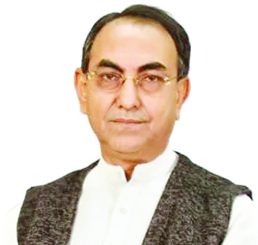
‘Some Are Still Waiting at the Door’: Tarique Rahman on the Unfinished Grief of Disappearances

Staff Reporter:
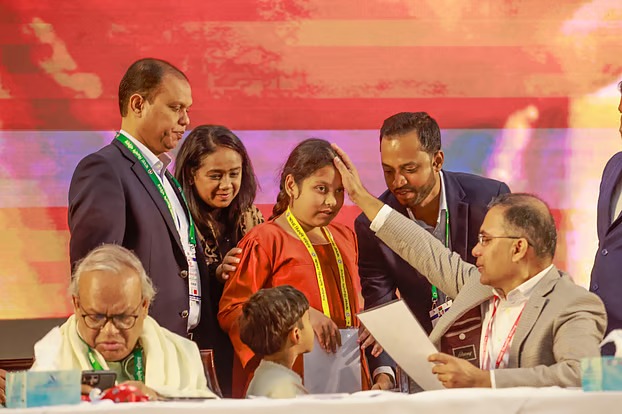
The hall fell into a heavy silence as Tarique Rahman spoke of doors that never open and phone calls that never come.
“Many children are still waiting, believing that one day their disappeared father will return and knock at the door,” the BNP chairperson said. “Many mothers are still hoping that their lost child will once again call them ‘Maa’. This waiting is a great burden on the state.”
Delivered with visible emotion, his words set the tone for a gathering shaped by grief, memory and unresolved loss. On Saturday afternoon at the Bangladesh–China Friendship Conference Centre in Dhaka, families of victims of enforced disappearances, killings and alleged state violence came together under the banners of two organisations, Maayer Dak and Amra BNP Poribar. Many in the audience carried photographs of missing sons, husbands and brothers. Some had been waiting for years; others for more than a decade.
Addressing the meeting as chief guest, Tarique Rahman said the suffering of these families was so profound that language itself felt inadequate. “Their pain is such that it is difficult to find words even to offer consolation,” he said.
In the front rows sat mothers who still set aside food for sons who never returned, wives who have learned to raise children in the absence of both answers and closure, and children who know their fathers only through fading photographs.
Referring to years of alleged enforced disappearances and political repression, the BNP chairperson said thousands of party leaders and activists had been subjected to torture, many killed, and more than a thousand forcibly disappeared. “Today, some of the families of those disappeared people are present here,” he said. “And many families are still waiting.”
Despite limitations, he said, his party had continued efforts to trace the disappeared. He defended BNP’s political stance, saying its leaders and activists had not chosen secrecy or compromise in the face of injustice. “I firmly believe,” he said, “that a party whose leaders and workers can take such an uncompromising stand against wrongdoing cannot be suppressed through conspiracy or propaganda.”
Beyond recounting past suffering, Tarique Rahman framed the issue as a moral and democratic responsibility. He urged all who believe in democracy to remain vigilant, warning that attempts were being made to create controversy and obstruct the democratic path once again.
He also referred to what he described as the Election Commission’s recent controversial role, adding that BNP, as a responsible political party, was choosing patience despite its concerns.
Turning again to the families before him, he linked their pain to the broader history of sacrifice in the country. He said justice must encompass those martyred in the 1971 Liberation War, those killed in the 1990 anti-autocracy movement, the victims of disappearances and killings over the past 16 years, and those who lost their lives in the movements of 2024 and 5 August.
“To establish justice for every injustice,” he said, “Bangladesh must have a democratic government.”
He pledged that if such a government is formed, trials of enforced disappearances and state violence would be ensured. He also promised state initiatives so that the sacrifices of the martyred and the disappeared would be remembered from generation to generation. If BNP comes to power, he said, important roads and key state and private institutions would be named after martyrs and victims of enforced disappearance.
As the programme ended, many in the hall remained seated—some quietly wiping away tears, others clutching photographs to their chests. Outside, life in the capital moved on at its usual pace. Inside, however, time seemed suspended, held still by the same unanswered question that has followed these families for years: not only what happened, but whether the country will ever truly reckon with their waiting.