Rohingya Repatriation: Bangladesh seeks global action at UNHRC

Staff Reporter :
Bangladesh has called upon the international community to fulfill its collective responsibility in creating conducive conditions in Myanmar’s Rakhine State for the voluntary, safe, dignified, and sustainable return of Rohingya refugees.
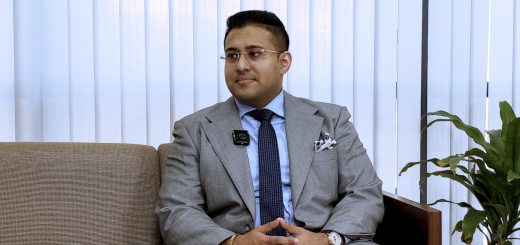
Speaking at the 59th Session of the UN Human Rights Council in Geneva, Ambassador Tareq Md Ariful Islam, Permanent Representative of Bangladesh, made the remarks during the adoption of an OIC-led resolution titled “The Situation of Human Rights of the Rohingya Muslims and Other Minorities in Myanmar.”
The resolution was adopted by consensus on Thursday afternoon, Foreign Ministry said.
“Bangladesh remains committed to working constructively with all partners to find a comprehensive and durable solution to the protracted Rohingya crisis through voluntary, safe, dignified and sustainable repatriation of the Rohingya to the Rakhine state,” he said.
Reminding the international community for their collective onus, he said, “And it is the collective duty of the international community to ensure that the rights and dignity of the Rohingya are upheld and the conditions conducive for their return are expeditiously created in Rakhine.”
Ambassador Islam expressed deep concern over the ongoing violence and humanitarian crisis in Rakhine, blaming Myanmar’s military and armed groups like the Arakan Army for perpetuating violence and blocking humanitarian access.
“Since November 2023 alone, about 118,000 Rohingyas have fled to Bangladesh to escape killings, persecution, and conflict,” he informed the Council.
The resolution raises alarm over the shrinking international humanitarian support for Rohingya refugees and stresses the need for equitable burden- and responsibility-sharing among the global community.
It also calls for unhindered and adequate humanitarian assistance in Rakhine by the United Nations and all relevant humanitarian actors.
In addition, the resolution emphasises the urgency of ensuring accountability for atrocities committed in Rakhine and calls for inclusive governance structures with meaningful representation of Rohingya Muslims at all levels of decision-making.
Bangladesh highlighted the importance of concrete, time-bound results from the upcoming High-Level Conference on the Rohingya crisis, scheduled for September this year in New York.
The 59th session of the Human Rights Council, which began on June 16, will continue until July 9.
In August 2017, a significant influx of Rohingya refugees began arriving in Bangladesh, fleeing violence unleashed by the Myanmar Army in Rakhine State. This influx, which started on August 25th, saw an estimated 700,000 Rohingya men, women, and children seeking refuge in Bangladesh. By December 2017, the total number of Rohingya refugees in Bangladesh was estimated to be around 1.2 million, including those who had arrived in previous years.
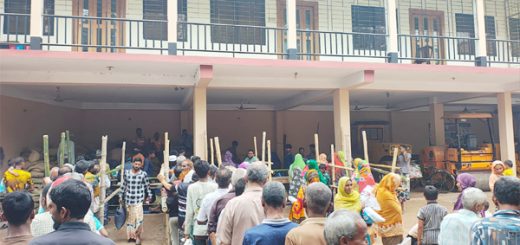
The over these years, the situation in the Rohingya camps are deteriorating and the humanitarian assistance has been depleting every year. The government of Bangladesh has been urging the international community to ensure the assistance so that these people get sufficient support both food and health.
On the other hand, the high concentration of the Rohingyas in different camps both in Cox’s Bazar and in Bhasan char has reportedly been the den of crime activities and arms and drug trafficking.
The crime statistics in the camps as found by the law enforcers are bleak and it has been difficult for the security forces to control such illegal activities due to manpower shortfall and inaccessibility.
On the other hand, the repatriation of these displaced people does not seem to be done quickly as the conflicts of different groups are continuing inside Myanmar.
The government of Bangladesh has been urging the international community to support the repatriation efforts as the lingering of the crisis would destabilise this region.