
Youth Trained as ‘Air Action Leaders’ to Tackle Bangladesh’s Air Pollution Crisis
NN online report
Air pollution, which reduces Bangladesh’s average life expectancy by 5.5 years according to the University of Chicago’s Energy Policy Institute, is now being addressed through youth-led initiatives. To build youth capacity in air quality monitoring and scientific reporting, the Center for Atmospheric Pollution Studies (CAPS), along with the National Alliance on Cities for Children and Youth and Save the Children in Bangladesh, organized a two-day training workshop titled “Air Action Leaders: From Data to Impact”.
The program, held on August 28–29 at the Bangladesh Institute of Planners (BIP), brought together young participants for both theoretical and hands-on training sessions. Youth mobilization partners included Prochesta Foundation, Amrai Agami, and the Youth Foundation of Bangladesh.
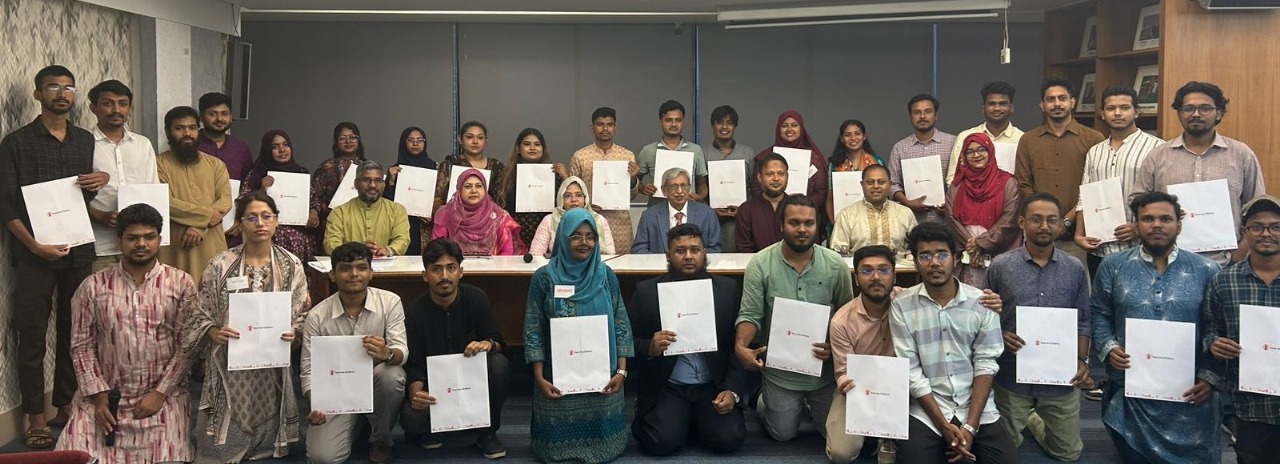
 The closing and certificate distribution ceremony was attended by prominent academics and experts, including Professor Dr. M. Feroze Ahmed, Emeritus Professor at Stamford University Bangladesh; Professor Dr. Abdus Salam of the University of Dhaka; Professor Dr. Adil Muhammad Khan, President of BIP; Associate Professor Dr. Mst. Mahmuda Parvin of Stamford University; and Nasrin Akter, Manager of Resilience & Climate Change at Save the Children Bangladesh.
Instructors from CAPS, Stamford University, Marine City Medical College, Oregon State University, and the Clean Air and Public Health Alliance provided training on air quality data collection, machine handling, GIS and remote sensing, data analysis, and scientific report writing.
Professor Dr. Feroze Ahmed warned that air pollution is causing grave harm to public health and the environment, but stressed that youth engagement can accelerate improvement. CAPS Chairman Dr. Ahmad Kamruzzaman Majumder emphasized that while air pollution is a leading contributor to climate change, it often receives less policy and training attention.
Professor Dr. Abdus Salam argued that technology and research alone cannot solve the problem, highlighting the importance of youth leadership in advocacy and awareness. BIP President Dr. Adil Muhammad Khan called for wider use of renewable energy, eco-friendly technologies, and awareness campaigns to ensure a greener future.
Other speakers echoed the urgency of the crisis. Associate Professor Dr. Mahmuda Parvin stressed the role of young people as future nation-builders, while Save the Children’s Nasrin Akter described youth as today’s “agents of change.” Dr. Ershadul Haque drew attention to health risks ranging from respiratory illness to cancer, while Syed Mahbubul Alam of CLPA underlined the importance of strict enforcement of environmental laws.
The training concluded with CAPS Lead Researcher Marziat Rahman urging young participants to combine technology, advocacy, and research in the fight against air pollution.