
Remembering Poet Kazi Nazrul Islam: Visionary thoughts of hope and harmony in today’s world
City Special :
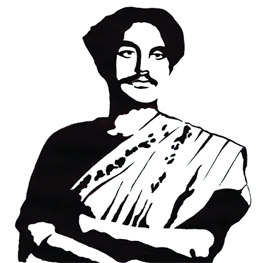
Marking the 49th death anniversary of Kazi Nazrul Islam, the National Poet of Bangladesh, whose profound and revolutionary works continue to resonate powerfully in contemporary society. Nazrul’s poetry and philosophy were far ahead of his time, embracing themes of equality, justice, freedom, and human dignity, which remain deeply relevant in the modern era.
Born in 1899, Nazrul emerged as a fiery voice during the early 20th century, advocating for the oppressed and challenging colonial rule through his compelling writings. His literary creations, rich with passion and defiance, sought to dismantle social evils like religious fundamentalism, discrimination, and exploitation. As the ‘Rebel Poet,’ Nazrul’s call for harmony among different communities, alongside his unswerving commitment to social justice, still inspires readers across generations.
In today’s globalised and technologically advanced world, Nazrul’s modernised vision takes on renewed significance. His unwavering advocacy for secularism and communal harmony is crucial in an age where divisive rhetoric threatens societal cohesion. Similarly, his vision for equality resonates strongly across ongoing struggles against discrimination, inequality, and injustice worldwide.
Kazi Nazrul Islam, the iconic rebel poet, left behind a compelling legacy whose core messages resonate more than ever in today’s complex world. His literary voice is characterised by an unyielding fight against oppression, a deep call for human dignity, and a profound belief in freedom ideas that are urgently relevant in our modern era marked by social, political, and cultural challenges.
From his poetry anthology “Agnibeena” (Fire Harp), emphasising human dignity and liberation:
“Ami sei din hobo shanto,
Jobe utpeeriter krondon-rol,
Akashe batashe dhwonibe na,
Otyacharir khorgo kripan
Bhim rone bhume ronibe na-
Bidrohi ron-klanto
Ami sei din hobo shanto.”
(“I will be at peace the day
When the cries of the oppressed
Will no longer echo in sky and air,
When the swords and spears of tyranny
Will no longer battle on the fearful battlefield-
The rebel, battle-weary,
I will be at peace that day.”)
This verse reflects his longing for an end to oppression and the dawn of true freedom, a modern humanist ideal.
Moreover, Nazrul’s celebration of humanity and freedom aligns with contemporary movements championing human rights and democratic values. His poetic insistence on courage, resilience, and empowerment encourages individuals to resist oppression and work towards a more inclusive society.
In Bangladesh, where Nazrul’s resource is woven into the cultural and national identity, honouring his contributions is vital not only as a tribute to a literary embodiment but also as a reminder of the ideals that underpin a just and progressive society. Educational institutions, cultural forums, and media play essential roles in keeping his spirit alive, encouraging new generations to engage with his works and interpret their significance in light of current realities.
As we observe the 49th anniversary of his passing, Kazi Nazrul Islam’s timeless thoughts remain a beacon of hope and a call to action. His visionary outlook invites us to reflect on our collective responsibilities, reaffirm our commitment to justice and unity, and strive for a world where freedom and dignity are guaranteed to all.
Indeed, Nazrul’s message transcends time and place, making him forever relevant in the evolving narrative of humanity. His legacy challenges us to dream boldly and act courageously for a better tomorrow.
In the rapidly changing landscapes of the 21st century, Nazrul’s poetry remains a source of strength and guidance. His words urge society to uphold freedom, fight inequality, and nurture harmony, principles that are essential to building a just and humane future. His message, carried through direct lines from his works, continues to awaken consciences and stir hearts worldwide.
Kazi Nazrul Islam’s literary legacy, rich with calls for rebellion, unity, and dignity, serves as a timeless compass pointing toward justice and humanity in the modern world.