
Educated but Unemployed: Urban Bangladesh faces new poverty trap
Farrukh Khosru :
Bangladesh is witnessing a troubling resurgence in poverty and inequality, with recent World Bank data warning that extreme poverty could rise to 9.3 percent in 2025, pushing an additional three million people below the poverty line. The sobering forecast comes amid political uncertainty, sluggish industrial growth, and mounting structural challenges following the interim government’s assumption of office.
According to the World Bank’s Poverty and Equity Brief, while overall poverty in Bangladesh had declined to 5 percent by the $2.15/day international threshold in 2022, current economic stagnation is expected to undo part of that progress. Inequality is also worsening: the Gini index for income inequality is projected to rise by one point, further complicating the country’s path toward achieving middle-income status by 2026.
The 2022 data revealed that rural poverty (36.5 per cent) remained significantly higher than urban poverty (15.9 per cent) when measured against the $3.65/day poverty line. However, due to rapid urbanization – where one in four Bangladeshis now live in cities – a growing share of the poor now resides in urban areas. Alarmingly, 32 percent of the non-poor urban population is currently vulnerable to falling into poverty, underscoring deepening fragility in urban livelihoods.
Youth unemployment and labor market mismatch are contributing to the crisis.
Despite improvements in educational attainment, particularly among women, job opportunities for young graduates – especially in urban areas – remain scarce. National unemployment stands at 3.4 percent, but urban youth tell a different story: 18 percent of young women are jobless, while unemployment among young men has risen from 11 to 13 percent.
Educated women have been hit particularly hard, facing both high unemployment and increasing inactivity rates due to a dearth of suitable employment. Most new urban jobs are low-paying service sector roles, offering little opportunity for career growth or stability.
Between 2010 and 2022, Bangladesh’s income Gini index rose from 50 to 53, reflecting widening inequality even as the consumption-based Gini remained stable. The benefits of economic growth have been unevenly distributed, with urban centers like Dhaka becoming increasingly competitive, favoring higher-skilled workers and leaving the rest behind.
Moreover, while the expansion of primary education has significantly reduced inequality in access to schooling, income disparities and consumption gaps persist. Better education is no longer a guaranteed pathway to better wages, as the labor market has failed to absorb the growing number of skilled graduates.
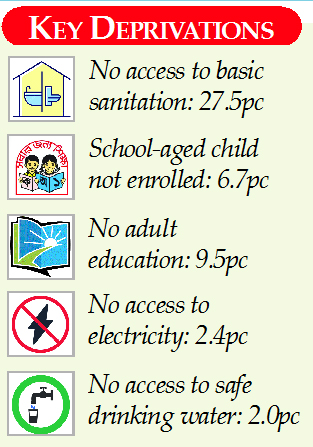
Beyond income-based poverty, Bangladesh continues to struggle with various dimensions of deprivation. In 2022, 6.6 percent of the population was classified as multidimensionally poor. About 9.5 percent of households had no adult who completed primary education, while 27.5 percent lacked access to basic sanitation.
Experts urge immediate policy interventions to address weak governance, lack of transparency, and urban vulnerabilities. The World Bank underscores the need to ensure inclusive urban employment, strengthen social safety nets, and enhance transparency in governance to prevent further socio-economic deterioration.
As Bangladesh looks ahead to achieving its 2026 middle-income goals, navigating the dual challenges of poverty resurgence and rising inequality will be critical.