
The Shrinking Horizon of Bangladesh’s Labour Markets
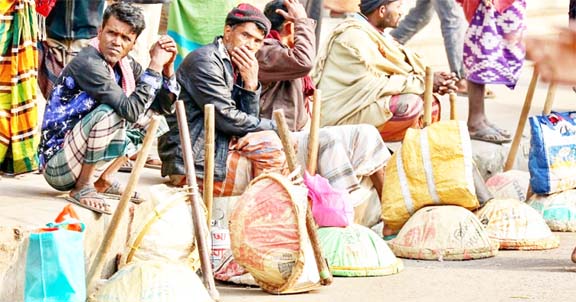
H. M. Nazmul Alam :
For decades, the story of Bangladesh’s economic resilience has been told through the remittances of its migrant workers. From the streets of Riyadh to the construction zones of Dubai and the plantations of Malaysia, Bangladeshi workers have quietly built a lifeline for the nation.
Their sweat has not only sustained millions of households but has also shielded the country’s economy in moments of global crisis. Yet today, that once reliable story of endurance and contribution seems to be unravelling, one market at a time.
Out of the four major labour markets—Saudi Arabia, the United Arab Emirates, Malaysia, and Oman—three remain closed to Bangladeshi workers. The only door that still stands open, Saudi Arabia, is now riddled with complications and barriers that make entry increasingly difficult.
Despite repeated diplomatic assurances and bureaucratic efforts, the government has failed to reopen a single closed market during its more than one year in power. The fallout is stark: the number of workers going abroad is shrinking, signalling deeper structural issues in the country’s foreign employment policy.
According to the Bureau of Manpower, Employment and Training (BMET), a total of 813,064 workers went abroad between January and September of this year.
On the surface, the number may appear substantial, but it represents a decline of 7.5 percent and 17.85 percent compared to the same period in 2022 and 2023, respectively. The contrast becomes more concerning when juxtaposed against the rising domestic unemployment and the mounting dependency on remittances for foreign currency reserves.
Even though this year’s figure is about 16.39 percent higher than that of the same period in 2024, the overall trend reveals a troubling contraction. The long-term direction of migration is downward, not upward, and the available routes are narrowing.
At the heart of this decline lies a tangle of policy stagnation, poor negotiation, and structural weaknesses in labour diplomacy. The interim government has inherited a complex situation—markets closed during the previous regime remain unopened, while new destinations have not been successfully explored.
The inability to reopen markets in Malaysia, the UAE, and Oman reflects not only diplomatic inertia but also a lack of strategic research and proactive engagement with host nations. Promises of market diversification, such as Japan or parts of Europe, have yet to move beyond the rhetoric of press conferences.
Saudi Arabia, which traditionally absorbs 50 to 60 percent of Bangladeshi migrant labour, continues to function as the last remaining pillar. From January to September this year, 550,597 workers went to Saudi Arabia, accounting for about 67.7 percent of the total outbound labour force.
However, even this dependence has turned precarious. The Saudi market now requires all workers to obtain a ‘Takamul’ proficiency certificate—an exam that costs about 6,100 taka per person. Initially intended for skilled professionals, the test has now become mandatory for all, including general labourers.
Beyond the financial burden, the procedural delay and bureaucratic hurdles have made the process exhausting. For thousands of workers with limited education and resources, this new requirement translates into exclusion, not empowerment.
What complicates matters further is the deteriorating condition of workers already in Saudi Arabia. Complaints regarding delayed iqamas, wage disputes, and job placement issues have become alarmingly common.
These problems are not isolated incidents; they are symptoms of a wider failure to protect migrant rights through effective bilateral mechanisms. The absence of adequate monitoring, legal support, and embassy-level intervention leaves workers vulnerable to exploitation.
Meanwhile, hopes for reviving the once-thriving markets of the UAE and Malaysia have faded into uncertainty. Both countries halted worker recruitment citing corruption, irregularities, and unethical practices within recruitment channels. More than a year after the political transition in Dhaka, no breakthrough has been achieved.
Despite several rounds of talks, no official confirmation or timeline has been announced for reopening these vital markets. The situation is equally grim in Oman and other smaller Gulf destinations. The cumulative effect of these closures is devastating for a nation that relies so heavily on migrant remittances to balance its trade deficit.
The implications reach far beyond numbers. Each market that closes is not just a diplomatic failure; it is a socio-economic wound that cuts through the rural economy. Migration is not merely an act of employment—it is a survival strategy for millions of low-income families.
The ripple effects of fewer departures are already visible. Recruiting agencies are reporting declining business, training centres are losing relevance, and thousands of aspiring migrants are trapped in debt after selling land or taking loans in preparation for foreign employment that never materialized.
The government’s Japan initiative was once seen as a potential game changer. With an estimated demand for more than half a million workers in Japan, the Ministry of Expatriates’ Welfare created a specialized “Japan Cell” and expanded skill testing from three to five categories. Yet the results remain negligible. BMET records show that only 962 workers have gone to Japan in the past nine months.
Sixty-two licensed recruiting agencies failed to send even a single worker during the first half of the year. The gap between ambition and implementation exposes the same bureaucratic inertia that has plagued other initiatives.
Even the case of the 17,000 Bangladeshi workers stranded after Malaysia’s recruitment suspension reflects the sector’s paralysis. Although about 8,000 were selected for eventual deployment under government-to-government arrangements, the process remains uncertain due to the absence of demand letters from employers.
With only weeks left before the year-end deadline, health checks, training, and flight arrangements appear unlikely to be completed in time. These repeated delays erode trust not only among workers but also among host nations who expect reliability and compliance from the sending country.
The crisis in the labour migration sector cannot be viewed in isolation. It is intertwined with broader questions about governance, research, and institutional integrity. Bangladesh’s manpower export policy has historically depended on reactive measures rather than long-term strategies.
Market expansion has rarely been based on labour market studies or skill-demand forecasts. Diplomatic missions often lack the human and technical capacity to engage effectively with host governments or employers’ federations.
The absence of a dedicated research unit within the Ministry of Expatriates’ Welfare leaves the country navigating blind in an increasingly competitive global labour market.
The shrinking labour market also poses macroeconomic risks. Remittances are the country’s second-largest source of foreign exchange, contributing over USD 21 billion annually in recent years. A sustained decline in migrant deployment will inevitably affect inflow volumes.
This comes at a time when export earnings face volatility, foreign investment remains tepid, and import costs continue to rise. Any significant drop in remittance growth would strain reserves, weaken the taka, and add pressure to already fragile fiscal management.
To reverse this decline, Bangladesh must adopt a two-pronged approach: immediate diplomatic engagement and long-term institutional reform. Reopening old markets requires more than negotiations—it demands rebuilding trust through transparency and efficiency in recruitment.
The creation of specialized task forces to engage with key host nations such as Malaysia and the UAE is essential. Simultaneously, diversification into new regions like Eastern Europe, East Asia, and Africa should be guided by research, not speculation.
Equipping workers with recognized certifications, language skills, and legal awareness would enhance competitiveness. Unless decisive action is taken to reopen markets, rebuild credibility, and reform recruitment systems, the country risks losing one of its most vital economic pillars.
(The writer is an Academic, Journalist, and Political Analyst based in Dhaka, Bangladesh. Currently he is teaching at IUBAT. He can be reached at [email protected])