
The People’s Agenda: Peace, Prosperity and Democratic Rights in Bangladesh
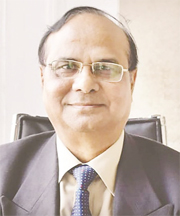
Prof. Dr. Zahurul Alam :
The vast majority of Bangladeshis aspire to live in a society defined by peace, shared prosperity, democratic values and basic human rights. They do not seek chaotic upheaval, extremist change or political instability. Recent years, however, have seen economic stagnation, deteriorating freedoms and democratic backsliding which threaten that vision.
Let us try to examine the evidence on public sentiment, on governance indicators, on economic trends, and maintain that for Bangladesh to deliver on the people’s agenda, a renewed commitment to inclusive governance, credible democratic process and economic equity is essential. Key suggestions would include strengthening institutional checks, reforming public service delivery, safeguarding civic space and enabling meaningful participation across society.
A 2023 survey by Open Society Foundations found that 91 % of Bangladeshis believe living under democratic governance is important. Yet, a substantial gap exists between this aspiration and reality: although citizens overwhelmingly value democracy, institutional performance and outcomes lag far behind.
In the 2024 report published by the Atlantic Council, Bangladesh ranked 141st out of 164 countries on its Freedom Index and 99th on its Prosperity Index (the “Freedom and Prosperity” report). These rankings place Bangladesh firmly within the “mostly unfree” category, even while it continues to achieve moderate economic progress. The implication is unambiguous: citizens endorse democratic governance, but governance institutions and socio-political systems are failing to deliver its core benefits: voice, accountability, rights, inclusion at scale.
At the same time the economic foundations of the country are cracking. Bangladesh’s transformation from a low-income country towards a lower-middle-income status remains impressive on paper. But cracks are now widening. Growth has decelerated in recent years, and job creation is faltering against rising domestic pressures.
A dramatic example lies in climate-induced productivity loss. According to a 2025 World Bank report, Bangladesh suffered economic losses of US $1.78 billion, which is around 0.4 % of GDP in 2024 due to heat-related illness. In terms of lost workdays, some 250 million days were lost. Since 1980, maximum temperatures have increased by around 1.1 °C, and the “feels like” temperature has surged by around 4.5 °C.
These figures highlight structural vulnerabilities: when a substantial portion of human capital is undermined by climate stress, the economy’s resilience and development momentum become fragile. The link between governance and development emerges clearly: good policy execution, institutional capacity, and adaptive governance matter as much as growth targets.
The paradox is that while democratic values enjoy broad public support, the operational reality suggests weak democratic mechanisms and under-performing institutions. For Bangladesh to reconcile this disjunction, the “demand side” i.e. public aspiration, must be matched by the “supply side”: governance, institutions, and rights. Measured citizen expectations can become a political force, but only if institutions extend voice, enforce accountability and deliver services reliably.
In short, Bangladesh stands at an inflection point: realizing the people’s desire for democracy and inclusive development will require a reinvigorated governance agenda that links citizens’ aspirations to institutional outcomes, while structural economic risks, from climate shocks to job stagnation, underscore the urgency. Without bridging that gap, popular support for democratic governance risks becoming disenchanted, and stability could be undermined.
To meet the public’s expectations, Bangladesh must urgently rebuild trust in its electoral, judicial and media institutions. This starts with free, fair and competitive elections, which remain the foundational mechanism through which citizens express political will. That means comprehensive institutional reform of the Bangladesh Election Commission (BEC) to guarantee its independence from executive interference and partisan control. Equally essential is the restoration of an impartial judiciary: one not beholden to political executives and equipped to enforce constitutional rights. Finally, an autonomous media regulator must be empowered to shield journalists from state or dominant-party capture and guarantee the freedom of inquiry.
On the other hand, despite considerable success in narrowing gender and social gaps, the journey is far from over. The World Economic Forum’s Global Gender Gap reports place Bangladesh’s ranking typically in the mid20s globally. Yet this masks the deep structural barriers that women, youth, and rural communities continue to face: limited access to finance, persistent wage gaps and constrained political representation. Perhaps allocating resources not merely equally but justly is the dimension most neglected in current policy. Without targeted support for historically disadvantaged groups, growth risks being unequal, and thus unstable.
Policies must shift from growth alone to employment quality, with particular focus on youth and household resilience. According to the International Labor Organization (ILO) data for 2025, youth unemployment in Bangladesh stands at 16.8 percent, while 30.9 percent of youth (aged 15-29) are not in employment, education or training. These are not simply labor statistics, rather these reflect growing social malaise in a country where formal employment growth lags despite decades of 6–8 percent GDP growth. The World Bank warns that job creation, particularly for educated urban youth and women, is now the binding constraint on inclusive growth. Without improved labor absorption and a transition away from low-value employment, the economic dividend of “demographic advantage” threatens to become a destabilizing liability.
The four aspects mentioned above are inter-connected – without one, the others falter. The fatigue of a population that has seen decades of high growth but limited jobs, rising cost burdens, and shrinking democratic space is real. What is at stake is not simply the form of elections or the performance of parties, but the social contract: that governance delivers fairness, voice and opportunity. Unless Bangladesh realigns these fundamentals, credible electoral process, inclusion in governance, fairness in outcomes and transparency in institutions, progress will stall and legitimacy erode.
A key point: peace and stability in Bangladesh are not simply absence of violence. They are built on a social contract where justice, voice and inclusion matter. The Atlantic Council data emphasize that nations with stronger freedoms tend to perform better economically and socially. Conversely, marginalizing large segments of society, whether youth, women, minorities or rural dwellers, erodes cohesion, fuels grievance and ultimately destabilizes progress.
The people of Bangladesh do not crave upheaval or extremist change. They seek the familiar quintet: peace, prosperity, democratic values, rights and dignity. The evidence is clear: delivering that agenda hinges on more than growth: it requires credible democracy, inclusive governance, protection of rights and equitable development. Failure to heed the call risks not just stagnation but social instability and a regression on the hard-earned gains of entire generations. The moment calls for political determination and institutional renewal. Bangladesh’s next chapter can be one of shared progress, or a fading promise.
(The author is Dean, School of Business
Canadian University of Bangladesh.)