
Corruption & Politics: “The General in the Shadows: Looting a Nation in Uniform”
City Desk :
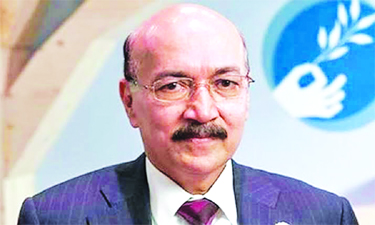
As the truth behind Bangladesh’s military procurement scandal emerges, Tarique Ahmed Siddique stands exposed as the architect of one of the country’s most brazen networks of state corruption.
During the Awami League’s prolonged and illegitimate rule spanning over 15 years and enabled by a voterless election, Bangladesh witnessed the rise of a full-fledged mafia regime. While Sheikh Hasina stood as the nominal head of this so-called constitutional government, the reality was starkly different. The administration survived not on democratic legitimacy, but on the muscle and machinery of an entrenched criminal network.
At the heart of this regime was a web of corruption, enforced disappearances, extrajudicial killings, suppression of dissent, and systematic money laundering. Although Sheikh Hasina was the public face of power, the invisible enforcer was her military adviser Tarique Ahmed Siddique, a close relative and the true kingpin of the state’s criminal architecture. As the brother of Sheikh Rehana’s husband, Siddique wielded unparalleled influence behind the scenes. Few acts of high-level corruption occurred without his direct involvement.
Despite holding the official title of Prime Minister’s Military Advisor, Siddique rarely appeared in the media. Like a mafia don operating from the shadows, he pulled strings silently dictating decisions across both military and civilian spheres.
The Military Procurement Scandal
Perhaps the most damning legacy of Siddique’s shadow rule lies in military procurement, where corruption ran rampant. Over the past 15 years, he allegedly siphoned off nearly Tk60,000 crore from defense purchases. No military acquisition proceeded without his approval. Suppliers were well aware that the first step in any deal was not technical compliance, but paying Siddique his 15-20per cent commission.
One tragic incident brought the issue to national attention. A training aircraft of the Bangladesh Air Force crashed into the campus of Milestone School and College in Uttara, killing several children and shocking the nation. Investigations revealed that the aircraft obsolete and deemed unsafe had been acquired under Siddique’s direction. Despite prior warnings from Air Force officials about the risks, their objections were suppressed. Officers who raised concerns were swiftly removed from their posts.
The aircraft, sourced from China, had been purchased at nearly three times their market value, yielding Siddique an estimated Tk1,000 crore in commissions from that deal alone. Similar aircraft had crashed before, costing the lives of several pilots. But this time, with civilian casualties, the systemic failures were laid bare for the public to see.
A Long History of Defense Corruption
Tarique Siddique’s involvement in defense-related corruption is not new. As early as 1996, he was accused of misappropriating funds in the controversial procurement of MiG-29 fighter jets and the frigate BNS Bangabandhu. A lawsuit was filed in 2001 for embezzlement involving thousands of crores. However, following the Awami League’s return to power in 2009, the case was quietly dismissed by courts loyal to the regime; never reaching trial.
From 2011 onwards, under Siddique’s directive, Bangladesh shifted its defense procurement almost entirely to China. Western defense firms, unwilling to pay bribes, were excluded through tailored tender specifications. Chinese companies, by contrast, complied readily with commission demands making them ideal partners in this corrupt ecosystem.
Because defense purchases are deemed matters of national security, such contracts are often kept confidential. Siddique exploited this secrecy, knowing that defense deals globally are shielded from public scrutiny. Over the last 15 years, nearly Tk1 lakh crore was spent on military modernization. If Siddique received even a 15per cent commission, his personal gain would exceed Tk15,000 crore.
Wider Corruption in Defense Infrastructure
The corruption extended beyond arms and ammunition. Major infrastructure projects inside cantonments became avenues for graft, with tenders rigged in favor of Siddique’s preferred contractors. Only firms aligned with his network were permitted to bid. Contractors often knew in advance who would win depending on signals from Siddique’s inner circle.
Military modernisation, while publicly celebrated, was in truth a front for massive embezzlement. Siddique’s control over procurement ensured that no deal passed without his consent reinforcing his status as a mafia godfather within the armed forces.
Civil Projects, Military Fronts, and Private Profits
Siddique also commercialized the army’s role in civilian projects. Under the guise of military-led efficiency, major roads, bridges, and government buildings were handed over to the armed forces only to be subcontracted to private firms chosen by him. These third-party contractors were often shell companies or firms offering large kickbacks.
This “direct purchase” model bypassed competitive tenders, eliminating transparency. While the military appeared to lead the projects, actual work was done by private firms selected for their loyalty to Siddique and their willingness to pay.
Through these military-fronted civilian projects, Siddique is estimated to have pocketed thousands of crores more in commissions. Combined with defense contracts, his total estimated illicit earnings over 15 years exceeds Tk60,000 crore, most of which has reportedly been laundered abroad.
What was publicly framed as a mission to modernize Bangladesh’s military and infrastructure was, in reality, a vast, coordinated scheme of state-sponsored corruption. The curtain covers Tarique Ahmed Siddique as unaccountable, unseen, and untouchable for over a decade.
The legacy of his actions is now visible not only in crashed aircraft and stolen public wealth, but also in the erosion of public trust in Bangladesh’s most vital institutions.