The economic impact of fertilisers on Bangladesh’s GDP
Dr. Nasim Ahmed :
The fertiliser industry plays a crucial role in supporting the agricultural sector, a significant component of Bangladesh’s economy. Fertilisers are essential for crop cultivation, and their availability and use directly influence agricultural output.
It is estimated that approximately 40 per cent of total food grain production in Bangladesh can be attributed to fertiliser use.
As of the fiscal year 2023-2024, agriculture contributed around 11.02 per cent to Bangladesh’s Gross Domestic Product (GDP).
This data underscores the vital role of the agricultural sector in the country’s economy, employing a substantial portion of the population. While specific data on the direct contribution of the fertiliser industry to GDP is limited, its impact is significant due to its essential role in enhancing agricultural productivity.
Bangladesh’s annual fertiliser demand averages about 6 million metric tons, with approximately 80 per cent of this demand met through imports.
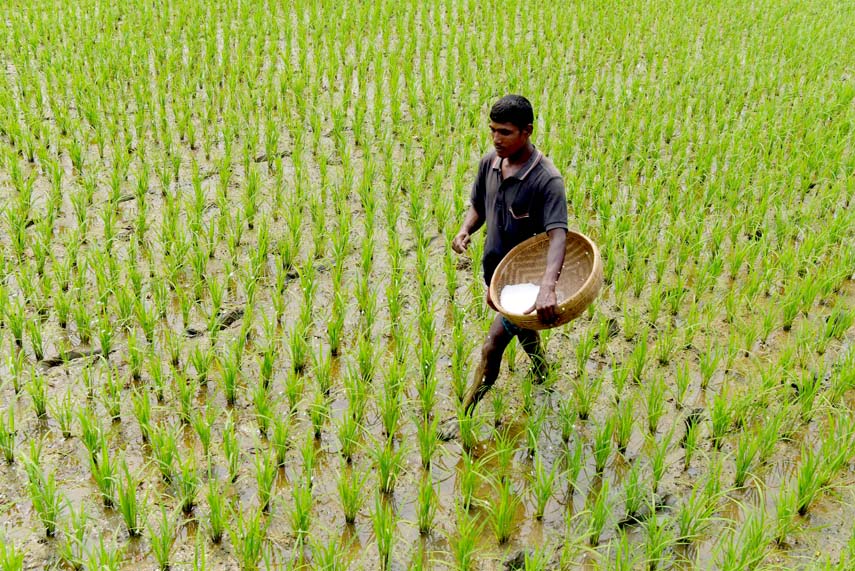
These fertilisers are necessary to support the country’s agricultural productivity, particularly for staple crops like rice. Demand is especially high during the Boro season (November to May), which accounts for about 70 per cent of the annual fertiliser usage.
Chemical fertilisers constitute approximately 80-90 per cent of total fertiliser use in Bangladesh, while organic fertilisers make up around 10-20 per cent, primarily focusing on small-scale or subsistence farming and environmentally conscious agricultural practices.
The primary chemical fertilisers used include Urea, Triple Super Phosphate (TSP), Muriate of Potash (MoP), and Diammonium Phosphate (DAP).
The high use of chemical fertilisers can be attributed to subsidised prices, which make them more affordable for farmers. Many farmers rely on fast-acting chemical fertilisers to meet the food security needs of a growing population, often unaware of the long-term benefits of organic alternatives. Intensive farming on limited land encourages farmers to adopt high-yield methods that depend on chemical fertilisers.
Fertilisers crises in Bangladesh are linked to seasonal demand peaks, disruptions in imports or production, natural disasters, financial constraints, distribution issues, and political instability. To address these crises, Bangladesh needs to diversify fertiliser sources, improve domestic production, and streamline import and distribution systems.
The fertiliser crisis in Bangladesh arises from a combination of domestic and international factors. The country heavily relies on fertilisers such as Urea, TSP, DAP, and Potash. Disruptions in global supply chains, caused by geopolitical conflicts (for instance, the Russia-Ukraine war), export restrictions by producing countries, or logistical challenges, can reduce availability.
Fluctuations in global prices of raw materials, such as natural gas (a key ingredient for urea production), can increase fertiliser costs. Insufficient gas supply due to high domestic demand and declining reserves reduces fertiliser production capacity. Frequent power shortages also impact local fertiliser production facilities.
Local dealers and middlemen sometimes hoard fertilisers, creating artificial shortages that drive up prices. Inefficiencies in transporting and distributing fertilisers to rural areas can result in delays and shortages during peak seasons.
Fertiliser subsidies are essential for making inputs affordable for farmers. However, limited government funds or delays in subsidy distribution can disrupt supply. Sudden changes in fertiliser pricing policies or import restrictions can destabilise the market.
To avert fertiliser crises during peak seasons, proactive measures involving policy, infrastructure, technology, and farmer support are necessary. Strategies to mitigate the fertiliser crisis may include:
1. Strengthening Policy and Regulation: Ensure that subsidies are well-targeted to prevent hoarding or black market activities. Establish a real-time monitoring system for fertiliser stocks at warehouses and retailers, and enforce penalties for hoarding and illegal trading.
2. Improving Fertiliser Supply Chain Management: Use accurate demand forecasting based on historical data, crop patterns, and weather forecasts to estimate fertiliser demand. Timely procurement of fertilisers is crucial to avoid delays during peak planting seasons.
3. Enhancing Distribution Networks: Strengthen the distribution network, particularly in rural areas, to ensure timely delivery of fertilisers to farmers. Building strategic reserves and maintaining buffer stocks can help meet emergencies and peak demand periods.
4. Accelerating Domestic Production Capacity: Upgrade existing fertiliser plants of the Bangladesh Chemical Industries Corporation (BCIC) to increase production capacity and efficiency. Promote the production of balanced fertilisers tailored to specific crop and soil needs.
5. Optimising Fertiliser Use: Encourage balanced fertilisation and train farmers to use the appropriate types and amounts of fertilisers based on soil and crop requirements. Expand soil testing programmes to identify nutrient deficiencies and recommend specific fertilisers.
6. Promoting Organic Alternatives: Encourage composting by providing training on compost production using crop residues, manure, and other organic waste. Subsidise organic fertilisers to make them competitive with chemical options, and promote the use of bio-fertilisers as environmentally friendly alternatives.
7. Collaborating with International Partners: Sign bilateral agreements with key fertiliser-exporting countries to ensure a stable supply and diversify import sources to reduce dependency on a few suppliers.
8. Investing in Research and Development: Focus on producing high-efficiency fertilisers, improving crop nutrient uptake, and exploring alternative methods of soil enrichment. Monitor climate and crop patterns to adapt fertiliser planning to shifting agricultural seasons caused by climate change.
Averting fertiliser crises in Bangladesh requires a comprehensive approach involving government agencies, private sector stakeholders, and farmers. By strengthening supply chains, optimising fertiliser use, and promoting alternatives, the country can ensure adequate fertiliser availability and support sustainable agricultural growth.
(The writer is currently working as Additional Secretary at the Ministry of Home Affairs, Dhaka).