
Telcos not required to sell local stakes
Staff Reporter :
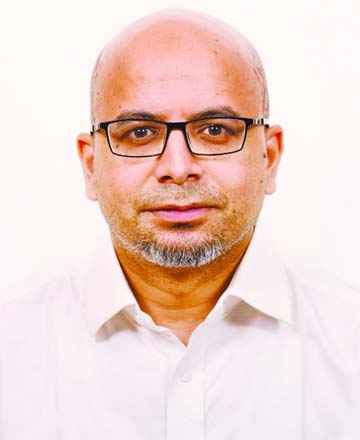
The government’s upcoming telecom licensing policy will not force mobile network operators to offload 15 percent of their ownership to local partners, clarified Faiz Ahmad Taiyeb, Special Assistant to the Chief Adviser overseeing Posts, Telecommunications and ICT.
Speaking at a roundtable titled “Telecom Network and Licensing Policy Reform”, hosted by the Telecom and Technology Reporters’ Network Bangladesh (TRNB) in Dhaka on Saturday, Taiyeb stated: “It’s not a statutory requirement. We are not compelling anyone to divest their ownership.”
His comments follow rising concerns among foreign investors over a clause in the draft Telecommunications Network and Licensing Reform Policy 2025, which mentions an 85 percent cap on foreign ownership for mobile network operators (MNOs).
Major international investors have urged the government to reconsider the provision, citing potential negative impacts on investment confidence.
Taiyeb also criticised the previous International Long Distance Telecommunication Services (ILDTS) policy, calling it “one of the worst examples of policy abuse in global telecom history.”
He revealed that 3,400 licences were issued under the policy, many of which were allegedly granted without need or strategic consideration.
The new telecom policy, he said, would remove several redundant licensing layers introduced under ILDTS. Existing licensees, however, will be allowed to continue operations until their current licences expire.
Industry stakeholders present at the event expressed mixed reactions to the policy draft.
Sumon Ahmed Sabir, Chief Technology Officer at Fiber@Home Ltd, called for stricter controls on foreign investment in critical telecom infrastructure.
“Infrastructure development should not be left entirely open, just as roads aren’t built without planning. Allowing the same foreign investor across all telecom layers could lead to complete ecosystem control,” he warned.
Taimur Rahman, Chief Corporate and Regulatory Affairs Officer at Banglalink, echoed concerns over capping foreign investment. “Bangladesh still requires foreign direct investment, but there must be a balance to maintain national interests,” he said.
TIM Nurul Kabir, Executive Director of the Foreign Investors’ Chamber of Commerce and Industry (FICCI), stressed the importance of strategic clarity. “A coherent roadmap for the telecom and ICT sectors over the next five years is vital for attracting and retaining foreign investors,” he noted.
Mahtab Uddin Ahmed, former CEO of Robi Axiata, welcomed several proposed features of the new policy, including provisions for active infrastructure sharing and incentives for network rollout and innovation. However, he criticised the absence of a clear framework on significant market power (SMP) regulation.
Aminul Hakim, President of the Internet Service Providers Association of Bangladesh (ISPAB), highlighted the imbalance between mobile operators and ISPs. “Mobile operators benefit from regulated price floors and ceilings, whereas ISPs have no such protections. They also face fixed transmission costs, unlike operators who can negotiate,” he pointed out.
Major General (Retd) Md Emdad ul Bari, Chairman of the Bangladesh Telecommunication Regulatory Commission (BTRC), admitted that the ILDTS policy was misused. “Licences for International Internet Gateway (IIG), Interconnection Exchange (ICX), and International Gateway (IGW) far exceeded market demand, and some firms held multiple overlapping licences,” he said.
He added that the revised policy aims to streamline regulation, enhance competition, and prevent monopolies in the telecom sector.
Also speaking at the event were Grameenphone CEO Yasir Azman and Banglalink CEO Johan Buse, both of whom offered industry perspectives on the future direction of Bangladesh’s telecom market.