
Tariff talks with US ‘very comprehensive’
Staff Reporter :
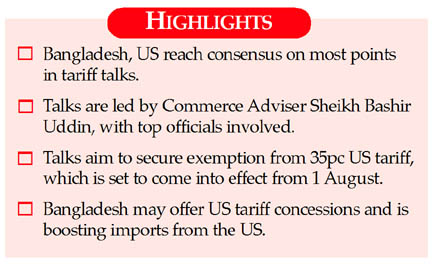
The first day of the second round of high-level tariff negotiations between Bangladesh and the United States was described as “very comprehensive” by the Chief Adviser’s Office, as both countries seek to resolve trade tensions sparked by Washington’s proposed steep tariff hike on Bangladeshi exports.
The three-day talks, which began on July 9 in Washington, DC, come amid mounting concerns in Dhaka over the US government’s decision to impose a 35 percent tariff on Bangladeshi goods effective August 1-a rate significantly higher than the 20 percent duty Bangladeshi officials had anticipated.
The originally proposed 37percent was slightly reduced, but the new figure still poses a potential blow to Bangladesh’s export-dependent economy, particularly its ready-made garment (RMG) sector, which accounts for over 80 percent of total exports.
In a statement issued today, the CA Office said the talks covered “almost all key aspects of the bilateral trade relationship,” although it did not provide further specifics.
Commerce Adviser Sk Bashir Uddin is leading the Bangladeshi delegation in Washington. National Security Adviser Khalilur Rahman and Faiz Ahmad Tayeb, the Chief Adviser’s Special Assistant on ICT and Telecommunications, joined the discussions virtually from Dhaka. Several senior officials from the Ministry of Commerce are also attending.
On the US side, representatives from key federal agencies-including those overseeing agriculture, energy, trade, and
intellectual property-took part in the first day’s sessions, reflecting the multifaceted nature of the negotiations.
Bangladesh is likely to push for exemptions or preferential terms under the Generalized System of Preferences (GSP), which had previously allowed duty-free access for some of its products before being suspended.
With Bangladesh graduating from LDC (Least Developed Country) status by 2026, the stakes are even higher for securing favorable long-term trade arrangements.
The talks are set to resume at 9:00 PM Bangladesh time on Thursday, with the final round of discussions scheduled for Friday. Both sides are expected to delve deeper into tariff structures, rules of origin, and possible dispute resolution mechanisms.
Trade analysts suggest the outcome of this round will be crucial for Bangladesh’s export competitiveness in the US market, which remains its single largest export destination outside the EU.