
Strengthening Bangladesh’s Healthcare Service Delivery System: Challenges and Pathways Forward
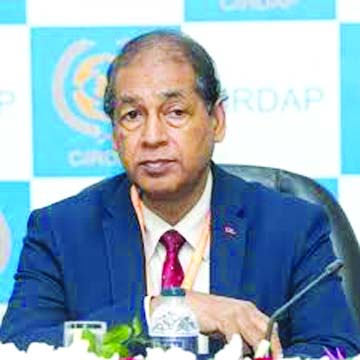
Professor Dr M Muzaherul Huq :
Bangladesh has established a well-structured healthcare service delivery system that extends from its villages to the capital, Dhaka.
Over the decades, successive governments have made significant efforts to expand access to healthcare, particularly at the grassroots level, through a tiered network of facilities. This system, in theory, ensures that every citizen can receive basic preventive, primary, and secondary health services within a reasonable distance from their home.
At the foundation of this structure are Community Clinics (CCs) – one in nearly every ward, each serving around 6,000 people. Above them are Union Health and Family Welfare Centers (UHFWCs) and Union Sub-Centers, followed by Upazila Health Complexes (UHCs) at the sub-district level, District Hospitals, and Tertiary Hospitals in divisional and metropolitan areas. Together, they form a well-conceived service delivery pyramid.
However, the practical functionality of this system remains a major concern. Despite impressive infrastructural expansion, a wide range of operational, managerial, and resource-related constraints have hindered the system’s ability to provide consistent, quality healthcare – especially for rural and disadvantaged populations.
1. Community Clinics: The First Contact Point with Persistent Limitations Community Clinics were introduced to bring healthcare to people’s doorsteps.
They were designed to provide essential preventive, promotive, and primary curative services, including maternal and child health, immunization, family planning, and health education. However, field realities often diverge sharply from this vision.
Many community clinics are only partially functional, limited to dispensing a small supply of basic medicines. In numerous cases, the clinics operate irregularly or remain closed due to absenteeism of staff, inadequate supervision, or a lack of community ownership.
Furthermore, health assistants and community healthcare providers often lack adequate training and equipment to deal with even simple emergencies or acute medical conditions such as asthma attacks, dehydration, or injury management.
This lack of functionality and reliability has led to a decline in public confidence in community clinics.
As a result, rural people frequently bypass these facilities, opting instead to seek care from unqualified local practitioners, informal drug sellers, or private clinics – even for minor ailments that could easily be treated at the community level.
To make community clinics truly functional, experts emphasise a comprehensive capacity-building initiative:
Regular training for staff in primary care, emergency response, and health promotion.
Ensuring uninterrupted supplies of essential medicines and basic diagnostic kits.
Strengthening supervision and accountability through digital attendance and community monitoring.
Promoting health education to increase local trust and engagement with the clinics.
If adequately supported, community clinics could serve as the first line of defense against preventable diseases and significantly reduce the burden on higher-level facilities.
2. Union Health Centres: The Undervalued Middle Tier
At the next level are the Union Health and Family Welfare Centers (UHFWCs), and in some cases, Union Sub-Centres. These facilities are meant to offer both outpatient and limited inpatient services, including maternal and child health, immunization, minor illness management, and normal delivery services.
However, many UHFWCs face severe manpower shortages, inadequate infrastructure, and logistical constraints. Essential medical equipment is frequently non-functional, and there are chronic shortages of life-saving medicines, laboratory supplies, and even utilities such as clean water and electricity.
Moreover, service mandates are often unclear, leading to overlapping responsibilities between the Ministry of Health and Family Welfare’s two directorates – the Directorate General of Health Services (DGHS) and the Directorate General of Family Planning (DGFP). This bureaucratic overlap results in inefficiencies, conflicting reporting chains, and poor coordination in delivering integrated services.
Experts suggest that making union-level facilities fully functional requires: Clear service mandates for each union facility, integrating health and family planning services under a unified management system.
Adequate staffing, with trained medical officers, nurses, and midwives assigned specifically for 24-hour operations.
Basic emergency obstetric and neonatal care (EmONC) facilities to encourage institutional deliveries and maternal health follow-ups.
Introduction of injury management and minor surgical services, which can effectively reduce unnecessary referrals to higher centers.
Community engagement and oversight committees to ensure transparency, cleanliness, and responsiveness.
If properly strengthened, these centers could become vibrant hubs of rural healthcare delivery, providing the majority of care needs within the community and reducing pressure on Upazila hospitals.
3. Upazila Health Complexes: The Backbone with Crippling Gaps The Upazila Health Complex (UHC) represents the backbone of the public health delivery system in rural Bangladesh. Ideally, each Upazila hospital should be equipped to provide secondary-level care, with departments in medicine, surgery, gynecology and obstetrics, pediatrics, and emergency services.
In practice, however, these hospitals face chronic shortages of doctors and specialists. Although doctors are officially posted, many remain absent due to poor monitoring, lack of incentives, or preference for urban postings. Consequently, rural patients are often deprived of proper diagnosis, treatment, and referral support.
Specialist services such as surgery, gynecology, and anesthesia are either irregular or completely unavailable in most Upazila hospitals. Even when specialists are posted, they often lack the equipment and supporting facilities needed to perform procedures safely.
Diagnostic services such as pathology, imaging, and laboratory testing are frequently non-functional or poorly maintained, forcing both doctors and patients to rely on private diagnostic centers.
To overcome these challenges, several strategic reforms are necessary: Enforcing doctor attendance through biometric systems and community monitoring, coupled with strong administrative accountability.
Introducing incentive-based retention programs – such as rural hardship allowances, career advancement opportunities, and housing facilities – to motivate doctors to stay in Upazila postings.
Ensuring availability of basic specialists (medicine, surgery, obstetrics, anesthesia) in all Upazilas through contractual or rotational arrangements.
Establishing a functional referral system where patients are referred upward for advanced care but returned to their Upazila hospital for follow-up, ensuring continuity of care.
Improving diagnostic capacity with regular supply chains, quality control, and partnerships with private labs under regulatory supervision.
Without such interventions, Upazila hospitals will continue to be underutilized, and the population will remain dependent on costly private services or district hospitals already overburdened with referrals.
4. District and Tertiary Hospitals: Overcrowded and Overstretched District and tertiary hospitals in Bangladesh face overwhelming patient loads, partly because of the inefficiencies at lower levels.
Every day, thousands of patients from villages and Upazilas flock to district and divisional hospitals seeking basic or specialist care that should ideally be available closer to home.
This uncontrolled patient flow leads to extreme overcrowding, long waiting times, and a decline in the quality of care. Infrastructure and manpower have not kept pace with population growth and service demand. Even basic services such as laboratory testing, radiology, and inpatient facilities are stretched to their limits.
Addressing this requires a two-pronged approach:
Decentralisation of healthcare services – by empowering Upazila and Union facilities with the resources, autonomy, and accountability to provide most routine services.
Referral management and digital patient tracking – establishing electronic health records and referral databases to ensure that patients receive follow-up care at their home-level facility after specialised treatment.
Additionally, regular maintenance and repair of equipment, which is often ignored, must be institutionalised within hospital management systems, backed by dedicated budget lines and technical staff.
5. Cross-Cutting Systemic Challenges
Beyond facility-level issues, Bangladesh’s healthcare system suffers from broader structural and systemic weaknesses:
Human Resource Management: Chronic shortages of trained health personnel, maldistribution between urban and rural areas, and weak accountability mechanisms undermine the system’s efficiency.
Supply Chain Management: Frequent stockouts of essential medicines, consumables, and lab reagents disrupt services, particularly in rural areas.
Infrastructure Maintenance: Many facilities suffer from poor maintenance, lack of water and sanitation facilities, and non-functional medical equipment.
Governance and Coordination: Fragmented responsibilities between directorates and lack of coordination among ministries weaken service delivery.
Financing and Equity: Public health spending remains low (below 1% of GDP), forcing households to bear over 70 per cent of health expenses out-of-pocket.
This disproportionately affects poor families and increases vulnerability to financial shocks.
Data and Monitoring: Weak health information systems and inadequate supervision limit evidence-based decision-making.
6. Policy Recommendations and Strategic Reforms
To revitalise Bangladesh’s healthcare system, a set of pragmatic reforms is essential across all tiers:
a. Strengthen Primary Healthcare: Fully operationalize community clinics with trained staff, functional equipment, and adequate drug supplies.
Introduce mobile health units and telemedicine services for hard-to-reach areas.
b. Revitalize Union Health Centers: Ensure 24-hour service with doctors on call and midwives available for deliveries.
Integrate family planning, nutrition, and immunization services under a single management framework.
c. Empower Upazila Health Complexes: Establish clear performance benchmarks and accountability mechanisms for absenteeism.
Incentivise rural postings with financial benefits, housing, and professional growth opportunities.
Upgrade diagnostic and surgical capacities, ensuring regular maintenance and quality control.
d. Improve Referral and Follow-Up Systems: Develop a digital referral database to link patients between Upazila and district hospitals.
Ensure that all referred patients return to their local facility for follow-up care.
e. Enhance Health Governance: Strengthen local health management committees to oversee transparency, service quality, and community engagement.
Reduce bureaucratic overlap by integrating DGHS and DGFP operations at field level.
f. Boost Financing and Investment: Increase government health expenditure to at least 2 per cent of GDP in the short term.
Introduce risk-pooling mechanisms such as community-based health insurance to reduce out-of-pocket burdens.
Prioritise infrastructure maintenance, logistics, and biomedical equipment management as integral parts of the health budget.
g. Capacity Development: Establish continuous professional development programmes for all healthcare cadres, including nurses and paramedics.
Promote task-shifting approaches to allow trained non-physician providers to manage common illnesses under supervision.
Conclusion: Bangladesh’s healthcare system, despite its extensive network and achievements in public health indicators, still faces deep-rooted challenges in accessibility, quality, and equity. The infrastructure exists – but its potential remains underutilised due to management inefficiencies, inadequate human resources, and fragile governance.
Revitalising the system requires more than incremental adjustments; it demands a comprehensive and integrated reform strategy centered on accountability, capacity-building, decentralisation, and community trust.
If community clinics, union centers, and Upazila hospitals are strengthened with proper manpower, training, and logistics – and if an effective referral mechanism links these levels seamlessly – Bangladesh can achieve a truly people-centered health system that serves every citizen, from the remotest village to the heart of Dhaka, with dignity and efficiency.