Speakers call for 3pc of GDP allocation in nat’l budget

Staff Reporter :
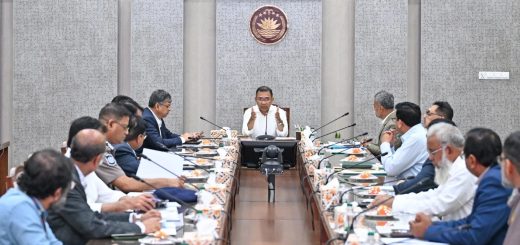
Climate experts, civil society representatives, and political leaders on Wednesday called on the government to allocate at least 3% of the national GDP to climate finance in the upcoming 2025–26 budget. The demand was made during a seminar held at the CIRDAP Auditorium in Dhaka, underscoring the urgent need to protect Bangladesh’s vulnerable coastal regions from the escalating impacts of climate change.
The seminar, titled “National Budget 2025–26: Climate Budget and Coastal Bangladesh,” was organized by EquityBD in collaboration with COAST Foundation, CPRD, CDP, Waterkeepers Bangladesh, Sundarban Protection Movement, BCJF, Udayan, DUS, and SDI.
Keynote presenter MA Hasan from the COAST Foundation highlighted the dire need for increased investments in climate adaptation, including the construction of durable embankments, afforestation, rehabilitation of climate-displaced populations, clean water and sanitation facilities, and climate-resilient agriculture and irrigation systems.
Chaired by disaster management expert Gawher Nayeem Wahra and moderated by COAST Foundation Executive Director Rezaul Karim Chowdhury, the event brought together a wide range of voices united in their call for stronger and more inclusive climate financing.
Wahra emphasized the importance of resolving transboundary river disputes and involving local communities in embankment management. “Children make up 45% of our population, yet they remain excluded from discussions on the national budget. We need transparency, accountability, and greater participation at every level,” he said.
Rezaul Karim Chowdhury reiterated the demand for allocating at least 3% of the GDP to climate adaptation and urged the government to prioritize durable infrastructure and integrated research to guide policy decisions.
AHM Hamidur Rahman Azad, Assistant Secretary General of Bangladesh Jamaat-e-Islami, criticized the neglect of coastal communities in national planning despite the rollout of numerous mega projects. He advocated for improved connectivity, skills training for climate-displaced individuals, and more resource-based budgeting with enhanced institutional capacity.
Umama Fatema, spokesperson for the Anti-Discrimination Movement, condemned environmentally harmful projects such as the Rampal and Matarbari coal plants and the unregulated expansion of shipbreaking yards near protected coastal forests. She stressed the importance of proper implementation and monitoring of the climate budget and emphasized river dredging to ensure water security.
Javed Rasin, Joint Convener of the National Citizen Party (NCP), pointed to the need for embankment protection coupled with coastal afforestation. He also highlighted the disproportionate health impacts of climate change on women in coastal areas, calling for gender-sensitive budgeting.
Speakers collectively warned that without robust climate investment and inclusive planning, Bangladesh’s coastal belt—home to nearly 40 million people—will remain perilously exposed to rising sea levels, frequent cyclones, and saline intrusion.