
Reversing Brain Drain
Md. Muzibur Rahman :
I was observing the presentation of Ashik Chowdhury who is the Executive Chairman of the Bangladesh Investment Development Authority (BIDA) and the Bangladesh Economic Zones Authority (BEZA) in the Bangladesh Invest Summit in Dhaka held on 07-04-2025. His excellent presentation about the investment situation & potentials of lucrative investment in Bangladesh drew the attention of all & called for some thinking about the educational intellectuals of Bangladesh who go abroad for their jobs leaving their motherland.
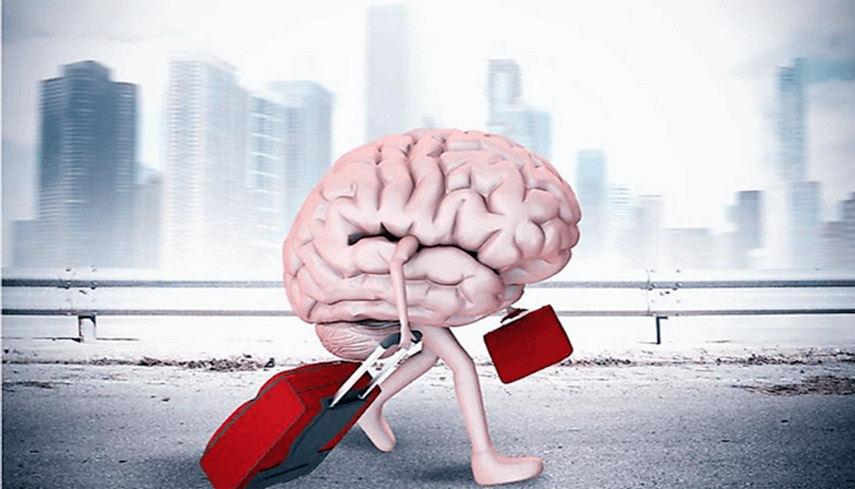
We know that the brain drain is the departure of educated or professional people from one country, economic sector, or field for another, usually for better pay or living conditions. In another sense it may be called that brain drain is the movement of skilled and educated individuals from their home country to other nations in search of better opportunities. This trend is most common among professionals like doctors, engineers, scientists, and IT experts, especially from developing countries to developed nations.
The effects of brain drain are multiple. It is felt not only in the area where the brain drain occurs but also where brain gain occurs-the place to which individuals move. It can often have a chain reaction. Areas affected by brain drain end up with a dearth of human capital. Professionals who go elsewhere end up leaving a large gap behind, one that isn’t always easy to fill. Consider medical professionals in developing nations who move to parts of the developed world for better opportunities. There may not be enough qualified people to replace them when they leave. This affects the overall quality of health care.
Another effect on areas that experience brain drain is the loss of revenue. Governments rely on income taxes to fund their social programs and infrastructure projects. A mass exodus leads to a drop in tax receipts that can stunt economic growth and development. Areas that see brain gain are also impacted. They can experience overcrowding, especially in major metropolitan areas where more opportunities are available. A lot of people in one area puts a strain on resources and this can lead to higher prices and taxes. If we think about Ashik Chowdhury who is now the Executive Chairman of the Bangladesh Investment Development Authority (BIDA) and the Bangladesh Economic Zones Authority (BEZA). He holds the rank of Senior Secretary and is the first private sector leader to head these key investment promotion agencies (IPAs) under the Chief Adviser’s Office.
Previously, Mr. Chowdhury was an investment banker at HSBC Singapore, specializing in infrastructure and sustainable finance. His expertise spans across advisory, investment strategy, M&A and strategic planning. He began his banking career at Standard Chartered and headed finance at American Airlines, covering Europe and Asia. He has also advised the Grameen Telecom Trust. Mr. Chowdhury has an MSc in Finance from the London Business School, where he was awarded an Alumni Scholarship. He got his BBA in Finance and Economics from the Institute of Business Administration at Dhaka University.
He has advised the Brunel Business School in London and taught business at Dhaka’s Bangladesh University of Professionals as a visiting professor. He is also a Chartered Financial Analyst (CFA). He is a certified skydiver and holds the Guinness World Record for the longest freefall with a flag. He is also a private pilot licensed in the UK. By a telephone call from our Chief Adviser Dr. Muhammad Yunus, he (Ashik Chowdhury) has come back toBangladesh to serve his own motherland. He is excellent in his career & we hope that he will be able to perform excellent tasks in his assigned responsibilities.
There are many educational talentslike Ashik Chowdhury who had gone from Bangladesh to abroad in search of good jobs & opportunities. But this brain drain is very loss for departing countries who could use their talents for their own development. We can take some measures to reduce brain drain or brain drain reverse for our own interests though there is not easy fix for brain drain reverse. Business & Government leaders can do some things to reduce or minimize it. These measures can be-1) to increase investments into certain areas of the economy, 2) offer competitive wages, 3) pave the way for legal and social reform, 4) improve the quality of resources such as housing and healthcare &5) provide affordable housing solutions etc.
Bangladesh now needs robust, vibrant & excellent professionals in public & private sectors to gear up economic & development activities. To make this happen, Bangladesh can return back its educational & professional talents (who have proven track record in their respective fields) from abroad as early as possible. China & India are good examples of their brain drain reverse. Driven by India’s strong tech ecosystem as well as the score of opportunities being created, more and more students, and IIT (The Indian Institutes of Technology) graduates in particular, are choosing to stay in the country.
China, similarly, has launched a multi-pronged strategy in the form of talent recruitment programs. By the Young Thousand Talents Plan, and the National Science Fund for Distinguished Young Scholars, it has been trying to attract Chinese scientists living overseas back with grant opportunities, distinguished titles, significant reimbursement, and housing benefits. Thus, not only are they trying to reverse the brain drain that has already taken place, but China is also attempting to benefit from the research skills these professionals picked up during their time as tenured faculty in renowned global institutions. Bangladesh can take such initiatives to attract native talents who has been working abroad to take the responsibilities of rapid economic development.
(The author writes on economic, development & rising issues. He can be reached at: E-mail: [email protected])