
Bangladesh Rising: Reimagining global business through the TRANSCEND-360 lens
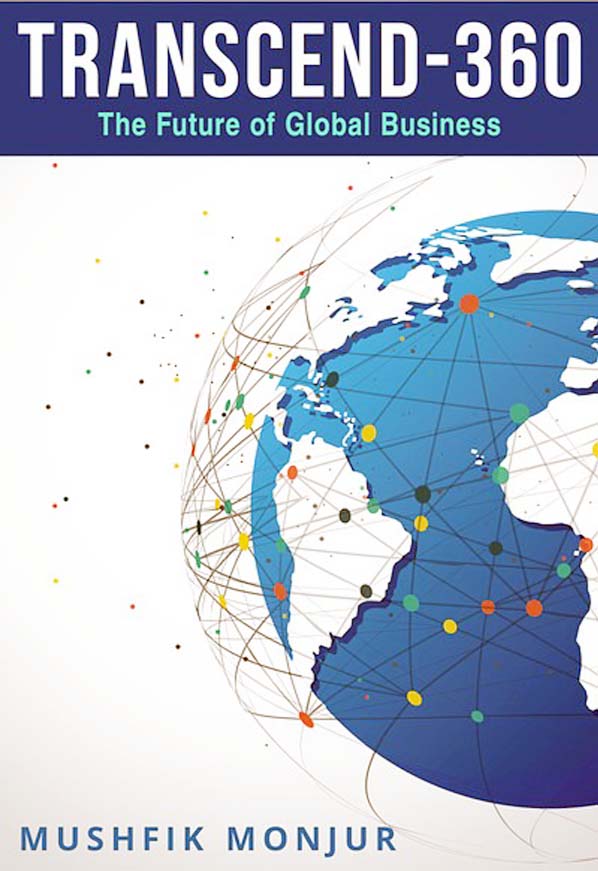
Mushfik Monjur :
Bangladesh stands at a historic crossroads. From once being labelled a bottomless basket to now being hailed as one of Asia’s fastest-growing economies, the transformation is undeniable. With robust export earnings, a youthful population, a thriving startup ecosystem, and a strategic geographic location, Bangladesh is on the brink of establishing itself as a formidable force in the global economy.
Yet, as we look beyond garments and remittances, a vital question emerges—How do we sustain this momentum and elevate Bangladesh’s global footprint in a rapidly evolving business landscape?
This is where the TRANSCEND-360 framework comes in.
A Blueprint for the Next Phase of Growth
Developed to address the complexities of 21st-century business, TRANSCEND-360 offers a nine-pillar strategy for global expansion. It empowers businesses to build adaptive, sustainable, and culturally intelligent organisations—key traits that Bangladesh must embrace as it transitions from an emerging market to a global economic contributor.
Let’s explore how this framework aligns with Bangladesh’s growth trajectory:
1. Technology Integration
Bangladesh’s digital transformation is accelerating, with mobile banking, e-commerce, and tech startups reshaping the economy. TRANSCEND-360 calls for deeper tech adoption—not just for convenience, but as a driver of innovation, automation, and global scalability.
2. Resilient Ecosystems
The pandemic exposed vulnerabilities in global supply chains. Bangladesh’s garment sector bounced back strongly, but resilience must now be institutionalised across sectors, from agriculture to healthcare to logistics.
3. Adaptive Cultural Dynamics
Our cultural richness is a strategic asset. TRANSCEND-360 encourages organisations to tailor their offerings with cultural intelligence, crucial for Bangladeshi businesses entering markets in the Middle East, Europe, or Southeast Asia.
4. Networked Collaboration
Bangladesh is already deepening regional ties—whether through the Belt and Road Initiative, BIMSTEC, or SAARC. TRANSCEND-360 promotes building ecosystems through cross-border partnerships, co-creation, and shared innovation.
5. Sustainable Innovation
As the world turns green, sustainability is no longer optional. TRANSCEND-360 embeds ESG into the core of business strategy. For Bangladesh, this means evolving from low-cost production to eco-smart leadership.
6. Customer-Centric Design
To move up the value chain, Bangladeshi brands must adopt global standards in user experience, design, and branding. Customer-centricity isn’t just about quality—it’s about relevance.
7. Empathy-Driven Engagement
Bangladesh’s social enterprise space is vibrant. TRANSCEND-360 turns empathy into a strategic advantage, aligning business growth with human impact—be it through fair wages, inclusive hiring, or health access.
8. Nimble Strategy Execution
Speed and agility will define the future. As consumer behaviour shifts overnight, Bangladeshi companies must move from rigid five-year plans to flexible, data-backed decision-making.
9. Data-Powered Insights
With digital infrastructure improving, it’s time we invest in real-time data analytics—fueling smarter export strategies, talent management, and market entry planning.
The Global Vision for Bangladesh
The TRANSCEND-360 model doesn’t just offer a global strategy—it offers a vision for how Bangladesh can lead.
Imagine a Bangladesh where our startups disrupt Silicon Valley norms, our garments are rebranded as ethical fashion icons, our agriculture feeds climate-resilient markets, and our tech talents power global innovation hubs.
This is not a dream—it is a strategic possibility, if we’re bold enough to redesign our approach with holistic frameworks like TRANSCEND-360.
Global success will not come from replicating yesterday’s playbooks. It will come from our ability to transcend borders, sectors, and paradigms.
Bangladesh is ready. The world is watching.
Let’s transcend—together.
(The writer is an International Sales Strategist, author of “TRANSCEND-360: The Future of Global Business Strategy.)