
Reforms remain slow, inconsistent
Staff Reporter :
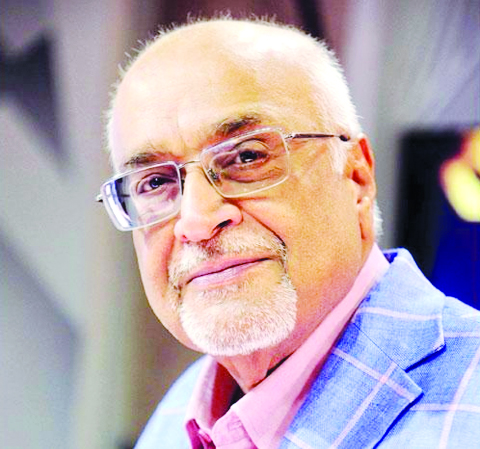
Reforms in Bangladesh remain slow, inconsistent, and frequently unfinished, said Dr Debapriya Bhattacharya, Distinguished Fellow at the Centre for Policy Dialogue (CPD), during a book launch event held in Dhaka on Friday.
Speaking at the unveiling of The Economy of Scandal, published by University Press Limited, Dr Bhattacharya noted that the country’s policy reform efforts lack coherence and continuity. “Some reforms are partial, others stall midway, and many never materialise,” he observed, adding that the demand for reform nonetheless persists.
Highlighting structural challenges, he said, “Although we often claim the country belongs to all its citizens, in reality, it is dominated by the powerful. A responsible state should prioritise those who lack voice, visibility, and influence.”
Dr Bhattacharya underscored the role of independent media in fostering democratic inclusion. “The media has a unique responsibility to amplify the voices of the marginalised and ensure they are treated as full citizens with rights and dignity,” he said.
He also drew attention to the expansion of social protection coverage, which now reaches approximately 40 percent of the population.
However, he cautioned against interpreting this as a comprehensive success. “Much of this growth took place under authoritarian rule as a means to secure political legitimacy.
Today, many earlier beneficiaries are being replaced, and around 56 percent of the vulnerable population remains excluded,” he stated.
Critiquing recent budget priorities, Dr Bhattacharya expressed concern over the reduction in targeted rural welfare schemes-such as family cards and direct cash transfers-in favour of broader market-based initiatives like Open Market Sales (OMS).
“The rural poor, who require support the most, have largely been overlooked,” he remarked.
In contrast, he commended the 2007-08 caretaker government for directing greater resources to marginalised groups and taking more proactive steps to address inequality.
He further noted the increasing politicisation of fiscal policy, pointing out that last year’s public expenditure trends appeared to disproportionately benefit the urban middle class-possibly as a strategy to influence public sentiment and curtail dissent.
Despite these shortcomings, Dr Bhattacharya acknowledged the development strides made by Bangladesh over the past five decades, crediting the contributions of those involved in direct production and economic activity.
He concluded with a cautionary note: “If journalism is weakened, civil society becomes fragile. A weakened civil society erodes the foundation of politics-and without political accountability, sustainable economic growth becomes unattainable.”