
Reflection of invincible and courageous Zia by life and works
Dr. Forqan Uddin Ahmed :
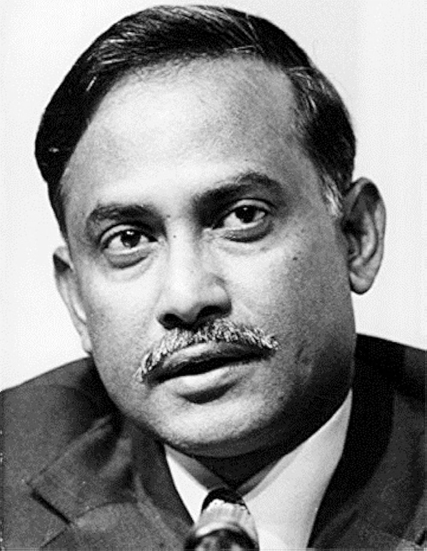
Ziaur Rahman is a great hero in the history of Bangladesh, immortalized in the hearts of the nation for his courage, leadership, and development initiatives. He was born on January 19, 1936, in a humble family in Gabtali, Bogura.
From childhood, his personality developed through discipline, perseverance and patriotism. After his education, he joined the Pakistan Army and quickly rose through the ranks due to his intelligence and bravery.
However, his true identity was established during the Liberation War of 1971 when he declared Bangladesh’s independence from the Kalurghat radio station.
His bold declaration inspired millions to join the war, and he himself participated as a front-line fighter. For his valor, he was awarded the title “Bir Uttam.” After the war, he devoted himself to the reconstruction of the country.
Following the assassination of Bangabandhu Sheikh Mujibur Rahman on August 15, 1975, the country fell into a deep political crisis. During this period, the military witnessed unrest, and through a series of power transitions, Ziaur Rahman eventually assumed the presidency.
In 1977, he was formally elected as the President. His leadership was not merely for holding onto power but played a significant role in the overall development and reconstruction of the country.
As President, Ziaur Rahman’s first major initiative was to democratize the political system. He abolished the one-party rule and restored multiparty democracy.
Through this, freedom of expression, press freedom, and transparency in the electoral process got a new life. His initiatives towards political stability opened a new chapter in the democratic journey of the country.
In 1978, he founded the “Bangladesh Nationalist Party” (BNP), through which he introduced a powerful political philosophy combining the history, culture, Islamic values, and modern nationalism of Bangladesh. Today, this party emerges one of the largest political forces in the country.
He also brought reforms to the military and security systems. To enhance professionalism and maintain discipline within the armed forces, he took strict measures.
At the same time, he focused on building a modern internal security force, the impacts of which are still visible today. During Ziaur Rahman’s tenure, law and order improved significantly, and people’s sense of security increased.
Ziaur Rahman’s contributions to agricultural development were highly significant. To tackle the food crisis, he launched the “Green Revolution.” He facilitated access to improved seeds, irrigation, fertilizers, and agricultural loans for farmers.
With the use of modern technology, agricultural productivity increased manifold. As a result, Bangladesh gradually moved towards self-sufficiency in food—a tremendous achievement. His agricultural policies brought about significant changes in rural life and initiated a reduction in poverty.
He also played a vital role in the development of the industrial and trade sectors. He adopted an export-oriented industrial policy that later laid the foundation for Bangladesh’s ready-made garment industry.
Today’s garments sector, which is a driving force of the country’s economy, is the result of the policies introduced during his time. He reduced government control and encouraged the private sector, allowing entrepreneurs to come forward in setting up industries.
This injected new momentum into the economy and increased employment opportunities.
For rural development, he adopted special programs that emphasized the construction of rural infrastructure such as roads, bridges, schools, and health centers.
Simultaneously, he introduced microcredit programs to help poor communities for economic self-reliance. We may mention the cooperative programs as specific initiatives for achieving “self-reliance” in villages.
He helped the rural population move forward through their own efforts. These programs played a significant role in poverty alleviation, where we see the similarities in the three-zero theory of prof. Dr. Yunus and his grameen bank model.
In terms of international relations, Ziaur Rahman made groundbreaking contributions. He proposed the concept of regional cooperation in South Asia, which later materialized as the South Asian Association for Regional Cooperation (SAARC).
Through his diplomatic policies, Bangladesh was able to strengthen its ties with countries in the Middle East, Asia, and Africa. He enhanced the importance of Bangladesh in the Muslim world by improving relations with the Organization of Islamic Cooperation (OIC).
Under his leadership, Bangladesh also began to take a more active role in the United Nations and various international organizations. He played an important role in the field of religious values and culture as well.
He included “faith and trust in Almighty Allah” in the Constitution, which resonated with the religious sentiments of the country’s Muslim majority. However, he also respected people of all religions equally and maintained a policy of religious freedom.
President Zia was a unique and indivisible personality in thought and philosophy. He was a military man growing with strict sense of discipline, also a social reformer, a creative genius, and a person of intellect and mindfulness.
He was as simple as modest that glorifies him. He had no anyarrogance or vanity. He embodied love for the country. He was known to the people for his childlike sense of justice and ethics.
He was free from greed and inferiority and was a worshiper of beauty and serenity. Moreover, he was a pioneer of development, liberalism, and progress. Selfishness, jealousy, or social complexities could never affect him.Above all, he always aimed to elevate life to a level of glory and greatness.
We never noticed any lack of sincerity in him. He tried to spread his identity to the world with refined manners, civility, self-respect, and a smooth flow of thoughts and consciousness.
Though his life ended by a conspiracy among the armies in Chittagong on May 30, 1981, Ziaur Rahman still stands in the pages of history as a symbol of courageous leadership and think tank of development.
His vision continues to inspire people of Bangladesh to move forward with confidence. He was a social reformer and a legendary leader of multiparty democracy in politics.
When people become educated and aware of political values, political consciousness grows, and Ziaur Rahman believed that politics becomes an effective tool for nation-building only by educating people of political knowledge and removing narrow thinking of discrimination. This also expands peoples support for politicians.
In this way, people become faithful to democracy and contribute to its institutionalization. With this process, people are being empowered. On May 30, 1981, President Ziaur Rahman was brutally killed by a group of ambitious army officers.
The nation fell into deep mourning over his death. His sudden death was a great shock to the nation. The country lost a great leader who was not only a politician but also a great man with vision. His death cast a deep shadow of mourning in the nation’s history.
The people could not accept the loss of a patriotic, selfless, and popular President. The nation continues to condemn this tragic assassination. On the occasion of his 44thdeath anniversary, we pay our respect and love to this great leader and pray for eternal peace.
(The author is a former Deputy Director General, Bangladesh Ansar and VDP; Rotary Learning Facilitator,
Rotary Club, Dhaka Elite)