
Re-evaluating our educational purpose
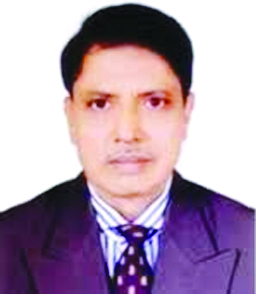
Dr. Forqan Uddin Ahmed :
The education sector has indeed seen a huge expansion, and the statistics provided each year by such organizations as the Bangladesh Bureau of Educational Information and Statistics (BANBEIS), UNICEF, UNESCO, and various NGOs working in education (BRAC, Campaign for Mass and Primary Education, or CAMPE, for example) make it obvious that expansion is not far behind the need or demand. What is lacking, however, is quality.
This applies to teaching as well as to administration, infrastructure, and facilities. It is seen to be a means of getting an entry to the job market, but sadly, it fails to provide the knowledge and skills necessary to compete at the regional or international level.
Students in general lack the necessary subject and language skills and have little knowledge of practical and applied research. A large number of students from the madrasa stream are denied the practical and applied skills required for jobs in different sectors.
Overall, our students do not appear to be ready to enter the fiercely competitive environment that the fourth industrial evolution is sure to create as it gathers steam.
In light of the challenges that we are bound to face when this and other game-changing developments take place, the ‘new educational era envisaged by the framers of the QKCR assumes an urgency and a more comprehensive and nuanced implication than it did all those years ago.
Some argue that universities should focus on ensuring quality education rather than pursuing good rankings. Ranking platforms also encourage inclusivity and respect for diverse opinions and lifestyles.
As universities are the torchbearers of any nation, they should be the first ones to ensure progress. Whether today or tomorrow, an inclusive society will become a reality, regardless of attempts to prevent it.
The responsibility now lies with the universities; they must decide whether they want to stay ahead of the curve and climb the ranking ladder today or remain silent during a time of revolution in academia.
Furthermore, we need to support disciplines that may not align directly with market demands but are essential for broader intellectual and moral development.
Are we offering adequate resources for fundamental subjects like philosophy, physics, mathematics, anthropology, and history? What about fundamental research in these fields?
These fields are vital for ethical reasoning and scientific innovation, yet they are often sidelined in favor of commercially viable programs like computer science and business administration.
Can a nation truly progress if it focuses only on technical skills while neglecting the ethical, cultural, and intellectual development that comes from other disciplines?
There may be multiple aims and objectives in the formulation of the National Education Policy (NEP).
All objectives may not need to be considered. The notable points are hereby mentioned as the vital objectives may be driven to stimulate the intellectual and practical qualities of the learners, fostering creative thinking among learners, removing socio-economic discrimination of race, religion, and creed, and eradicating gender disparity. showing tolerance to different ideologies, ensuring skills of high standard, and above all, ensuring proper quality of education.
Moreover, the decolonization of education must be handled or managed. It does not mean rejecting Western knowledge systems straightway but rather engaging with them critically and integrating them into our local contexts.
The global ideas should be adapted not by ignoring or rejecting knowledge, technologies, or innovations from the west in a diverse country like Bangladesh, the true value of university education lies in its ability to address local needs while remaining open to global perspectives.
Universities should serve as spaces where international knowledge is critically engaged to reflect and respond to local realities, rather than copying foreign educational models.
A paradigm shift in education requires national consensus and strong political will. Once this foundation is established, the reform process must begin by strengthening the base of the primary education system. Primary schools should become true centers of excellence, supported by adequate investment to ensure full potentials.
A key reform would be to extend primary education to include classes VI, VII, and VIII, while secondary education would then begin from class IX to class XII. For an integrated and seamless education system-from pre-primary through higher education-to succeed, this policy must be enforced consistently by the government.
Primary education should emphasize the development of core competencies in language and mathematics to equip students for the next stages of learning. As they transition into secondary education, students can take on more advanced tasks, identify their talents and interests, and prepare for higher academic and life challenges.
To make this system effective, teaching-especially at the primary level-must be regarded as a valued and secure profession. If compensation packages are designed to meet the needs of teachers and ensure long-term professional satisfaction, talented and committed individuals will be drawn to the field. These educators will play a crucial role in bringing about the transformative changes in our education system.
If teaching as a profession is made attractive and secure with a compensation packages that take care of every need of the teachers, there will be no shortage of talented and dedicated teachers who will give their best to bring the required changes in our education.
Moreover, the Quality and Knowledge-based Curriculum Review (QKCR) in Bangladesh represents a crucial step towards improving the quality of education in the country. While there are challenges related to implementation, such as resistance to change, infrastructure limitations, and resource constraints in transforming the education system.
The challenging steps may save our disastrous education. The Probable Initiatives in Curriculum reform is the step to national and international standards. Again by re-evaluating our educational purpose, we are hope of establishing new era in education. Above all Quality, not solely quantity, should be the goal of education.
(The writer is a Former Deputy Director General,
Bangladesh Ansar and VDP).