
Rationality of Hilsha Export from Bangladesh (Export Earnings vs. Empty Plates)
Md. Muzibur Rahman :
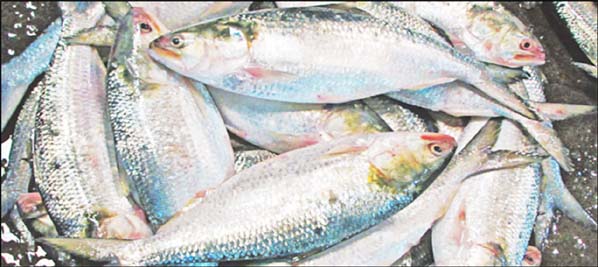
Hilsha is the national fish of Bangladesh. It holds a special place in the culture, economy, and cuisine of the nation.
It is not merely a food item but a symbol of heritage, tradition, and national pride.
Hilsha, often hailed as the “Queen of Fishes,” is renowned for its exceptional qualities and distinctive taste that set it apart from other species.
Found abundantly in the rivers and coastal waters of Bangladesh particularly the Padma, Meghna and Jamuna, Hilsha possesses a silvery sheen and a delicate texture.
Its flesh is rich in natural oils, giving it a buttery, melt-in-the-mouth sensation that food lovers cherish.
The flavor is uniquely soft yet aromatic, with a subtle sweetness balanced by the natural richness of its fat.
Whether fried to a golden crisp, cooked in mustard sauce, or paired with plain rice, Hilsha delivers a taste that is both refined and deeply satisfying.
Beyond its culinary appeal, Hilsha is also highly nutritious, packed with omega-3 fatty acids and proteins, making it not only a cultural delicacy but also a food of immense health value for the people of Bangladesh.
Once upon a time, people ate it for its taste & cheap price which was withinreach to the poor & middle-income people.
But at present when we go to the market, the price of the Hilsha fish is out of reach of the poor people.
When we ask price, we see that the price is about 800-2800 taka/kg (small to big size) which is absolutely out of reach of the poor and low-income people.
However, in recent years, the issue of Hilsha export has sparked debate, particularly when the fish has become increasingly expensive and out of reach for ordinary Bangladeshis.
This raises a pressing question: is there any rationality in exporting Hilshaor tons of Hilsha gifts to other countries when its own people cannot afford it?
From an economic perspective, Hilsha export generates foreign currency for Bangladesh.
The demand for Hilsha in neighboring countries, especially India, is extremely high. Exporting this prized fish strengthens trade relations and boosts the national economy.
The government often justifies Hilsha exports on the grounds of increasing export earnings, balancing trade deficits, and enhancing Bangladesh’s image as a quality fish producer in the global market.
For policymakers, this economic gain may seem rational. However, the cultural and social reality cannot be ignored. Hilsha is deeply woven into the identity of the Bangladeshi people.
Festivals such as Pahela Baishakh or family gatherings often remain incomplete without Hilsha dishes.
When the price skyrockets beyond the purchasing power of the middle class and the poor, it alienates citizens from their own tradition.
Many argue that the first responsibility of the state should be to ensure domestic availability at affordable prices before exporting for profit or gift to others outside of the country.
Without this, the cultural bond between the people and their national fish becomes strained.
The rationality of export also comes under question when viewed through the lens of equity and justice.
In a country where millions still struggle with poverty and food insecurity, prioritizing foreign markets over local consumers creates social injustice.
It privileges wealthy foreign buyers while depriving common citizens of their own natural resources.
This policy widens inequality and creates resentment among ordinary people, who feel that their cultural rights are being traded for profit.
A rational approach should strike a balance between economic benefit and social justice. Total export bans might harm trade relations and reduce foreign earnings, but unchecked exports raise local prices beyond affordability.
A middle path could involve setting quotas where a significant share of Hilsha production is reserved for domestic markets at controlled prices, while the surplus is exported.
Additionally, stricter monitoring of illegal fishing and overfishing is necessary to ensure sustainable Hilsha stocks for both local consumption and international trade.
According to some newspaper reports, statistics, we see that the Hilsha price rise over within 10 years is about double or more.
In 2014-2015, a medium sized (800-1000g) Hilsha was sold for about Tk 1,000-1,200 per kg in many urban markets. In 2024-2025, similar size fish are going for Tk 2,500-2,800 per kg (Dhaka, Chandpur).
The rationality of exporting Hilsha from Bangladesh cannot be seen solely in economic term. While export earnings strengthen the economy, the cultural, social, and ethical dimensions highlight the responsibility to make this national delicacy accessible to its own people.
Rationality should therefore mean balance-exporting Hilsha to earn foreign exchange while ensuring that ordinary Bangladeshis can still afford to enjoy the pride of their national fish. Only then can the policy of Hilsha export be truly justified and sustainable.
(The writer is a columnist & freelancer. He can be reached
at: E-mail: [email protected])