
Monsoon Mismanagement: Rain reveals city drainage collapse
Abu Jakir :
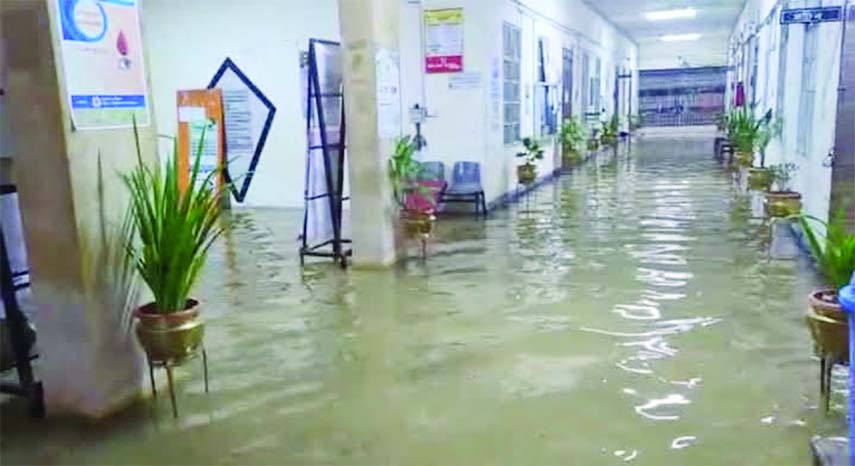
Days of relentless rainfall have left large swathes of Dhaka and Sylhet waterlogged, disrupting daily life and once again exposing the vulnerabilities of urban infrastructure and drainage systems in Bangladesh’s major cities.
In Dhaka, hopes that rain would bring relief from a prolonged heatwave were quickly dashed.
Instead, the city saw widespread flooding, with knee- to waist-deep water submerging major roads, stalling vehicles, and forcing residents to wade home.
Areas like New Market remained inundated well into Saturday, while in parts of Dhaka South City Corporation (DSCC), broken-down buses and rickshaws caused hours-long traffic jams.
The city’s drainage infrastructure – 2,211 kilometres on paper-remains severely compromised in practice. Despite repeated investments, Dhaka North (DNCC) and South city corporations have failed to maintain or upgrade the system.
Much of it is clogged by solid waste, poorly maintained, or insufficient to handle the volume of water, especially in the face of unplanned urbanisation.
Residents are growing increasingly frustrated. “I had to carry my child through waist-deep water,” said Rakib Hossain of Kalabagan.
“No rickshaw would go. What kind of capital city is this?” Others, like a resident from Jurain, said repeated complaints to the authorities go unanswered.
Although city corporations have now assigned specific engineers and opened emergency control rooms, experts warn these measures are inadequate.
Environmental activist and architect Iqbal Habib stressed the need for a long-term master plan. “We must restore canals and wetlands, stop illegal encroachment, and fix waste management. Above all, authorities must act sincerely,” he said.
With further rain expected in the next 24 hours and monsoon season still ahead, Dhaka remains vulnerable to more waterlogging, traffic disruptions, and health hazards.
In Sylhet, continuous heavy rainfall has triggered severe waterlogging in over 50 areas, causing significant disruption. As of this morning, 132 mm of rain had fallen in the last 24 hours.
Streets and homes were submerged in key locations such as Zindabazar, Ambarkhana, Bandarbazar, and Shibganj, with residents reporting knee-deep flooding and damage to property.
The Sylhet City Corporation has opened a special emergency control room and ordered ward officers to remain present in their areas. Daily progress reports are being submitted to the ICT branch.
However, residents remain sceptical. “This happens every year,” said Zakir Ahmed of Chowhatta. “Thousands of crores have been spent, but we see more corruption than actual progress.”
Further complicating Sylhet’s situation is the rapid rise in river levels due to both local rain and runoff from India’s Meghalaya and Assam states.
The Surma, Kushiyara, Sari-Gowain, and Dhalai rivers are approaching danger levels. According to the Water Development Board, 410 mm of rainfall was recorded in Meghalaya in just 24 hours, with the water quickly flowing into Sylhet’s low-lying areas.
Goainghat, Companiganj, Jaintapur, Zakiganj, and Kanaighat upazilas have reported rising water in low-lying zones.
Tourist destinations like Jaflong and Bichanakandi have gone underwater, and local authorities have advised against travel to these areas.
While no residents have yet needed to relocate, shelters have been prepared and food stockpiled in anticipation of worsening conditions.
Officials remain on alert, with local Upazila Nirbahi Officers stating that while some roads are submerged, no villages have been entirely flooded so far.
Both Dhaka and Sylhet’s experiences highlight a chronic failure in urban management.
Unplanned construction, encroachment on water bodies, inadequate drainage systems, and lack of coordinated response are turning seasonal rains into recurring disasters.
Without urgent structural reforms and transparent governance, experts warn that flooding will remain an annual ordeal-costing livelihoods, damaging infrastructure, and undermining public trust in civic authorities.