
Public pressure mounts on govt to implement Teesta master plan
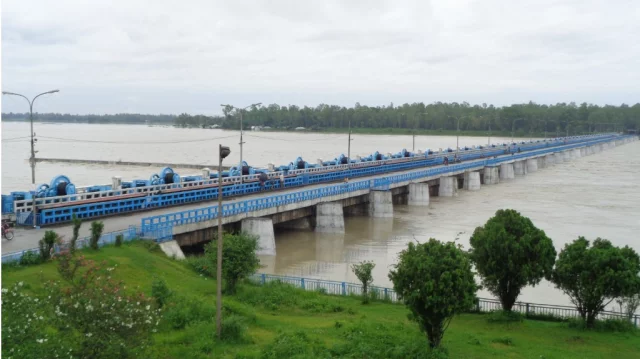
Al Mamun Harun Ur Rashid :
Public pressure over the long-delayed Teesta River Master Plan has reached a breaking point across Bangladesh in the recent times.
From the northern plains of Rangpur to the coastal campuses of Chittagong, citizens and students have united to demand the government begin work immediately while China signals readiness to proceed.
People of the northern region have urged the interim government to begin the project immediately to save the lives and livelihoods of the people and biodiversity of the northern region.
The project, designed to restore the Teesta’s flow, expand irrigation, and protect river-dependent communities from erosion and floods, has been stalled for years amid bureaucratic delays, funding constraints, and geopolitical tension with India.
On 15 September, Chinese Ambassador to Bangladesh Yao Wen met Foreign Secretary Asad Alam Siam in Dhaka, reaffirming Beijing’s “strong interest” in the initiative.
Yao said a team of Chinese experts would visit Bangladesh in the coming months for an on-site assessment and confirmed that discussions were underway with the Economic Relations Division (ERD) regarding a $550 million loan to finance the project.
Diplomatic sources said China had responded positively to Bangladesh’s request for funding the ‘Comprehensive Management and Restoration of Teesta River Project,’ estimated at $750 million.
The remaining amount would be met through domestic financing. The first phase is expected to begin in 2026 and finish by 2029.
China’s expanding role in the Teesta basin carries geopolitical implications. The river lies close to India’s Siliguri Corridor, a narrow but vital passage to its northeastern states.
New Delhi has remained publicly silent about Beijing’s interest, though diplomats interpret this as quiet unease.
Environmental experts have urged the government to ensure that the project prioritises sustainability and does not harm the river’s natural ecosystem.
However, the urgency of the plan is underscored by years of suffering in the north. Bangladesh receives only a fraction of its required water from upstream India during the dry season.
A 2011 water-sharing deal collapsed due to opposition from the West Bengal government, leaving the issue unresolved.
Now, frustration has turned to fury as protesters in Rangpur, Lalmonirhat, Kurigram, Nilphamari, and Gaibandha on 17 October took to the streets with torches, chanting “Jaago Bahe Teesta Bachai” (Rise to Save Teesta).
Demonstrators accused successive governments of neglecting the north, where more than 3,000 families have already lost their homes and farmland to erosion.
“The Teesta is not simply a river of the north-it is the lifeline of Bangladesh,” said one protest organiser in Lalmonirhat.
“If the government can build metro rail and expressways in Dhaka, it can protect the people of the north from losing everything.”
Student movements have added new momentum when on 20 October, students at the University of Chittagong formed a human chain in solidarity with Teesta communities, calling the project a matter of “justice and national responsibility.”
Student organiser Maruf Hossain said Bangladesh “cannot claim development while its northern districts are left to fight drought, flood and displacement alone.”
As public anger spreads, government advisers are calling for balance. Environment Adviser Syeda Rizwana Hasan recently called for in-depth feasibility assessments and meaningful community engagement for the of the proposed Teesta project.
She also called upon the foreign investment should be transparent and concessional terms. “The investors should support local communities, not exploit regulatory weaknesses,” she said.
While visiting Lalmonirhat on 28 July, she told residents that implementation of the project would begin in 2026 but stressed that environmental impact assessments must come first.
Meanwhile, on 22 October, thousands gathered at Rangpur Zilla School intersection under the banner of Sarbostorer Chhatra-Janata (Students and Citizens’ Alliance) demanding that work on the project begin before the election schedule is announced.
General Secretary of the Teesta Bachao Nodi Bachao Andolon Shafiar Rahman told the New Nation on Friday: “The Teesta Master Plan has already been delayed for far too long. It has been a long-cherished demand of the people in this region.
We want the work on the Teesta Master Plan to begin during the tenure of this government, using our own funding if necessary. ECNEC should allocate the required budget.”
About China’s involvement, he said, “If China is willing to come forward, we can work together with them as they have technical expertise.”
Regarding national consensus over the project, he said, “Political parties should not use this as a tool for political gain, but rather unite under a single banner to fulfil the long-standing aspiration of the people in this region.”
Meanwhile, movement leaders warned that if no progress was made by November, they would call for shutdowns and road blockades across northern Bangladesh.
The Teesta River Protection Committee, led by BNP’s Rangpur divisional organiser and former deputy minister Asadul Habib Dulu, has already announced a “Silent Rangpur” programme on 30 October, urging residents to stop work and stand still for 15 minutes at 11 am in protest.
Teachers, students, traders, transport workers and government employees across five districts have pledged to participate. Dulu said the campaign symbolises the “silence of suffering and the unity of the deprived north.”