Probe says 24 India’s NSG commandos joined BDR massacre

Staff Reporter :
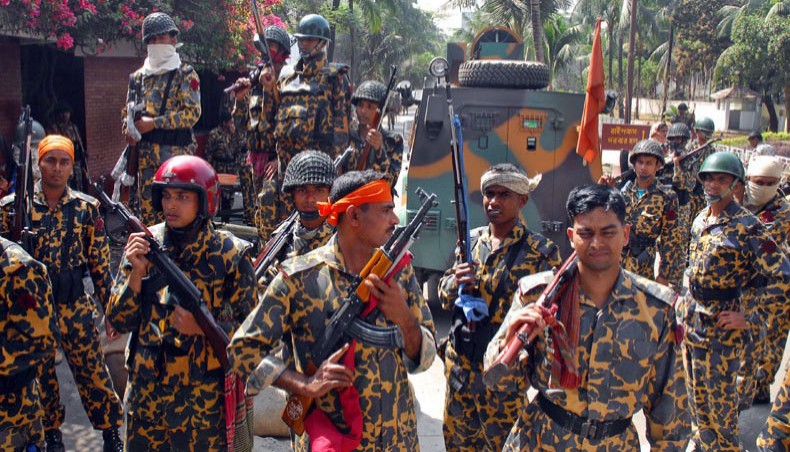
More than sixteen years after the 2009 massacre at the headquarters of the then–Bangladesh Rifles (BDR), a newly formed National Independent Investigation Commission has submitted a sweeping report that raises fresh questions about the political and foreign dimensions of one of Bangladesh’s deadliest peacetime tragedies.
The 360-page report — handed to Chief Adviser Dr. Muhammad Yunus on Sunday — alleges extensive involvement of several senior members of the Sheikh family, including barrister Sheikh Fazle Noor Taposh and Awami League politician Sheikh Selim, in the events that preceded the mutiny and mass killings on February 25–26, 2009.
The commission further claims that Indian intelligence officials were directly involved in planning and coordinating the attack, which left 74 people dead, including 57 Army officers seconded to the paramilitary force.
Commission Claims Taposh Was a Central Coordinator
According to investigators, Taposh’s name appeared “repeatedly and prominently” throughout the inquiry.
The commission says it held interviews, examined classified documents, and reviewed testimonies establishing that multiple meetings took place at Taposh’s office and residence before the massacre.
One such meeting, the report states, involved Indian intelligence operatives who allegedly worked with certain BDR members to finalise the plan for a large-scale assault inside the Pilkhana compound.
The report claims that a team of 24 Indian commandos and intelligence personnel were “directly involved,” though it does not specify their exact operational roles.
The commission also asserts that former Prime Minister Sheikh Hasina — now living in India — had been cautioned just two days before the mutiny not to visit Pilkhana, though the report does not detail who issued that warning.
Allegations against Sheikh Selim and Former State Minister Sohel Taj
Investigators claim that Sheikh Selim, another influential family member, played a supporting role in the alleged coordination meetings.
The report also names former state minister for home affairs Sohel Taj as someone who was “aware of the planning.”
Taj has not publicly responded to the commission’s findings. Neither have the individuals named in the report, and no independent verification of these allegations has yet been provided.
Foreign Involvement and Historical Pretext
The report devotes significant attention to earlier border clashes — particularly the Padua and Roumari skirmishes — in which BDR troops had overpowered India’s Border Security Force (BSF).
According to the commission, these events formed part of India’s purported motivation for “retaliation” and “reassertion of dominance.”
The commission argues that the mutiny was “pre-planned with geopolitical objectives,” linking it to Bangladesh’s political landscape after the December 2008 election, which brought Hasina to power following a military-backed caretaker government.
The report suggests that foreign assistance in that election created new “strategic alignments” that set the stage for subsequent events.
New Questions, Old Wounds
The Pilkhana massacre has been the subject of extensive legal proceedings for more than a decade.
The main murder case is now in its final stage before the Appellate Division, while the explosives case remains under trial in a lower court.
Until now, none of these court proceedings officially attributed political or foreign orchestration to the killings.
But the commission’s fresh allegations — including assertions of “collective involvement of the Awami League” and naming Taposh as the “primary coordinator” — challenge earlier narratives and introduce contentious new dimensions that could reshape public perceptions.
Legal experts say the commission’s findings may spark motions for further judicial reviews, though the courts have not yet commented.
Formal Submission After 11 Months of Inquiry
The interim government created the National Independent Investigation Commission last year to re-examine the events with broader authority than previous inquiries.
Led by retired Major General A.L.M. Fazlur Rahman, the commission interviewed hundreds of witnesses over an 11-month period.
Their findings, submitted Sunday, are likely to intensify political tensions and revive long-simmering debates about the mutiny’s origins, the motives of its orchestrators, and the unresolved grievances of the victims’ families.
A National Trauma Revisited
The 2009 Pilkhana massacre remains one of the most traumatic events in Bangladesh’s history. Families of the slain officers have long voiced dissatisfaction with earlier investigations, insisting that the full truth was never uncovered.
With the release of the commission’s report, Bangladesh again finds itself confronting painful questions: Who planned the massacre? Who benefitted? And will these new allegations provide a clearer path to justice — or reopen divisions that have haunted the nation for years?