
Preventing enforced disappearances need insttl reform Asif Nazrul
Staff Reporter :
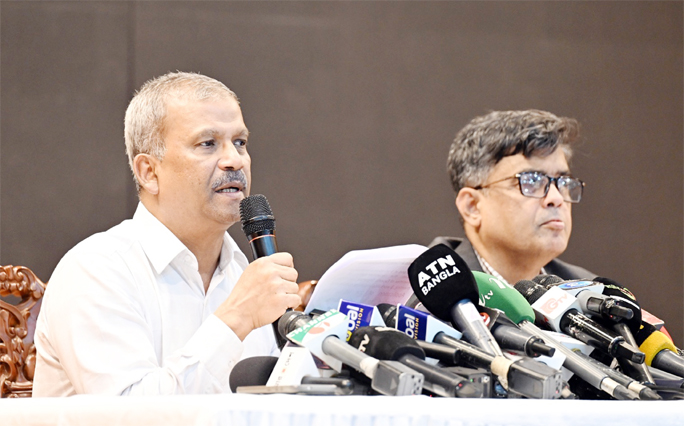
Law, Justice and Parliamentary Affairs Adviser Asif Nazrul has said that enforced disappearance is a crime even more heinous than murder, stressing that preventing it demands not only changes in law but also deep institutional reform.
“Bangladesh has entered a new era earned through immense sacrifice and struggle. To make this transformation lasting, ensuring justice for victims of enforced disappearance is indispensable,” he said while addressing the opening session of a daylong workshop at Hotel Amari in the capital’s Gulshan on Saturday.
The workshop, titled “Ensuring Justice: The Role of the Judiciary in Addressing Enforced Disappearances,” was organised by the Commission of Inquiry on Enforced Disappearances in collaboration with the Office of the United Nations High Commissioner for Human Rights (OHCHR) in Dhaka.
Speaking to members of the judiciary, Nazrul urged, “Judges must act with courage and impartiality in ensuring justice for disappearance cases. A neutral and resolute judiciary can one day eliminate the culture of enforced disappearances from Bangladesh.”
Commission Chairman retired Justice Moinul Islam Chowdhury, in his keynote presentation, highlighted that only through collective efforts of the judiciary, law enforcement agencies, and human rights organisations can the entrenched culture of disappearance be eradicated.
During the workshop’s working session, participants examined issues such as evidence gathering, witness protection, application of human rights standards, and ensuring accountability within the judicial process in disappearance-related cases.
Several key recommendations emerged, including: forming a permanent commission to prevent enforced disappearances; enacting a dedicated law against the crime; setting up an independent investigation agency under the judiciary.
establishing a monitoring cell to address complex cases; increasing public awareness; providing specialised training for judges; ensuring psychological and legal assistance for victims; and offering compensation and rehabilitation. Participants also called for necessary amendments to anti-terrorism, arms, and explosives laws.
Other proposals included simplifying online general diary (GD) filing, prioritising the disposal of pending cases, improving victims’ access to magistrates and judges, empowering magistrates to dismiss false cases, and strengthening information-sharing between the judiciary and the commission.
Commission member retired High Court Justice Md Farid Ahmed Shibli, Law and Justice Division Secretary Liaquet Ali Molla, and Huma Khan, senior human rights adviser at the UN Resident Coordinator’s Office in Bangladesh, also spoke at the event.
The workshop was moderated by Commission Member Dr Nabila Idris, also a faculty member at BRAC University. Around 90 judges and judicial officers from different courts and tribunals took part in the daylong programme.