
President’s portraits dropped from missions abroad
Diplomatic Correspondent :
Bangladesh Ministry of Foreign Affairs has instructed its embassies, consulates and diplomatic residences abroad to take down portraits of President Md Shahabuddin, in a move that breaks with more than five decades of diplomatic tradition.
The directive, issued verbally on 15 August, has not been circulated through formal letters or emails. Instead, officials conveyed the order by telephone to several ambassadors and high commissioners, who were asked to pass the message to other missions and monitor compliance.
Diplomatic sources said while many missions in South Asia, Africa and Europe have yet to receive the instruction, others have already acted on it. “The ministry told us to remove the president’s portraits from embassies, consulates and official residences. It was conveyed by phone, not by letter. We were also asked to monitor implementation,” one senior envoy told The New Nation on condition of anonymity.
In some cases, the message was relayed through neighbouring missions rather than directly from Dhaka. A senior diplomat in New Delhi confirmed that the High Commission there had already removed the portrait.
Since independence in 1971, Bangladeshi missions have followed international practice by displaying the head of state’s portrait alongside the national flag. Portraits of Sheikh Mujibur Rahman and former prime ministers, including Sheikh Hasina, were also often displayed.
Globally, such traditions are common: US embassies show the president’s portrait, British missions the reigning monarch, French offices the president, and Indian missions often both the president and prime minister. Against this backdrop, Bangladesh’s new directive marks a striking departure.
Observers suggest the move reflects the interim government’s effort to distance itself from symbols of the previous administration. President Shahabuddin, elected under the former government, may not be seen as representative of the transitional leadership’s neutrality. Others, however, view it as a temporary measure until a new protocol is introduced or elections are held.
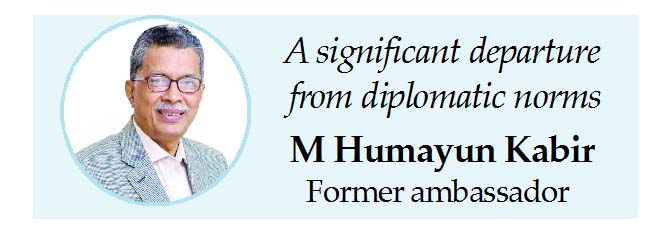
Former ambassador M Humayun Kabir described the decision as “a significant departure from diplomatic norms.” He told The New Nation: “It has long been the tradition to display the portraits of the head of state and head of government in foreign missions. We see this practice in many countries, especially in South Asia.”
The foreign ministry confirmed that Bangladesh maintains 82 missions abroad. Following the change of government on 5 August, portraits of Sheikh Mujibur Rahman, Sheikh Hasina and the president were removed from around 65 missions. On Friday, the ministry verbally ordered the removal of President Shahabuddin’s image from the remaining offices.
For the first time in more than 50 years, Bangladeshi embassies may now stand without the image of the sitting president – raising questions about whether this is intended as a permanent shift in state protocol or simply a temporary political measure.