
Poverty, parenthood, city in motion
NN Special :
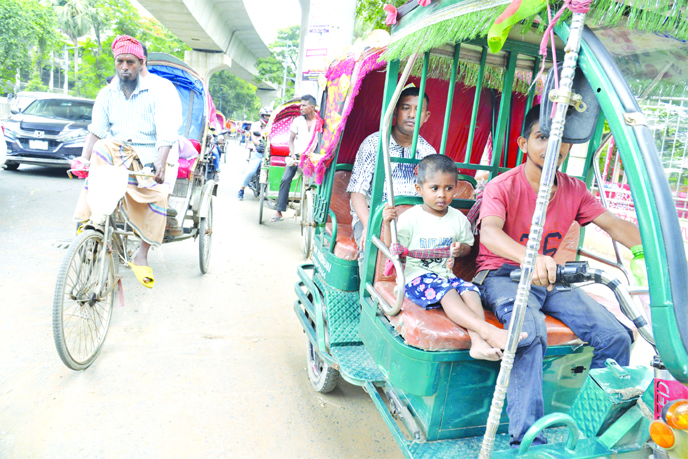
Under the scorching sun, amid the chaos of traffic and city horns, 34-year-old Mujibur Rahman navigates his auto-rickshaw through the streets of Dhaka. His hands grip the wheel, eyes on the road—but his heart and attention are equally tied to the small figure seated quietly beside him: his youngest son, no more than a toddler, tied with a cloth to his father’s seat.
This is not a scene of convenience or eccentricity. It is the heartbreaking reality of poverty, desperation, and fatherly love. With no one to care for his child and no money to afford daycare, Mujibur brings his minor son along every day, tying him securely beside him while he drives passengers across the city.
“I can’t leave him alone,” Mujibur says quietly. “His mother is at home, but she’s unwell and can’t manage both of them. My older son stays in the village with relatives.
This one, he’s too small. He needs someone.” Mujibur’s wife is a homemaker, and their family of four survives hand-to-mouth. The income from driving the auto-rickshaw irregular and meager is barely enough for rent, food, and medication. On many days, they go without proper meals. For the last two years, Mujibur has been working as a driver. But even after years on the road, financial stability remains out of reach. “Sometimes I earn Tk 400 a day.
If there are no passengers, there’s no income,” he says. His story is not unique, yet the image of a child silent, scared, and tied to the metal frame of a three-wheeler on a busy road—is one that few can ignore. The tie is not just physical; it’s emotional, symbolic a father refusing to let go of his responsibility in the face of a world that offers little support.
Child safety experts warn of the dangers. “It’s deeply unsafe,” says a local rights activist. “But we also need to ask: What choices does he have? When systems fail, people are left with impossible decisions.” Mujibur’s situation reveals the cracks in social safety nets and the absence of affordable childcare or community support for working-class families.
His act tying his son to him during work—may appear extreme, but for Mujibur, it’s a desperate form of care. “I just want a better life for them,” he says. “Even if I suffer, I want them to have a chance.”