Post-LDC Challenges Are Rising: Are We Ready?

H. M. Nazmul Alam :
The clock is ticking toward November 2026, when Bangladesh will formally step out of the list of Least Developed Countries after eight years of assessments and repeated reviews by the UN Committee for Development Policy.
That moment should have been a milestone of confidence, signalling that the country is ready to compete on fairer terms in global markets. Yet the mood within the country’s key export industries, especially among leaders of the ready-made garment and textile sector, tells a different story.
Instead of celebration, there is uncertainty. Instead of preparedness, there is an air of hesitation. Instead of a united roadmap, there is a widening gap between strategic goals and practical readiness.
At the centre of this tension lies the Smooth Transition Strategy, a framework designed precisely to prevent shocks after graduation. The idea is simple.
Once duty-free privileges, quota-free access, concessional financing and preferential treatment under WTO provisions disappear, the vacuum should be filled by alternative arrangements, new competencies and stronger domestic capacity.
This is not merely a bureaucratic requirement but a critical safety net that ensures a country’s progress is not interrupted the moment international generosity ends.
The UN General Assembly requires every graduating LDC to prepare such a strategy and Bangladesh, with assistance from CDP, ECOSOC and other UN bodies, has drafted its own path. The Enhanced Monitoring Mechanism tracks its execution before and after graduation. This is how the world measures readiness.
The concern raised by industry leaders this week during a consultation with the visiting UN-OHRLLS mission was therefore not a small administrative complaint. They warned that coordination gaps in implementing the transition strategy are real and growing.
Their argument was blunt. Without clear alignment between ministries, regulatory bodies, trade negotiators and private sector stakeholders, Bangladesh risks stepping into a higher-income category without the supportive architecture required to survive there.
Business leaders even called for a three-year delay in graduation, fearing that the country’s competitiveness will erode too quickly under current pressures.
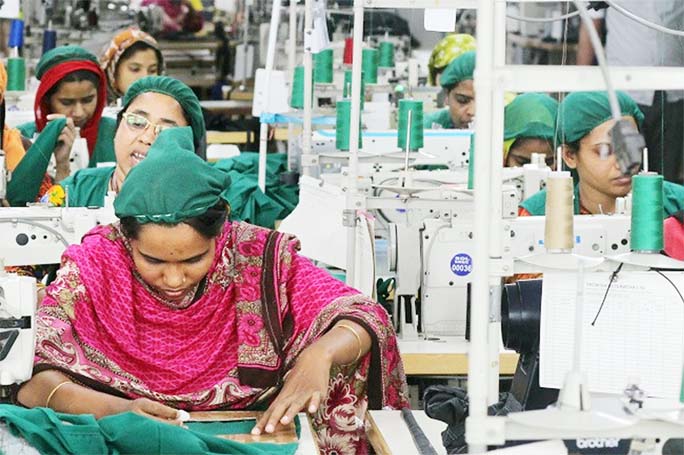
The export structure of Bangladesh remains one of the narrowest in the world. More than 84 percent of export earnings come from a single product group.
Even a minor disruption in global apparel demand can destabilise the entire economy. According to the World Trade Organization, Bangladesh’s concentration index is one of the highest among major exporting nations. Graduation will reduce flexibility in providing incentives to this sector because WTO rules for non-LDCs severely limit subsidies, export cash incentives and tax concessions.
The pharmaceutical industry, which has benefited immensely from exemptions on intellectual property restrictions since the 1990s, will lose the shield that allowed domestic manufacturers to supply generic versions of patented medicines. The implications are far-reaching.
The question is whether Bangladesh has built enough capacity to confront these structural disruptions. The indicators are not promising. Political instability in recent years has paralyzed investment sentiment. Inflation crossed 9 percent for more than a year, at one point reaching a decade-high of over 9.9 percent according to the Bangladesh Bureau of Statistics.
Bank interest rates were raised to control inflation, yet price pressures persisted, eroding real incomes and reducing consumer demand. Meanwhile, the apparel sector is facing cancelled orders from major US buyers, partly triggered by reciprocal tariffs under the trade tensions of the current American administration. When the largest export market begins tightening conditions, an economy heavily reliant on a single industry becomes exposed.
The cost side paints an equally troubling picture. Gas prices, a major input cost in the textile value chain, rose by 286 percent between 2016 and 2023. Earlier this year, tariffs for captive power and industrial users were hiked again by 40 percent and 33.33 percent. Electricity and gas are no longer cheap comparative advantages. Logistics, too, has become a choke point.
Chittagong Port, already notorious for delays, inefficiencies and limited container handling capacity, raised port charges by 41 percent last October. Road congestion continues to add invisible taxes to export operations. Every additional day lost at the port reduces a factory’s competitiveness in a global market where delivery time can determine whether an order is confirmed or diverted to Vietnam, Cambodia or Indonesia.
Diversification, the cornerstone of a smooth transition, remains more of a slogan than a reality. Despite decades of policy declarations, non-RMG exports have stagnated at around 15 percent of total shipments. Sectors with potential leather, light engineering, agro-processing and ICT services continue to face weak infrastructure, slow certification processes, inconsistent regulatory oversight and lack of targeted incentives.
Japan exports auto parts worth over 300 billion dollars annually. Vietnam has diversified into electronics, which now accounts for more than 30 percent of its exports. Bangladesh, by contrast, exports almost the same category of apparel products it did twenty years ago.
The post-LDC world requires an ecosystem that rewards innovation, investment and efficiency. The domestic financial sector, however, is struggling with mounting non-performing loans, estimated at more than 10 percent officially and nearly 20 percent by independent estimates. Banks lack capital depth. Their capacity to provide long-term financing is limited.
Without a stable credit environment, the industrial sector cannot upgrade machinery, adopt new technologies or improve productivity. Every delay in reforming the banking sector is ultimately a delay in preparing for graduation.
None of these challenges are unmanageable if addressed through coherent policy action. But that is precisely what the private sector fears is missing. The Smooth Transition Strategy demands harmony between trade policy, industrial policy, monetary policy, skills development strategies, port reform agendas and diplomatic negotiations. If these components move in different directions, the country will lose the advantage of early preparation.
International development partners closely observe the implementation of STS. Any perceived weakness can influence future financing decisions, especially at a time when concessional loans will shrink after graduation.
A business environment defined by high tariffs, bureaucratic delays, sudden policy shifts and weak coordination is incompatible with the competitive pressures awaiting a non-LDC economy.
The country must embrace industry-friendly revenue policies that reduce the cost of doing business rather than increasing it. It must remove tariff anomalies that penalise import of raw materials while protecting inefficient local industries. It must invest aggressively in logistics and transport, where even modest improvements can save millions of dollars in export losses.
Equally important is the search for new markets and new products. Relying on two or three major markets is risky when geopolitical shifts can instantly reshape demand patterns. The United States has already shown how quickly a tariff adjustment can disrupt Bangladesh’s export chain. A more diversified portfolio of partners across Asia, Africa, Latin America and the Middle East could provide a buffer against such disruptions.
Graduation from LDC status should symbolise maturity and readiness. It should reflect that an economy has built enough internal momentum to thrive even without diplomatic privilege. At the moment, Bangladesh is caught between promise and hesitation. The window of preparation is small. The consequences of delay will be large. The transition will test not only policy coherence but national resolve. What the country needs now is not another strategy, but the discipline to implement the one already in hand.
(The Writer is a Lecturer, Department of English and Modern Languages, IUBAT, Academic, and Political Analyst. He can be reached at [email protected])