
‘Policymaking must remain with policymakers’
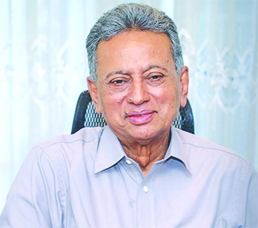
Staff Reporter :
Bangladesh needs a clear reform roadmap to reduce bureaucratic dominance and promote private sector–led, digitally driven governance, said BNP Standing Committee Member Amir Khosru Mahmud Chowdhury at an economic reform summit held on Monday at the Lakeshore Hotel in Dhaka.
“The bureaucracy should focus on implementing policies, not making them. Overlapping roles have long undermined efficiency and accountability,” said Khosru, a former Commerce Minister.
The event was jointly organised by Voice for Reform, BRAIN, Innovision Consulting, Fintech Society, and Citizen Coalition.
Recalling his time in office, Khosru cited an example of successful reform. During his tenure, the government handed over the responsibility of issuing Utilisation Declaration (UD) certificates for duty-free raw material imports to the Bangladesh Garment Manufacturers and Exporters Association (BGMEA). “Exporters had complained about corruption and delays in obtaining the certificates,” he said.
“So I shifted the responsibility from the Export Promotion Bureau to the BGMEA. Despite bureaucratic resistance, it worked — corruption declined and efficiency improved. The private sector has managed it effectively ever since.”
He stressed the need to minimise face-to-face interactions between citizens and government officials to curb corruption.
“In developed countries, people can pay bills, renew passports, or complete official tasks online. We should do the same,” he said, referring to the government’s Access to Information (a2i) programme as a key tool for promoting transparency and simplification.
“If simplification, automation, and digitalisation are implemented properly through a2i, many of our governance problems can be solved,” Khosru added.
He also criticised the limited understanding of economic realities among bureaucrats, arguing that policy formulation should remain the responsibility of elected policymakers. “Policy-making should belong to policymakers — and its execution to the bureaucracy,” he said.