People and Leadership: The Nexus of Sustainable Progress
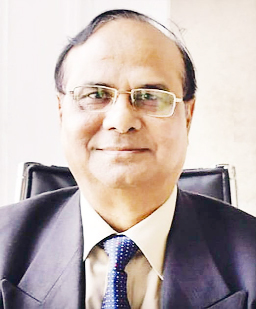
Prof. Dr. Zahurul Alam :
In an era where institutional legitimacy, social cohesion and strategic governance face mounting pressure, the interplay between people and leadership emerges as the linchpin of sustainable progress.
We shall explore how inclusive, accountable and visionary leadership, rooted in genuine citizen engagement fosters social trust, economic dynamism and effective governance. Drawing from leadership theory, public administration and comparative case studies, the analysis emphasizes that leadership is not merely about authority but about stewardship of collective aspirations.
By examining modern challenges: authoritarian drift, populism and citizen disengagement, it argues for a recalibrated social contract where people legitimize leadership and leadership uplifts people. The practical pathways are: embedding participatory governance, leadership development, transparency mechanisms, civic education and digital engagement to align leadership and people in the pursuit of resilient and just societies.
People, in governance terms, are more than electoral numbers or beneficiaries. Participatory governance theory positions citizens as active agents: partners in policymaking, watchdogs for accountability and co-creators of civic culture.Together, leadership and people constitute a dynamic system, not separate spheres. Leadership shapes direction; people supply legitimacy. Leadership steers policy; people mandate it.
In defining leadership from a scholarly perspective, we can see that leadership is one of the most studied but least understood concepts in social sciences. At its core, leadership is a relational and value-driven process through which an individual or group influences others to achieve shared objectives.
According to James MacGregor Burns, who introduced the idea of transformational leadership, true leadership is moral: “The transforming leader looks for potential motives in followers, seeks to satisfy higher needs, and engages the full person.” Leadership is not about domination or command, but about mutual elevation of both leader and follower toward a shared vision rooted in values.
In contrast, transactional leadership, a more common form in bureaucracies, is based on exchange: leaders reward or punish in return for performance. While both forms can coexist, transformational leadership tends to yield longer-term societal change.
The Interdependence of People and Leadership
The relationship between leadership and people is symbiotic. Leaders who ignore popular needs lose legitimacy; citizens who retreat from engagement deprive leadership of purpose. Empirical research reinforces this: countries with high civic participation sustain stronger governance outcomes (OECD 2023). In contrast, leadership disconnected from public sentiment tends to foster policy failures, corruption and disenchantment.
Leadership and the people who give it legitimacy have always been intertwined. But in the 21st century, the relationship takes on new urgency. Rapid technological change, eroding institutional trust and widening inequality demand leadership that is adaptive, inclusive and grounded in public purpose. Simultaneously, citizens are no longer passive recipients, they expect agency, voice and accountability. A disjunction between people and leadership undermines governance, chills social innovation and risks reversing development gains.
Conversely, societies where leadership remains in tune with citizen aspirations, where trust, transparency and participation flourish, tend to exhibit better outcomes in governance, economic competitiveness and social well-being.
The question thus becomes: what constitutes effective leadership in service of the people, and how can societies cultivate that trust, leadership nexus?
Leadership has evolved beyond top down directive models to encompass transformational, servant and collaborative styles. These emphasize emotional intelligence, shared vision and ethical influence rather than command and control.
Bangladesh offers a layered example. Its development journey has been marked by bold leadership in infrastructure and social policy. Yet recent concerns, about electoral integrity, media constraints and decentralized inclusion, highlight the stalling of the leadership-people interface.
Leadership that fails to continuously engage citizens risks hollowing institutional legitimacy.
Scandinavia: Norway, Sweden and Finland score consistently at the top for social trust, governance and leadership accountability. Their model: leadership structures that embed citizen voice and civil society at every level.
South Africa: The post-apartheid transition exemplifies how visionary leadership: Nelson Mandela’s inclusive, moral authority, paired with sustained citizen mobilization created new social contracts. But the persistence of inequality underscores the challenge: leadership must be sustained by people’s engagement and institutional renewal.
Pathways to Strengthening the People-Leadership Nexus
Institutionalize Participatory Governance. Establish national and local platforms for continuous dialogue between leadership and citizens, ensuring policy reflects real needs, not elite assumptions.
Consider the case of the Nordic countries. Leadership there converges with active citizen participation, high social trust and consensus-oriented governance. The result: low inequality, strong institutional performance and enduring prosperity. By contrast, in systems where leadership is isolated or authoritarian, disenfranchised citizens foster social fragmentation and institutional brittleness.
Contemporary Challenges
· Authoritarian Resurgence: Several states have shifted toward power concentration, filtering citizen input and throttling dissent, eroding social trust and participatory legitimacy.
· Populism: Leaders’ claim to embody “the people” often sidesteps checks and balances, polarizes politics and weakens institutions.
· Citizen Disengagement: Factors such as misinformation, social inequality and institutional fatigue reduce meaningful civic engagement, leaving leadership without a grounded constituency.
These emerging trends pose strategic risks: the erosion of the leadership-citizen interface undermines governance, impedes development, and fosters instability. For sustained progress, nations require not only visionary leadership but also a robust, collaborative bridge between leaders and the populace. Leadership must cultivate future leaders and co-create agendas with citizens. In turn, citizens must make informed choices to ensure accountable governance.
Policies must emphasize leadership development, beyond a few charismatic individuals, countries need values-driven, inclusive leadership capacity across public, private, and civic sectors.
Equally vital is civic education and digital engagement. Empowering citizens through media literacy, participatory budgeting, and digital town halls fosters a culture of trust and shared responsibility.
To enhance transparency and accountability, digital platforms enabling real-time public data, performance tracking, and citizen monitoring are essential. However, these tools must complement, not replacedirect civic participation. Feedback loops, open-data portals, and virtual consultations can meaningfully expand the leadership-citizen engagement spectrum.
People and leadership form the twin pillars of modern governance. A leader without people is a monologue; people without leadership are drifting. Only when leadership anchors itself in popular legitimacy, and people are enabled to shape governance, does the social contract hold. The twin tasks of inclusive governance and responsible leadership are central to addressing today’s economic disparities, institutional distrust and complex global challenges.
In practical terms, the message is clear: invest in people not merely as beneficiaries, but as participants; develop leadership not just as command but as stewardship. The dividend is robust citizenship, resilient institutions and sustainable progress.
By forging this dynamic partnership between people and leadership, societies can move beyond cycles of trust erosion and institutional fatigue, towards a governance paradigm capable of delivering development, justice and collective resilience.
(The author is Dean, School of Business Canadian University
of Bangladesh)