
Pakistan Army chief gains lifetime immunity
News Desk :
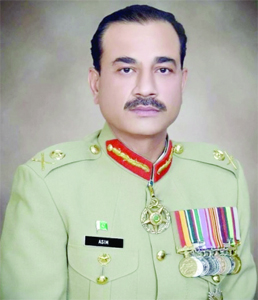
In its 27th Constitutional Amendment, Pakistan’s parliament has granted army chief Field Marshal Asim Munir sweeping new powers and lifetime immunity from arrest and prosecution, sparking concerns of a drift towards autocracy.
The amendment, signed into law on Thursday, also reshapes the country’s judicial system, creating a new Federal Constitutional Court (FCC) with judges appointed by the president, reports bdnews24.com.
The BBC reports that supporters of the amendment say it brings clarity to the military’s chain of command and eases judicial backlogs, while critics warn it entrenches military dominance and undermines judicial independence.
Munir, who has served as army chief since November 2022, will now also oversee the country’s navy and air force. His field marshal title and uniform are for life, and he will retain duties assigned by the president, advised by the prime minister, even after retirement.
The expectation is that he will retain a prominent public role for life, the report said.
Pakistan’s military has long been influential, sometimes seizing power through coups, at other times wielding influence behind the scenes, it added, highlighting a historical oscillation between civilian autonomy and overt military control under leaders such as Generals Pervez Musharraf and Zia-ul-Haq.
Analysts describe this as a hybrid rule, now seemingly tilting further towards the military, the BBC noted.
“For me, this amendment is the latest indication, perhaps the strongest yet, that Pakistan is now experiencing not a hybrid system, but a post-hybrid system,” Michael Kugelman, director of the Wilson Center’s South Asia Institute was quoted as saying.
“We’re essentially looking at a situation where the civil-military imbalance is about as imbalanced as it could possibly be.”
Critics say the judiciary has also been weakened.
The new FCC will decide constitutional matters, with judges appointed by the president, raising fears over impartiality.
“It forever changes the shape and the nature of the right to a fair trial,” Munizae Jahangir, co-chair of the Human Rights Commission of Pakistan, was quoted as saying.
“The influence of the executive has increased… what hope do I have as a litigant of getting a fair trial?” Two Supreme Court justices resigned in protest. Justice Athar Minallah wrote, “The constitution that I swore an oath to uphold and defend is no more.” Justice Mansoor Ali Shah said the amendment had “torn the Supreme Court to pieces”.
While supporters argue it improves military efficiency and judicial administration, opponents warn that judges may face pressure through transfers and career threats, and the amendment sets a precedent for further centralisation of power, according to the report.
“This indicates a slide towards authoritarianism,” said Arifa Noor, journalist and commentator. “The balance of power is tilted… heavily tilted in favour of the establishment.”