
Over 40 million in Bangladesh suffer chronic pain: Experts
NN Report:
More than 40 million adults in Bangladesh are living with chronic joint, muscle, and bone diseases—making musculoskeletal disorders one of the country’s most urgent yet overlooked public health challenges, health experts warned at a national awareness event in Dhaka on Saturday.
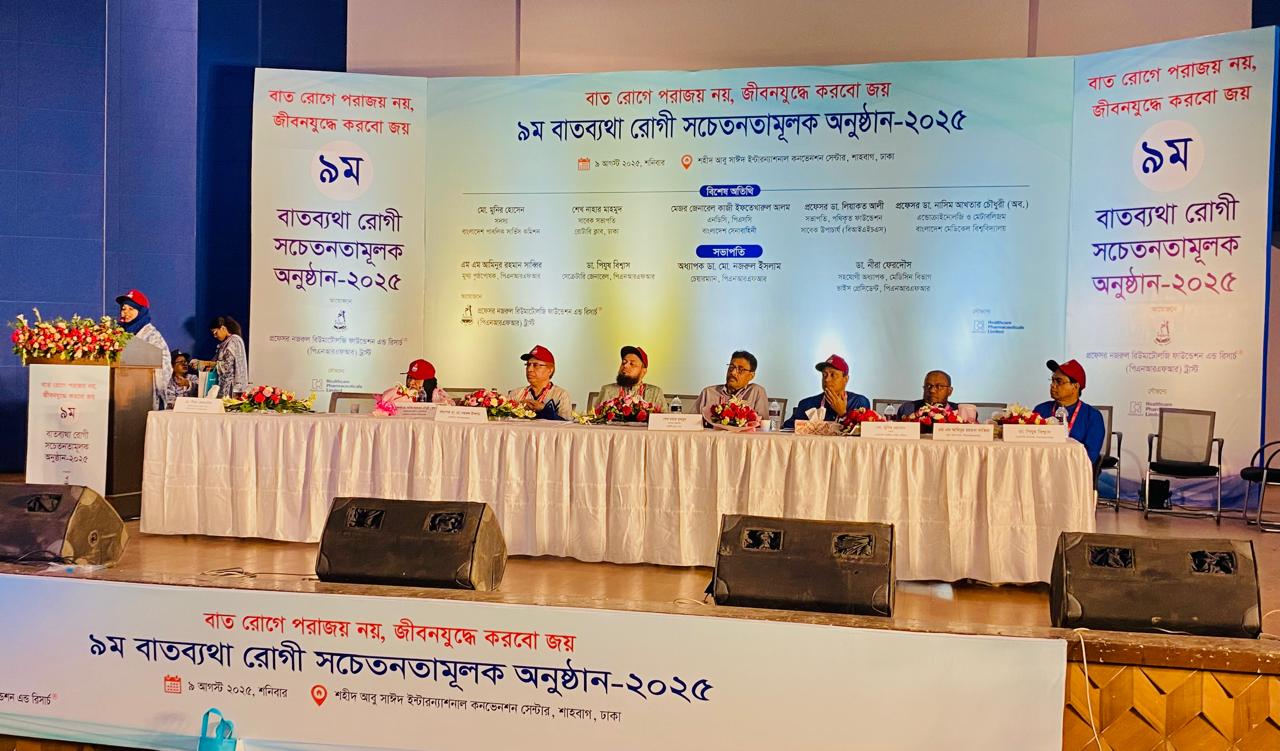
The 9th Patient Awareness Program, organized by the Professor Nazrul Rheumatology Foundation and Research (PNRFR) Trust at the Shaheed Abu Sayeed Convention Center, revealed that one in three Bangladeshi adults suffers from conditions like arthritis, spondylosis, gout, and osteoporosis.
“Chronic pain is not just a personal struggle—it’s a national crisis,” said Dr. Neera Ferdous, Vice-Chairman of PNRFR and Associate Professor of Medicine at MH Samorita Medical College. “It destroys mobility, drains household incomes, and robs people of dignity and productivity.”
Key statistics presented at the event highlight the scale of the problem:
Knee Osteoarthritis: 12.5+ million affected Rheumatoid Arthritis: ~1.75 million Lumbar Spondylosis: 10.6 million, mostly age-related Hyperuricemia: 15 million with elevated uric acid levels Gout: Over 550,000 diagnosed Osteoporosis: Estimated to affect up to 6 millionOne new osteoarthritis case emerges every 25 seconds, and a new spondylosis case every 105 seconds. Globally, an osteoporotic fracture occurs every three seconds—1 in 3 women and 1 in 5 men over 50 will experience one.
Despite the growing burden, Bangladesh has a critical shortage of rheumatologists. Experts, including Professor Dr. Md. Nazrul Islam, Chairman of PNRFR and Vice President of APLAR, called for urgent government action.
“We’ve been treating pain as normal,” he said. “But without trained specialists, early diagnosis, and affordable care, millions will suffer needlessly.”
He urged integration of rheumatic disease management into primary healthcare, expanded training, and subsidized treatment.
The event included the distribution of scholarships to meritorious students and financial aid to underprivileged patients.
Mohammad Badruddoza, Executive Director of rural development NGO HANDS, was honored for his work in improving healthcare access for marginalized communities.
The program was attended by senior officials including Md. Munir Hossain (BPSC), Major General Kazi Iftekhar-ul-Alam (Retd.), and Aminul Islam, Chairman of NTRCA, alongside doctors, academics, and civic leaders.
“Pain is not a part of aging—it’s a sign of disease,” Dr. Neera Ferdous stressed. “We must stop ignoring it and start investing in prevention, awareness, and accessible care.”
With millions silently suffering, experts agree: chronic pain must no longer be invisible in national health policy.