
No price hike during Ramadan: Commerce adviser
NN Online:
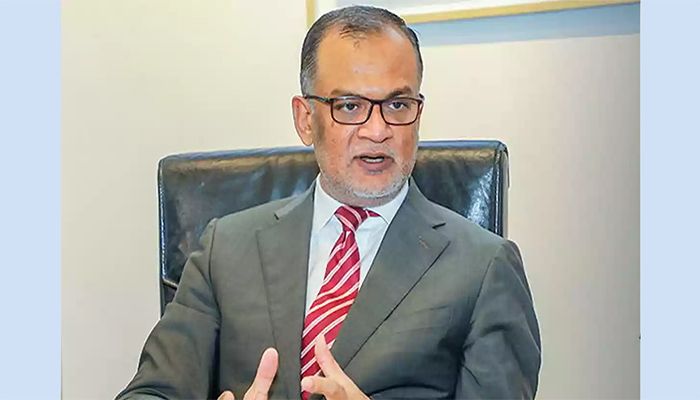
Commerce Adviser Sk Bashir Uddin on Sunday said that essential commodity prices will not increase during the upcoming month of Ramadan.
He made these remarks while speaking at a policy conclave titled “Reasonable Pricing of Food Items: Exploring Market Supervision Strategies” at a city’s hotel on Sunday.
Reassuring the country’s import systems and stockpiles are sufficient to meet demand during the holy month, he said, “InshaAllah, there will be no shortages of items such as oil, sugar, chickpeas, and dates in the market.”
The adviser explained that local market conditions suggest prices should actually decrease despite a rise in international prices of various commodities. “I do not see any reason for prices to rise. We have had extensive discussions today on what the reasonable prices of food items should be, and both short-term and long-term plans will be devised to turn these ideas into action.”
He also stressed the need for policy development to genuinely assist consumers.
To ensure proper market practices, he highlighted the roles of several regulatory bodies, including the Competition Commission, the Directorate of Consumer Rights Protection, and the Trading Corporation of Bangladesh (TCB).
The Tariff Commission and the National Board of Revenue (NBR) are working to make the market more consumer-friendly.
He called on local producers, importers and traders to contribute to creating a more competitive market.
Bashir Uddin addressed the export of rice bran oil, a commodity highly beneficial for health.
He revealed that approximately 5,00,000 to 6,00,000 tonnes of rice bran oil was previously exported to India, but the government has made exports more difficult by imposing a 25 per cent regulatory tax. “If this oil is brought back to the market, it will help stabilise the oil market further…there is no real difference between bottled and bulk oil apart from price.”
He also announced that the government is working to grant the competition commission more independence to ensure a fair and competitive market.
“Our policies have been designed for the benefit of the wealthy, not for the common people. In the past 15 years, there has been little large-scale investment in the country, and thus, employment opportunities have not increased. Without more investment, how can tax collection rise?” he questioned.
Further criticising the banking sector, he claimed that banks have become “criminal institutions” and pointed out the destruction of Islamic banks and the TCB. “In the TCB’s records, 4.3 million fake beneficiaries have been found, and this needs further verification,” he remarked.
Centre for Policy Dialogue (CPD) Research Director Dr Khondaker Golam Moazzem delivered the keynote address.
National Board of Revenue Chairman Mohammad Abdur Rahman Khan, former Jahangirnagar University professor and economist Anu Muhammad, Commerce Ministry’s Secretary (routine duties) Mohammad Abdur Rahim Khan, National Committee Leader Sarjis Alam, and Anti-Discrimination Student Movement Chief Coordinator Umama Fatema, among others, spoke on the occasion.