No more toothless human rights commission: CPD

Staff Reporter :
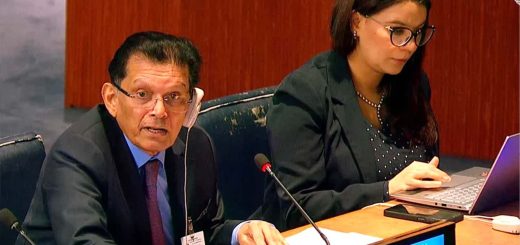
Distinguished Fellow of the Centre for Policy Dialogue (CPD) Dr. Debapriya Bhattacharya has cautioned that Bangladesh cannot afford to have another “powerless” National Human Rights Commission (NHRC).
He stressed that what the people want is not a symbolic body but a strong, independent, and functional institution capable of protecting citizens’ rights without fear or bias.
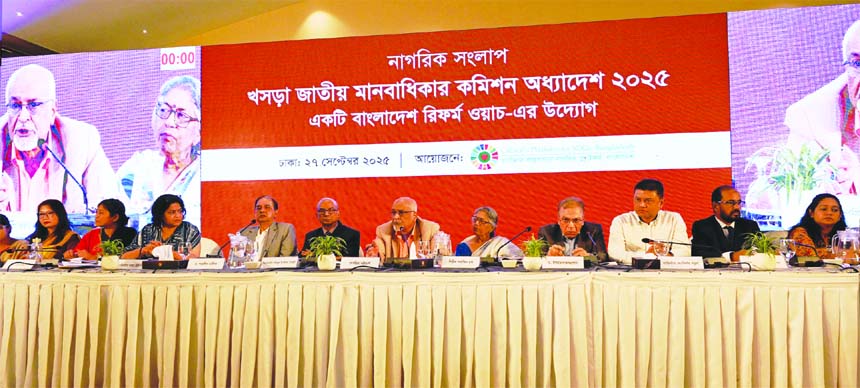
Speaking at a discussion titled “Draft Human Rights Commission Act 2025” organised by Bangladesh Reform Watch on Saturday Debapriya said the absence of the NHRC for nearly a year has left a vacuum in institutional protection of rights.
Although the interim government abolished the commission in November 2024, it has since failed to introduce a credible alternative, leaving the draft of a new law open to criticism from experts and rights defenders.
Recalling the origins of the commission, he noted that the first initiative came under the Fakhruddin Ahmed-led caretaker government in 2007, with a draft law prepared in 2009.
However, he said the Awami League government later reshaped the draft in its own way and formed the commission through parliament, but the body ultimately proved to be “ineffective.”
“We do not want a commission that is practically toothless, with no power to bite,” Debapriya declared.
“This time, the leadership must go to people with honesty, principle, and courage—individuals who can even confront the government if necessary. Appointing a ‘spineless good man’ will simply reproduce past failures.”
Supreme Court lawyer Barrister Jyotirmoy Barua also raised concerns about the proposed draft law.
He pointed out that it still contains many of the flaws of the earlier legislation, including provisions that allowed bureaucrats to become members—creating conflicts of interest.
The draft also remains vague on key issues such as disposal timelines for complaints, funding sources, and eligibility of dual citizens to serve on the commission.
He added that while the earlier commission worked in certain areas, it remained silent on sensitive issues such as human rights in the Chittagong Hill Tracts.
Sanjida Islam, coordinator of Mayer Daak—a platform of families of enforced disappearance victims—shared her personal experience.
“Whenever we went to the commission, all it did was send letters to the home ministry and then consider its duty fulfilled. Beyond that, no meaningful action was taken,” she said.
Debapriya echoed this criticism, noting that the commission consistently reported 100 percent task completion while its activities were reduced to letter-writing.
The discussion, joined by human rights activists, UN officials, and foreign representatives, focused on aligning the draft law with international standards, particularly the Paris Principles.
Participants emphasised the urgent need for structural reform, financial independence, and accountability mechanisms to ensure the commission becomes a truly effective guardian of human rights in Bangladesh.