



IAEA finds no gaps in RNPP’s on-site

Bangladesh’s first nuclear power plant at Rooppur has received positive international recognition for its emergency preparedness and response infrastructure.
An Emergency Preparedness Review (EPREV) mission of the International Atomic Energy Agency (IAEA) identified the plant’s on-site emergency response system, specialised medical centre and modern firefighting training facilities as notable strengths.
According to project officials, the IAEA’s published assessment identified no specific deficiencies in Rooppur’s on-site emergency management arrangements and made no recommendations for corrective action in this area.
Instead, the mission recommended strengthening coordination among relevant agencies at the national level.
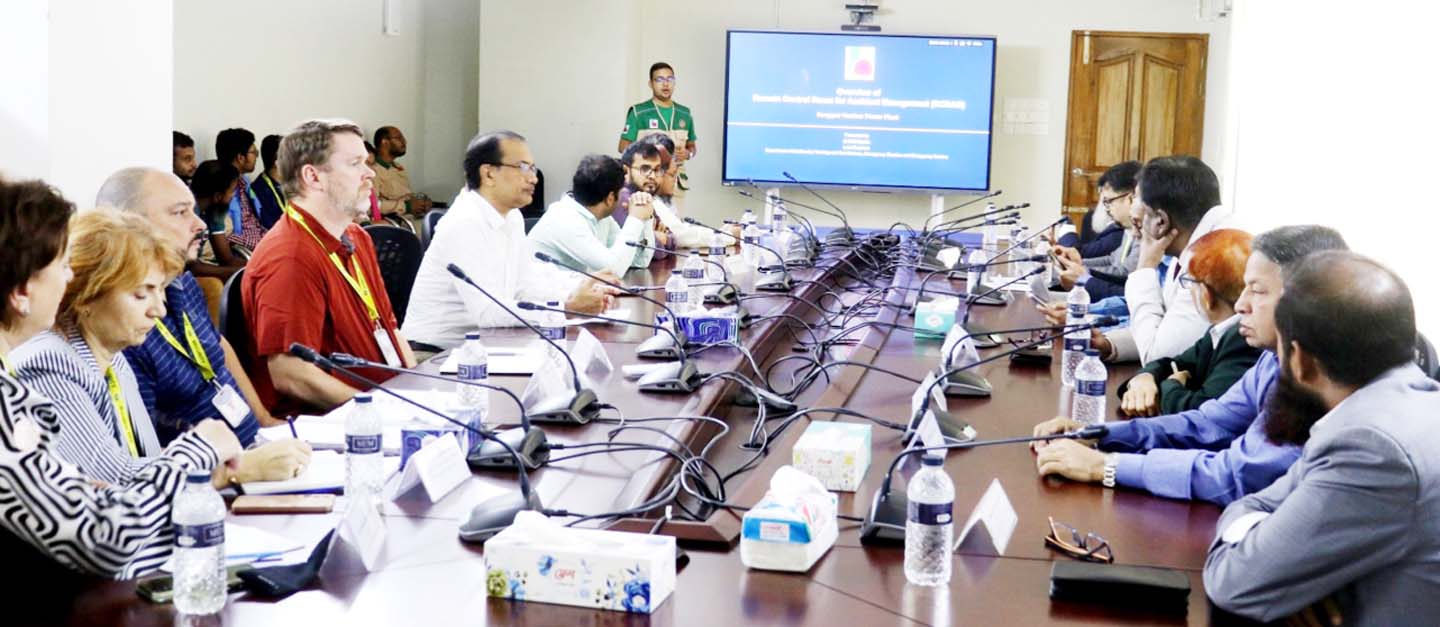
The 10-day review was conducted from 8 to 18 November under the supervision of the Bangladesh Atomic Energy Regulatory Authority (BAERA).
In a statement issued on 18 November, the IAEA acknowledged Bangladesh’s progress in emergency preparedness while emphasising the need for stronger coordination among national agencies.
The IAEA expert team identified two major strengths in Bangladesh’s emergency preparedness and response framework.
The first was the country’s extensive experience in managing natural disasters, which could provide a strong foundation for responding to nuclear and radiological emergencies.
The second was Rooppur’s own emergency response capacity. The team positively assessed the plant’s specialised medical facilities, including psychological support services, as well as its modern fire station simulator, which provides practical training for firefighting personnel.
These facilities are expected to play an important role in maintaining emergency readiness through regular training, practical exercises and refresher programmes.
Dr Md Zahedul Hassan, Managing Director of Nuclear Power Plant Company Bangladesh Limited (NPCBL), said on Sunday that the IAEA assessment should be understood by clearly distinguishing between on-site and off-site emergency management.
On-site arrangements cover the plant’s internal emergency response, accident management, firefighting, medical services and protection of personnel.
Off-site arrangements, by contrast, depend on coordination among national and local administrations, law enforcement agencies, rescue services and other government institutions.
He explained that the IAEA’s recommendations primarily concerned strengthening the national emergency preparedness and response framework, particularly inter-agency coordination, clear allocation of responsibilities, and integrated command-and-control arrangements.
“Emergency preparedness at a nuclear power plant cannot depend on a single organisation. Alongside the plant’s internal arrangements, the coordinated capabilities of relevant national agencies are equally important.
The IAEA’s recognition of Rooppur’s emergency response system, specialised medical services and firefighting training facilities as strengths is significant.
Recommendations for stronger national coordination should not be interpreted as weaknesses in the plant’s own management system,” he said.