
NBR abolished in bid to raise tax-to-GDP ratio
Staff Reporter :
In a landmark move to modernise Bangladesh’s tax system, the interim government on Monday announced the dissolution of the National Board of Revenue (NBR), replacing it with two new entities – the Revenue Policy Division and the Revenue Management Division – under the Ministry of Finance.
According to a statement issued by the Chief Adviser’s Press Wing, the restructuring seeks to separate tax policy formulation from enforcement, aiming to improve efficiency, eliminate conflicts of interest, and broaden the country’s tax base.
The NBR, operational for over five decades, has consistently underperformed in meeting revenue targets. Bangladesh’s tax-to-GDP ratio currently stands at just 7.4 per cent – one of the lowest in Asia – compared with a global average of 16.6 per cent and 11.6 per cent in neighbouring Malaysia.
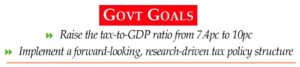
The government has set a near-term objective of raising this ratio to 10 per cent as a prerequisite for advancing the country’s development goals.
The press release identified several longstanding governance and structural issues within the NBR such as conflict of interest, revenue shortfalls, governance failures, administrative redundancy and internal discontent.
Housing both tax policy-making and enforcement within a single institution led to a concentration of power, reduced accountability, and created opportunities for irregularities.
Tax officials were often accused of enabling evasion in exchange for personal gain.
The dual role hindered strategic tax planning and capacity-building, leading to a persistently narrow tax base and underwhelming revenue performance.
Inefficient enforcement, limited investor support, and poor institutional oversight eroded confidence in the tax administration.
The same official serving as both the head of the Internal Resources Division and chairman of the NBR created overlap, inefficiency, and unclear decision-making channels.
The reforms have raised concerns among experienced tax and customs officials, many of whom worry about losing influence or being side-lined under the new framework.
Under the new structure, the Revenue Policy Division will be responsible for developing tax laws, setting rates, and managing international tax treaties.
The Revenue Management Division will oversee tax collection, audits, and enforcement. By clearly delineating responsibilities, the government aims to curb conflicts of interest and enhance institutional integrity.
Officials said the reform is expected to Strengthen Governance and Efficiency, Broaden the Tax Base, Improve Investment Climate and Enable Long-Term Policy Planning. Dedicated roles for each body will eliminate duplication and foster specialisation.
A more targeted approach to direct taxation is expected to reduce dependence on indirect taxes and improve equity in tax collection.
Greater transparency and professionalism are expected to boost investor confidence and reduce friction in tax administration. A standalone policy unit will allow for forward-looking, research-based tax strategy – a shift from the previous reactive and revenue-driven model.
This overhaul represents more than an administrative reshuffle – it marks a fundamental realignment of the country’s tax governance.
The government believes these changes are vital to building a fairer, more efficient, and accountable tax system capable of meeting the aspirations of a growing economy.
A detailed roadmap for the transition is expected to be released in the coming weeks.
Meanwhile, a group of now-dissolved National Board of Revenue (NBR) employees has announced a pen-down strike on 14, 15, and 17 May in protest of the NBR’s dissolution.
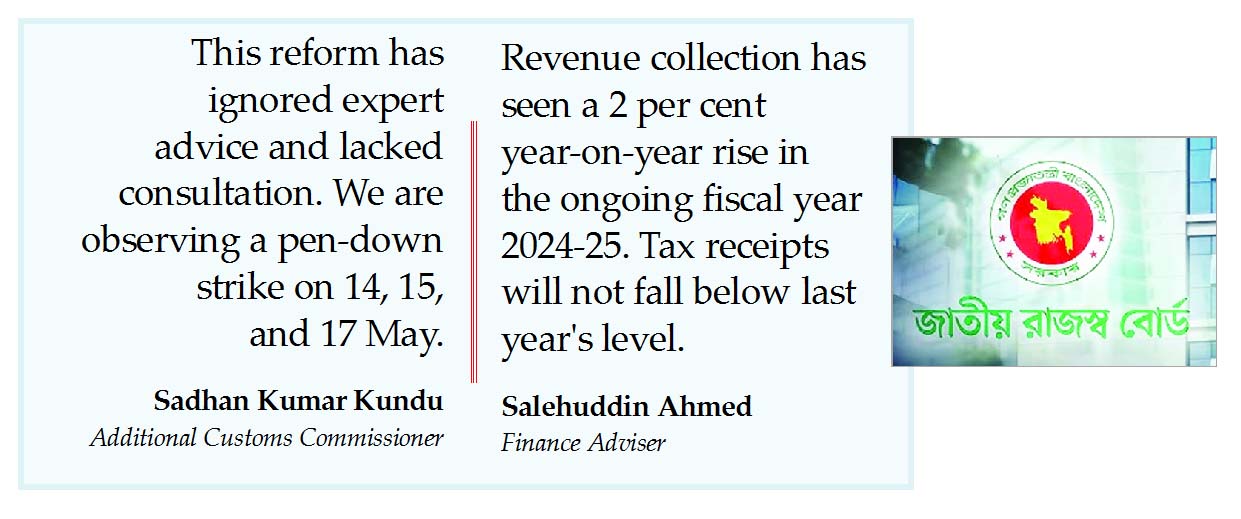
Sadhan Kumar Kundu, additional customs commissioner and representative of the protesters, disclosed the strike dates during a demonstration held in front of the NBR headquarters on Tuesday under the banner of the NBR Sangskar Oikya Parishad.
According to the announcement, the strike will be observed from 10am to 1pm on 14 May, and from 10am to 3pm on 15 and 17 May. Protesters will continue handling tasks related to airway passengers, exports, and the national budget, but all other activities will remain suspended.
They urged the government to reconsider the NBR Reform Commission’s recommendations and engage with relevant stakeholders. The dissolution was enacted by an interim government ordinance, which customs and tax officials argue ignored expert recommendations and lacked stakeholder consultation.
As of 5:00pm on 13 May, the NBR Sangskar Oikya Parishad was staging a sit-in protest at the NBR headquarters, demanding withdrawal of the ordinance. At around 4:10pm, NBR Chairman Abdur Rahman Khan was seen leaving the premises amid slogans from protesters.
Speaking at the event, Monalisa Shahrin Sushmita, joint commissioner of taxes, said the ordinance was suddenly issued at night, bypassing the Reform Advisory Committee’s input. She warned that implementing it would sideline experienced revenue professionals.
However, Finance Adviser Salehuddin Ahmed assured that the recent unrest among tax officials, following the dissolution of the National Board of Revenue (NBR) and the separation of tax policy from administration, will not impact revenue collection.
“There will be no adverse impact. Revenue collection has seen a 2 percent year-on-year rise in the ongoing fiscal year 2024-25. So, there is no cause for disappointment. Tax receipts will not fall below last year’s level,” he told reporters after a meeting of the advisers’ committee on public procurement at the secretariat.