
Nationalist forces have to unite in spirit of 7th Nov
Staff Reporter :
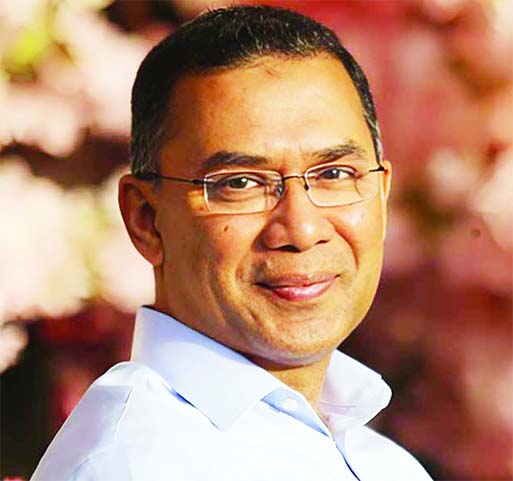
BNP Acting Chairman Tarique Rahman on Thursday called upon all nationalist forces to unite in the spirit of November 7 to build a strong and democratic Bangladesh.
“Safeguarding our national independence and sovereignty has become an urgent necessity today,” he said in a message issued on the eve of ‘National Revolution and Solidarity Day.’
He stated that the Sepoy-People’s Revolution of November 7, 1975 marked not just a turning point in Bangladesh’s history but also the beginning of anti-hegemonic nationalist politics in the country.
Extending his greetings and best wishes to the nation on the occasion, Tarique said, “The sovereignty of our motherland was defended through the Sepoy-People’s Revolution.
On this historic day, patriotic soldiers and the masses took to the streets with a firm vow to safeguard national independence and restore democracy. Hence, November 7 holds immense significance in our national life.”
He observed that after independence, the ruling clique, driven by self-interest, plunged the nation into the grip of hegemonic control.
“In their bid to perpetuate power, they destroyed democracy by forming the one-party BAKSAL system.
The BAKSAL regime, through undemocratic and fascist measures, deprived the people of their fundamental rights.”
Recalling the turbulent events of that period, Tarique said that on November 3, 1975, conspirators imprisoned the Proclaimer of Independence, Shaheed President Ziaur Rahman, and his family inside the cantonment.
“In that moment of grave national crisis, the valiant soldiers and patriotic masses united on the streets on November 7, demonstrating an unprecedented solidarity to defend national independence and secure the freedom of Ziaur Rahman,” he added.
He noted that under the leadership of President Zia, this change ushered in a new sense of hope and vitality in national life, reinstating freedom of speech, opinion, and democracy. “Peace and confidence returned to the hearts of the people,” he said.
Tarique further remarked that domestic agents of foreign hegemonic forces, perceiving President Zia as a threat to their ambitions, brutally assassinated him at the Chittagong Circuit House in 1981.
“Although Zia embraced martyrdom, his ideals continue to inspire millions who remain united in their determination to defend the nation’s independence and democracy,” he said.
Referring to the current situation, Tarique said, “Once again, the fascist Awami League has seized state power through conspiracy, destroying democracy for nearly sixteen years.”
He alleged that the country’s sovereignty has steadily eroded under their subservient foreign policies.
“The Awami fascist government has unleashed brutal repression on pro-democracy activists, establishing a reign of terror marked by corruption, enforced disappearances, extrajudicial killings, and secret detention centers like Aynaghar,” he said.
Tarique lamented that the “Symbol of Democracy,” Begum Khaleda Zia, was unjustly imprisoned for years without valid cause.
He said that the fascist regime was ultimately forced to flee the country following the courageous uprising of students and the masses on August 5 – a movement that, he believes, has paved the way for the restoration of democracy.
Tarique Rahman emphasized that ensuring the people’s fundamental human rights and holding a genuinely free and fair election are prerequisites for establishing true democracy.
He concluded by calling for the establishment of justice, the rule of law, and good governance in society.