
Iran responds to Israeli strikes: Missile barrages rock Tel Aviv, Jerusalem
Staff Reporter :
Explosions echoed across Tel Aviv, Jerusalem, and Tehran on Saturday as Iran launched a series of retaliatory missile strikes following Israeli attacks on its nuclear infrastructure the previous day.
Iranian missiles reportedly struck multiple sites across Israel, leaving at least three dead and dozens injured, in a response Tehran framed as retribution for the deadly Israeli airstrikes on key nuclear and military facilities.
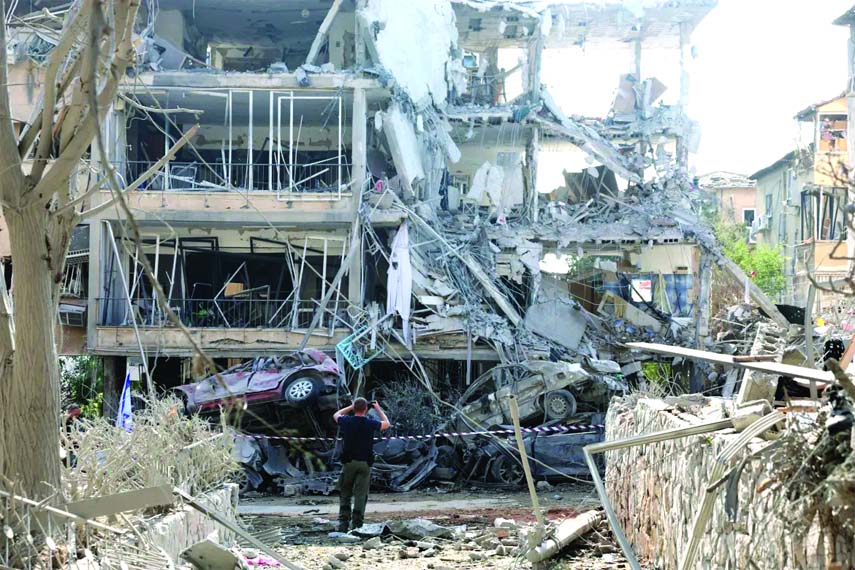
In Israel, air raid sirens blared through the night as residents sought shelter amid ongoing missile salvos. By morning, the alerts were lifted by civil defence forces, but images from Ramat Gan near Tel Aviv revealed the aftermath – shattered buildings, wrecked vehicles, and debris-strewn streets.
Iran’s Islamic Revolutionary Guard Corps claimed responsibility for hitting dozens of targets across Israel. Meanwhile, Iran’s Supreme Leader Ayatollah Ali Khamenei, in a recorded address, vowed that Tehran would continue its reprisals: “We will not allow them to escape safely from this great crime they committed.”
Israel’s Defence Minister, Israel Katz, warned of dire consequences if Iranian strikes persisted. “If Khamenei continues to fire missiles at the Israeli home front – Tehran will burn,” he said.
The latest escalation follows Friday’s surprise Israeli strikes, which reportedly killed several senior Iranian military officials and nine leading scientists connected to Iran’s nuclear programme. Israel Defence Forces (IDF) stated that those killed were key successors to Mohsen Fakhrizadeh, the top nuclear scientist assassinated in 2020.
According to the IDF, the scientists were targeted as part of a covert, years-long intelligence operation aimed at dismantling Iran’s nuclear knowledge base. “All of the scientists eliminated were pivotal to Iran’s nuclear weapons development and held decades of accumulated expertise,” the statement said.
Iran’s ambassador to the United Nations reported that 78 people were killed and more than 320 injured in the Israeli attacks. Iranian state media also confirmed at least 60 fatalities in a strike on Tehran alone.
Prime Minister Benjamin Netanyahu defended the Israeli strikes, describing them as necessary to neutralise threats posed by Iran. He simultaneously appealed to the Iranian public to resist their government, saying Israel would welcome regime change, though it was not actively pursuing it.
Tensions escalated further when Iran issued a warning to the United States, United Kingdom, and France, threatening to target their military assets in the region if they intervened to defend Israel. Downing Street has not officially commented, though sources suggest the UK has not been involved in any military operations or air defence efforts.
Elsewhere, Iran’s Foreign Minister Abbas Araqchi told EU foreign policy chief Kaja Kallas that continued nuclear negotiations with the US were now “unjustifiable” in light of what he described as Israeli “savagery”. The recent airstrikes have likely set back Iran’s nuclear capabilities, which may delay progress in ongoing diplomatic talks.
Despite the mounting crisis, former US President Donald Trump has expressed optimism, urging Iran to return to the nuclear deal. The US and Iran have already held five rounds of indirect negotiations this year, mediated by Oman, with uranium enrichment remaining a key sticking point.
In London, Prime Minister Keir Starmer spoke with Saudi Arabia’s Crown Prince Mohammed bin Salman on Saturday to discuss the deepening conflict. A Downing Street spokesperson said both leaders agreed on the urgent need for de-escalation and confirmed the UK’s commitment to working closely with allies to pursue a diplomatic resolution.