
Media freedom needs political culture shift
Staff Reporter :
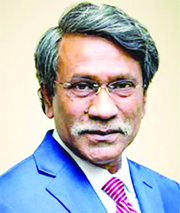
National Consensus Commission Vice-Chairman Professor Ali Riaz on Wednesday said that true media freedom in Bangladesh remains elusive due to the failure of news outlets to evolve as corporate entities and the dominance of politically charged ownership structures.
Speaking at a dialogue hosted by the Centre for Governance Studies (CGS) at the CIRDAP Auditorium, Prof Riaz, also the head of the Constitution Reform Commission, said, “The media houses of Bangladesh have not emerged as corporate entities. Most of them exist to protect the business interests of their owners.”
His remarks came during a session titled “Dialogue on Media Freedom: Exploring Grievances and Self-regulations”, where he served as the chief guest. The discussion drew media professionals, researchers, and policymakers to address the growing concerns over press freedom and journalistic independence.
Contrasting the local media landscape with that of globally renowned outlets, Riaz pointed out, “People don’t usually know who owns The New York Times or The Guardian, but in Bangladesh, everyone knows the media owners by name. As long as this continues, freedom of the press is unattainable.”
He argued that the personal visibility and political ties of media owners, often tied to other business ventures or political alignments, undermine editorial independence.
Prof Riaz also highlighted the precarious working conditions of many journalists, saying the lack of corporatisation has prevented the establishment of a fair wage structure. “Journalists are not receiving proper salaries due to the absence of institutional frameworks in media ownership and operations,” he said.
He went on to criticise journalist trade unions, stating that they have become politically divided and ineffective.
“These unions are neither functioning as proper trade unions nor acting like credible political groups,” he said, suggesting their failure has left journalists unprotected and vulnerable.
The commission vice-chair warned that regime changes often bring changes in editorial leadership and ownership control.
“Since political culture remains unchanged, media editors and owners change with every change in government,” he observed, describing it as a core obstacle to institutionalising press freedom.
Touching on the rise of social media, Riaz acknowledged its irreversible impact but noted that mainstream media still enjoys public trust.
“You cannot halt technological advancements, but people continue to rely on mainstream media because of its credibility,” he said.
On the subject of self-regulation and external oversight, the academic voiced discomfort with the idea of heavy-handed frameworks.
“I don’t like the term ‘regulatory framework’-it’s a question of principle,” Riaz remarked, indicating his preference for self-discipline within the industry rather than top-down control.
The event comes amid growing scrutiny over media accountability, rising misinformation on digital platforms, and concerns over declining press freedom in Bangladesh, with several outlets facing censorship or pressure in recent years.