
‘Limited export items biggest barrier to negotiation’
Staff Reporter :
The Trade Adviser said, many people asked us – what is our way forward? We believe we deserve better, but we must clearly define what we want and how we want it.
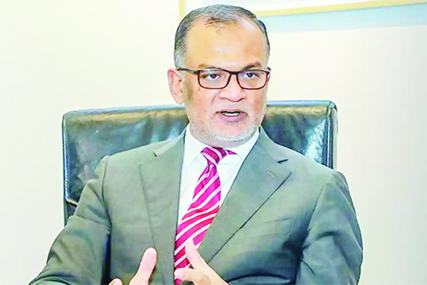
Trade Adviser Sheikh Bashir Uddin said the lack of export product diversification is one of the biggest problems for Bangladesh in trade negotiations.
He said, our major export items are very limited. In addition, we lack sufficient production capacity or raw materials. For most products, we import raw materials and add only limited value before selling them. That is why “Rules of Origin” carry special importance in trade negotiations.
He made these remarks on Sunday at a discussion titled “National Capacity in Trade Negotiations: Reflections and the Way Forward” held at the InterContinental Dhaka. The event was jointly organized by the Ministry of Commerce, UNDP Bangladesh, and UK International Development.
The Trade Adviser said, many people asked us – what is our way forward? We believe we deserve better, but it must be clearly defined what we want and how we want it.
For example, we import about 15 million dollars’ worth of food grains every year, although the previous government claimed the country was “self-sufficient in food.” In reality, we still spend heavily on food. Moreover, most of our energy demand depends on imports.
Therefore, food and energy – these two fundamental areas – are where we attempt to fill the gaps. Whenever we enter into negotiations, strategies must be formulated around these basic issues.
Sheikh Bashir Uddin also remarked that future trade negotiations will remain a long-term challenge for Bangladesh.
In her remarks as Special Guest, British High Commissioner Sarah Cook said that the global trading system is currently under pressure. Protectionism is rising. We have seen supply chains break down, and global trade policies are being reconsidered. For Bangladesh, graduation from LDC status will bring additional challenges.
The country will face tougher competition in global markets. Dependence on trade tariffs must be reduced, and the economy must become more open. Bangladesh will have to sign trade agreements and ensure market access with partners worldwide.
She further said, we know trade policy is complex and negotiations are difficult. It is political, it is technical. For Bangladesh to succeed, it will need sharp intellect, strong institutions, and a clear strategy. You must fully understand what your own interests are, and what the interests of your trading partners are.
The session was chaired by Commerce Secretary Mahbubur Rahman, with special guests including the Chief Adviser’s Special Envoy for International Affairs Lutfey Siddiqi, British High Commissioner Sarah Cook, and UNDP Resident Representative Stefan Liller. The welcome address was delivered by Tanvir Mahmud, Senior Governance Specialist at UNDP Bangladesh.
In the session titled “Institutionalizing National Capacity in Trade Negotiations”, speakers included UNDP Country Economic Adviser Weis Pärä, RAPID (Research and Policy Integration for Development) Chairman Mohammad Abdur Razzaque, and Abdur Rahim Khan, Additional Secretary (Export Wing) of the Ministry of Commerce.