
Lal Sabuj Society: Bangladesh’s Youth Leading the Charge for Positive Change
FatemaTuz Jannat Noor :
In a country where nearly 35 percent of the population is under 25, energy and ideas of young people have never been more vital. Since its humble beginnings in Barisal in May 2010, Lal Sabuj Society (LSS) has grown from a monthly children’s magazine into a dynamic, youth-led movement spanning 32 districts nationwide.
Driven by the belief that empowered youth can transform society, LSS has already engaged over 178,000 Bangladeshis through grassroots projects, advocacy campaigns, and life-changing training programs.
From Magazine Pages to National Movement
What started as the “Lal Sabuj” monthly magazine quickly revealed a hunger among young readers for more than stories; they wanted to take action.
By 2015, the founders formalized their efforts into the Lal Sabuj Foundation, registering with the Youth Development Department and later earning recognition from the Social Welfare Department.
Over the next decade, LSS built a lean core team of 18 staff supported by more than 2,500 volunteers, establishing district committees in Barisal, Khulna, Rangpur, Mymensingh, Chattogram, Sylhet, Narayanganj, and beyond.
A Holistic Approach to Sustainable Development LSS aligns its work with seven key United Nations Sustainable Development Goals, including climate action, gender equality, health, and clean water and sanitation.
“Our mission is simple: empower youth to become responsible, creative leaders of tomorrow,” says Tahsin Uddin, President of Lal Sabuj Society.
“We want to build a platform where young people can develop leadership skills and drive sustainable change from city centers to remote villages.”
Climate Action and Environmental Stewardship
Recognizing the urgent threat of climate change, LSS runs tree-planting drives and plastic-pollution cleanup campaigns in schools and communities.
“Turning every sapling into a symbol of hope, we teach students that protecting the environment is everyone’s responsibility,” explains Azizun Nahar Tama, Volunteer Coordinator.
Workshops on “Youth in Climate Action” have inspired students to turn flood-prone ponds into floating vegetable gardens, an innovative solution that both conserves water and secures local food supplies.
Championing Mental Health
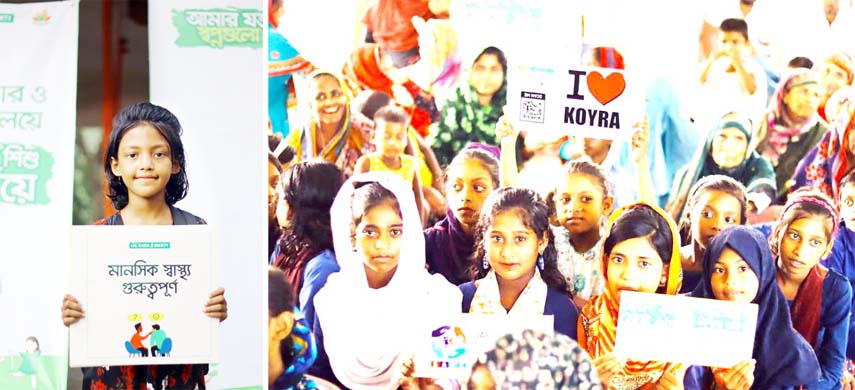
LSS also tackles a quieter crisis: adolescent mental health. Across districts, volunteers organize story-based sessions on depression, anxiety, and suicide prevention for school-age children.
These workshops include role-plays to practice empathetic listening and information on government helplines, so no young person feels alone in times of crisis. “Simple conversations can save lives,” says Tama. “When we break the stigma, we open the door for healing.”
Building Skills, Fostering Careers
To prepare youth for the workforce, LSS offers free soft-skill and leadership training, career guidance seminars, and digital literacy courses.
In recent years, over 2,000 participants have learned basic journalism, mobile reporting, and feature writing during hands-on workshops led by seasoned journalists and university professors.
Graduates have gone on to produce news reports, blogs, and videos that highlight local issues, amplifying unheard voices and nurturing the next generation of storytellers.
Beyond journalism, LSS supports young women in self-defense and sports.
Take Sajia Afrin Raka: she joined LSS’s karate project as a beginner and rose to become a black belt trainer. Despite social and family opposition questioning why a girl should learn karate, she persevered and eventually gained her family’s support.
This year, Sajia claimed the silver medal at the 29th National Karate Championship, an achievement that inspires other girls to pursue strength, confidence, and discipline through martial arts.
Responding to Emergencies, Sustaining Hope
When a disaster strikes, LSS volunteers spring into action. From distributing Iftar packages during Ramadan to supporting flood victims with relief and rehabilitation, the organization operates entirely on a nonprofit basis.
During the 2024 dengue outbreak, youth teams mobilized awareness campaigns in urban slums; in the monsoon floods, they helped rebuild homes and distribute clean water, demonstrating that resilience is rooted in community solidarity.
Partnerships That Strengthen Impact
Credibility and scale come through strategic alliances. LSS collaborates with UNICEF, Actionaid, ManusherJonno Foundation, Mutual Trust Bank and national institutions like the Bangladesh Tourism Board etc.
These partnerships provide technical expertise, funding, and broader media exposure, ensuring LSS initiatives reach the people who need them most.
Looking Ahead: A Vision for 2030 As Bangladesh marches toward middle-income status, LSS has set an ambitious goal: to train 100,000 volunteers by 2030. “Our youth are the country’s greatest asset,” Tahsin Uddin emphasizes.
“With the right guidance and platform, they can accelerate social progress. We welcome every young Bangladeshi to join us—through social media, in their own districts, wherever their passion lies.”
From its magazine-maker roots in Barishal to a thriving national network, Lal Sabuj Society has proven that when young people lead, positive change follows. In classrooms, communities, and disaster zones alike, their energy and creativity are shaping a greener, healthier, and more equitable Bangladesh, one volunteer at a time.
(The writer is a Research Associate, Lal Sabuj Society [email protected])