
Khulna lags behind in economic development
Khulna Bureau :
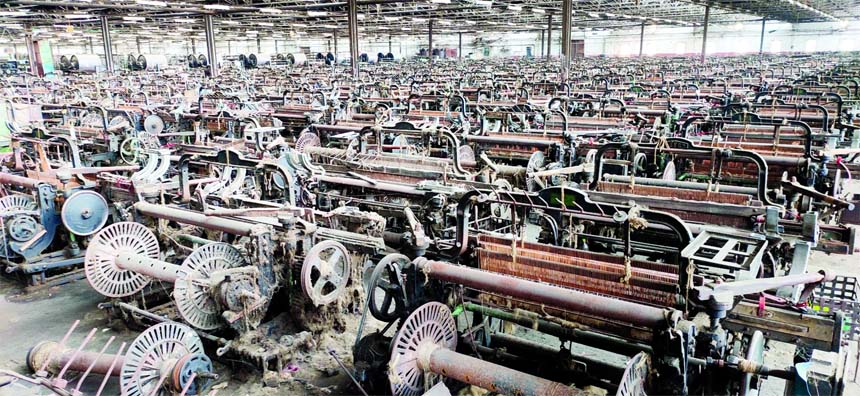
The once industrial city of Khulna is now shrouded in a shadow of stagnation. Where once the area was bustling with river-based trade, jute mills, fish processing establishments and match factories, there is now silence.
Khulna is gradually falling behind economically due to slow development projects, the decline of industries, the stagnation of waterways and the infrastructure crisis.
Several projects of Khulna City Corporation (KCC) and Khulna WASA have been pending for years.
Projects that were started to improve citizen amenities have now become a burden on the city due to protracted delays.
Road potholes, unplanned work and delays in approving new projects are disrupting the lives of the common people.
Locals complain that this slowdown has not only stopped the development of the city’s infrastructure but also the overall economic growth.
Khulna Metropolitan Jamaat-e-Islami Assistant Secretary and Metropolitan President of the Workers’ Welfare Federation Mu. Azizul Islam Farazi said, Khulna’s economic backbone was once industries.
One of the country’s largest jute mills, fish processing industries and match factories created employment for thousands of people.
But over time, these institutions have closed one by one. Although some mills were started by government initiatives, they could not survive due to lack of sustainable management.
As a result, the employment crisis has taken a terrible shape. And this is due to the irregularities and looting of the fascist government.
“I hope that the elected government, especially if the Bangladesh Jamaat-e-Islami government is formed, will pay special attention to Khulna and restore the ancient traditions of Khulna”, said Farazi.
Former Dhaka University Vice President Ziaur Rahman Papul, who is leading the BNP nomination race in Khulna-1 constituency, said, a large part of Khulna’s trade once depended on the river routes.
But due to the decline in the navigability of the rivers, many rivers are now dying. The once vibrant waterways have now become defunct.
The local economy is further affected by the lack of water transport facilities for trade and commerce.
It is not possible to revive Khulna’s economy without river routes. At the same time, work must be done to prevent river erosion in Dakop and Batiyaghata in the district.
Traffic jams, poor condition of roads and unplanned urbanization have become major obstacles to Khulna’s development.
The common people are suffering year after year in the name of road digging and repair.
This is slowing down the pace of trade and commerce and the interest of investors is also decreasing.
Sheikh Ashraf-Uzzaman, president of the Greater Khulna Development Struggle Coordination Committee, said that about 150,000 people have lost their jobs due to the closure of various industries and factories in Khulna.
Due to the lack of economic opportunities, the flow of people from Khulna to other cities and abroad has increased. As a result, the city’s manpower is gradually decreasing.
According to the Bangladesh Bureau of Statistics, while the manpower has increased in many cities of the country, the opposite is true in Khulna.
According to experts, the main reason for this change is the decrease in employment and livelihood opportunities.
Md. Ansar Ali, a senior resident of the city’s Rupsha Stand Road area, lamented, “Khulna was the heart of the southwestern region.
The city, bustling with rivers, industry and business, is now filled with despair. After August 5, we thought there would be a change. But we are disappointed.”
Analysts believe that to revive Khulna’s economy, it is essential to quickly implement ongoing projects, set up new factories, create jobs and restore the river route.
Otherwise, Khulna, the once industrial city, will become just a city of memories.