Key reforms ‘safeguarded’ from political reversal: Asif

Staff Reporter :
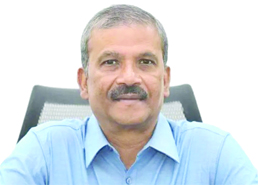
Law, Justice and Parliamentary Affairs Adviser Dr Asif Nazrul on Thursday said the reforms enacted by the interim government following the July mass uprising are structurally protected and will not disappear with the arrival of an elected administration.
Speaking at a high-level programme in Dhaka marking International Human Rights Day, he argued that certain institutional changes now form an irreversible foundation for future governance.
“When we talk about reforms, a common frustration arises—what will happen when the next political government comes? Will these reforms simply disappear?” he told the gathering at Hotel InterContinental. “Let me assure you—two things will not get lost. And these two elements create a very significant distinction between the past, the present, and the future.”
Dr Nazrul identified the restoration of the caretaker government system and the establishment of the Supreme Court Secretariat as reforms that are now secured beyond the reach of partisan rollback. The caretaker model, reinstated by a Supreme Court judgment after years of political dispute, is legally insulated, he said. “There is no possibility of it ever being undone.”
He said the Supreme Court Secretariat, created to strengthen judicial autonomy and administrative independence, is similarly shielded. “The Supreme Court itself will act as the guardian of this law. I do not believe any government would even consider reversing these reforms,” he said. “These two elements are fundamental: our caretaker government will remain, and our independent judiciary will remain. Together, they serve as a major guarantee for the advancement of our human rights.”
Reviewing a broader slate of initiatives pursued by the interim administration, Dr Nazrul said that ambitious proposals such as the Human Rights Ordinance and the Ordinance on Enforced Disappearance had faced organised resistance. “There will be groups opposing these because these will grow into real institutions of accountability,” he said. He signalled that civil society mobilisation would be essential to ensure their survival if they are enacted in the future. “When we return to civil society, we will take to the streets to protect these laws.”
He also pointed to reforms already implemented in the Code of Criminal Procedure and Code of Civil Procedure, arguing that closing long-standing procedural loopholes has begun to accelerate access to justice. “Delivering justice swiftly is now more achievable than ever. I don’t think any government would try to reverse these changes,” he said.
Calling for public recognition of the interim government’s achievements, Dr Nazrul said, “Please appreciate what we have genuinely accomplished. And for the things we could not do, kindly try to understand the reasons behind those limitations.”
He highlighted the newly formed independent Police Commission as another step meant to reshape long-entrenched patterns of impunity. The body will be empowered to issue recommendations on policing and law enforcement.
“If the commission repeatedly issues recommendations and the government continues to ignore them, will that not create pressure on the government?” he asked. He said this structural pressure, combined with increased transparency and oversight of the Home Ministry, marks a break from past practice.
The programme was organised by the Legislative and Parliamentary Affairs Division and attended by senior advisers of the interim administration, including Housing and Public Works Adviser Adilur Rahman Khan and Environment Adviser Syeda Rizwana Hasan. International representatives, including UNDP official Steffan Liller and Swiss Embassy Counsellor Alberto Giovanetti, also addressed the event.