
July Charter nearing final stage
Special Correspondent :
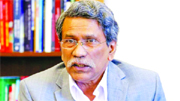
The National Consensus Commission is on the brink of finalising the historic July Charter within the next two to three days, Vice-Chairman Professor Ali Riaz announced on Monday marking a significant milestone in ongoing efforts to forge a national agreement on state reforms.
Speaking at the 20th day of the commission’s second-phase talks with political parties at the Foreign Service Academy in Dhaka, Prof Riaz said, “With your cooperation, we hope that we will be able to reach the final process of a charter in the next 2-3 days.” He emphasized that the commission is engaged in continuous dialogue, making amendments where necessary to ensure broad-based consensus.
So far, the commission has reached agreement on 12 key reform issues. While there remain notes of dissent on two topics, Prof Riaz expressed optimism that compromises are still possible. “Everyone is making concessions. We believe consensus is within reach,” he added.
Prof Riaz highlighted the importance of the charter in addressing long-standing structural issues in the country’s political and administrative system. “For instance, the caretaker government system remains a core demand of many parties. A national framework must be presented to avoid future crises,” he stated.
A draft version of the July Charter was expected to be distributed to political parties in today’s meeting. The day’s agenda included critical provisions related to the appointments of the Public Service Commission, Anti-Corruption Commission, Auditor General, and Ombudsman, as well as ensuring adequate women’s representation in parliament.
“Our goal is to include only those issues that are fundamental to the reform of the state structure,” said Prof Riaz. “This Charter will not cover everything, but it will act as a historical document and a roadmap for the future of Bangladesh.”
He urged political parties to maintain their commitment to the dialogue process and work towards a unified outcome. “We want to present this document to the nation together and sign it collectively,” he said.
Representatives from 30 political parties took part in Sunday’s session, including the Bangladesh Nationalist Party (BNP), Bangladesh Jamaat-e-Islami, Jatiya Nagorik Party (NCP), Gono Odhikar Parishad, Gana Sanghati Andolan, Communist Party of Bangladesh (CPB), Biplobi Workers Party, and Amar Bangladesh (AB) Party.
The session was also attended by commission members Justice Emdadul Haque, Dr Badiul Alam Majumder, Dr Md Ayub Mia, Dr Iftekharuzzaman, Safar Raj Hossain, and Special Assistant to the Chief Adviser Monir Haider.
With hopes running high, the coming days could be decisive in shaping a unified vision for political and institutional reforms in Bangladesh.