
July Charter faces uncertainty: Jamaat
Staff Reporter :
Senior leaders of political parties and civil society on Sunday warned that Bangladesh’s recent political uprising will remain “incomplete” unless the “July National Charter 2025” is given a legal foundation and proportional representation (PR) system of election is introduced.
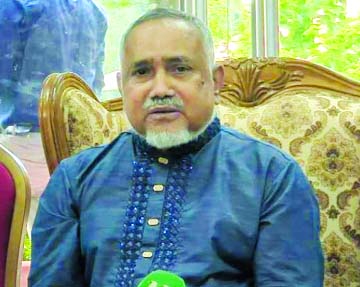
Speaking at a roundtable discussion titled “PR System of Election and Legal Basis of the July National Charter 2025” at the National Press Club in Dhaka, Jamaat-e-Islami’s Nayeb-e-Ameer and former MP Dr. Syed Abdullah Mohammad Taher said: “Seventy-one percent of people want elections under the PR system. If the July Charter is not implemented, the revolution will remain unfulfilled. Any election without reforms will only revive fascism.
Those who want to bring back autocracy, as in the Awami era, are the ones opposing reforms.”
Dr. Taher also criticized parties that came to power after the July uprising for what he termed “compromise with fascism.” He stressed that only a PR-based electoral system could guarantee free, fair, and participatory elections.
The roundtable was organized by the Bangladesh Ideal Teachers’ Federation, drawing academics, lawyers, politicians, and rights activists.
In his opening remarks, Prof. A.B.M. Fazlul Karim, General Secretary of the federation and former Senate member of Dhaka University, said last year’s July-August student-teacher uprising was “a milestone in people’s struggle,” producing both the July National Charter and its Declaration.
“Yet, this historic document has not been granted legal basis,” he warned. “If it is not institutionalized, the achievements of the revolution will remain confined to paper.”
Speakers noted that 91 countries worldwide currently conduct elections under PR systems, which they argued prevent authoritarian tendencies, foster dialogue, and ensure multi-party governance. They stressed the principle of “vote for symbol, not individual candidate,” which they said better reflects public opinion.
Several participants also criticized the July National Charter itself, calling it “incomplete.” They pointed to missing elements such as the recognition of martyrs, rehabilitation of the injured, acknowledgment of Islamist contributions, and proper reference to the 2009 BDR mutiny, the 2013 Shapla Square crackdown, and the 2006 street killings.
They demanded the Charter be finalized, incorporated into the constitution, and subjected to a national referendum for legitimacy.
Nurul Haque Nur, President of Ganadhikar Parishad, said: “Without constitutional recognition of the revolution’s gains, authoritarianism may return in the future. An interim government must ensure PR-based elections in the interest of the people.”
Presiding over the meeting, Prof. Dr. M. Korban Ali emphasized that the PR system is “not just a method of voting, but the beginning of a democratic culture.” He argued reforms are now “a necessity of time” to address the weaknesses of Bangladesh’s political and administrative structure.
Among others present were educationists, rights activists, and lawyers, including Principal Md. Sirajul Islam, GM Alauddin, Dr. Md. Sakhawat Hossain, Prof. Nur Nabi Manik, Prof. Dr. Abul Kalam Patwari, Prof. Dr. Umar Ali, Dr. Nazrul Islam, Barrister Belayat Hossain, and human rights leader Dr. Golam Rahman Bhuiyan.
The meeting concluded with a unanimous call on the government and all political parties to urgently frame a consensus-based legal framework to hold elections under the PR system and grant constitutional recognition to the “July National Charter 2025.”