
Journos to push for HRDD that embeds human rights in every step
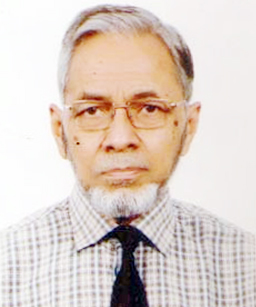
Z.A.M. Khairuzzaman :
Human rights are basic rights that belong to all people. They assist individuals to live in dignity and freedom.
In modern world, the issue of human rights is inseparably connected with economic development and industrialisation. Business and human rights clearly maintain multifarious relationship with each of them. A business organisation can directly influence an individual’s human rights both positively and negatively through its activities or its business relationship.
It is true that business groups create opportunities of livelihood for lots of people, but some of the groups show apathy towards labour rights by violating the rights. Studies show that most of the world’s multinational business firms are involved in violating human rights in their supply chains in some ways. Failure to ensure workers’ safe working atmosphere, depriving them of their fair wage, compelling them to work beyond working hours, employing child labour, forceful labour and racial discrimination etcetera are considered as gross violation of human rights.
Instances of violation of human rights are greater in number in garment and mineral industries as well as in technological and agricultural sectors. As for example, in 2013, ‘Rana Plaza’ building collapsed due to unsafe workplace resulting in death of 1,134 workers and injuries to thousands of others. This incident made it clear that some business companies put the lives of workers at risk for earning profits only.
Despite initiatives taken later for safe workplace in face of international pressure and local demonstrations, workers’ human rights still remain elusive in many spheres. In the international human rights charter, the issue of workers’ basic rights at workplace have been clearly mentioned. Basic human rights such as workers’ right to organise, protection from forceful and child labour, freedom from all kinds of discrimination and torture as well as a safe workplace, are being intentionally violated by business corporations or due to their abject negligence.
Not only in export-oriented Ready-made Garment (RMG) industry, the issue of human rights protection deserves consideration in all major and minor business establishments.
Ensuring a moral business infrastructure is very important, where business concerns will not only put their attention on profits only, but will also play their role in protecting human rights and environment.
Beyond labour rights, environmental human rights are also being violated due to business. Water pollution occurs when industrial organisations release liquid waste and toxic chemicals contaminating the rivers and canals thereby contaminating the source of local people’s drinking water and create a public health crisis.
However, business not only violates human rights, it may play a major role in protecting human rights by following the right policy. Moral business enterprises bring positive change in society by protecting labour rights, consumer rights and conducting environment-friendly activities by following the policy of ‘corporate social responsibility.’
According to international standard, the United Nations adopted the ‘Guiding Principles on Business and Human Rights (UNGPs)’ in 2011. There, it has been mentioned that the responsibility of the state is to ensure human rights in business. It is the responsibility of a company not to violate human rights and create an opportunity to the affected people so that they get proper remedy.
International Labour Organisation (ILO), Organisation for Economic Cooperation and Development (OECD) and European Union have formulated different policies for protection of human rights so that the companies pay due respect towards labour rights and maintain a fair business system.
Many countries have formulated the mandatory Human Rights Due Diligence (HRDD) law, while a process is underway in other countries to make similar law. As a consequence, many big multinational companies follow the ‘Fair Trade’ model where stress has been given on payment of fair wage to workers, environmental-friendly production and improvement of working environment.
In Bangladesh, workers in different sectors including the apparel industry always fall victims to different types of human rights violation. The sectors are riddled with various problems like low wage, work beyond working hours, unsafe working atmosphere, sexual harassment, lack of workers’ right to express opinion and obstruction in forming trade unions etcetera.
On the question of labour rights, the role of newspersons is much more important. On many times, the voices of marginalised working people do not reach the ears of policy makers and socially influential people. Journalists bring their voices to the forefront. Their articles, features and investigating stories can create an awareness in society and international arena.
Against the backdrop, HRDD has emerged as an important tool for protection of labour rights and human rights. For successful implementation of HRDD, an active role of media and especially of journalists is essential.
It is also widely alleged that global chains are violating workers’ human rights all over the world. So, multinational brands and buying organisations have been compelled to practice HRDD.
If the media people possess a sound knowledge of HRDD, they can easily identify the human rights violation. They can create accountability and raise awareness. They can show a way of constructive solution and create an international connection.
Realising the gravity of situation in the country’s Ready-Made Garment (RMG) sector, Bangladesh Institute of Labour Studied-BILS and Netherlands-based Mondiaal FNV, two trade union and labor-focused organisations have come forward to enhance the capacity of journalists on HRDD in the apparel sector by organisinga two-day training workshop at a city hotel recently. The workshop was organised as part of a two-year joint project of BILS and Mondiaal FNV titled “Effective Social Dialogue for Decent Work in RMG” which is nearing completion.
From now on the media workers will push for HRDDthat embeds human rightsin every step. BILS and Mondiaal FNV deserve praise for organising the workshop for media activists and their sincere efforts to save our multi-billion dollar apparel industry and protect the interest of its over four million workers, many of whom are women.
(The writer is a columnist and senior vice-president of Bangladesh Labour Rights Journalists Forum. E-mail:[email protected])